Uncategorized
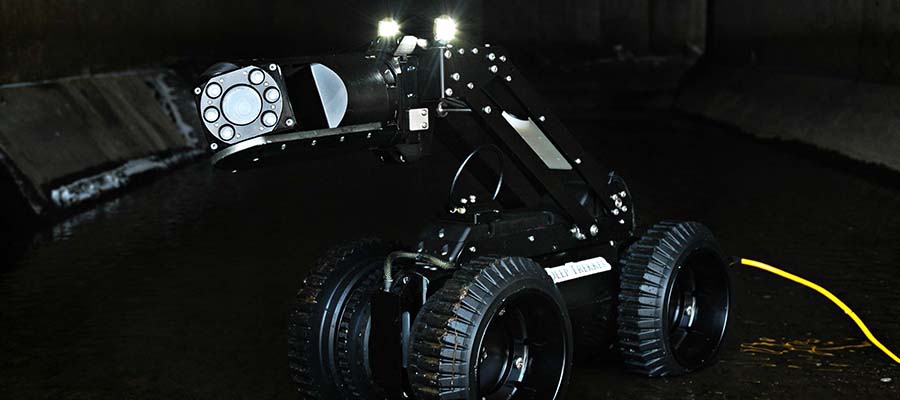
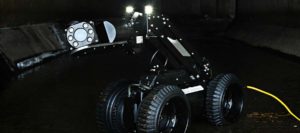 Deep Trekker is set to launch its enhanced trenchless technology product line, the 340 Pipe Crawler system at the NASTT’s No-Dig Show in April.
Trenchless technology helps municipalities inspect, maintain, and repair their buried infrastructure. Allowing operators the ability to see what’s happening within stormwater and wastewater systems without unearthing them. This is an important fact; with every passing year, the structural integrity of many municipal water management systems are reaching the point where they need to be repaired or reconstructed. Replacing entire systems can be quite costly and in some instances – unnecessary.
Trenchless Technology – The No-Dig Solution
Performing regular inspections of buried infrastructure have proven to be the most challenging factor for many municipalities due to the lack of accessibility and affordability. One small town spent $400,000 to hire a CCTV service company to conduct inspections of it storm water pipes. Realizing after that they could conduct their own inspections using trenchless technology; this lead them to purchase a Deep Trekker 340 Pipe Crawler at a fraction of the cost.
Deep Trekker is set to introduce its enhanced product line of trenchless technology at the upcoming NASTT’s No-Dig Show. This event provides the ideal platform to display the 340 Pipe Crawler and its features to industry professionals.
This North American show will bring municipalities, contractors, engineers, and personnel from various energy and utility companies, all looking to learn about new trenchless technologies and techniques that will effectively save time and money.
Deep Trekker will be present at booth #529; if you are attending the event and would like a private demonstration or presentation, be sure to contact them in advance to set up the one-on-one meeting.
Uncategorized
Earlier this week we posted about Vermeer’s HDD training Program with the Des Moines Area Community College 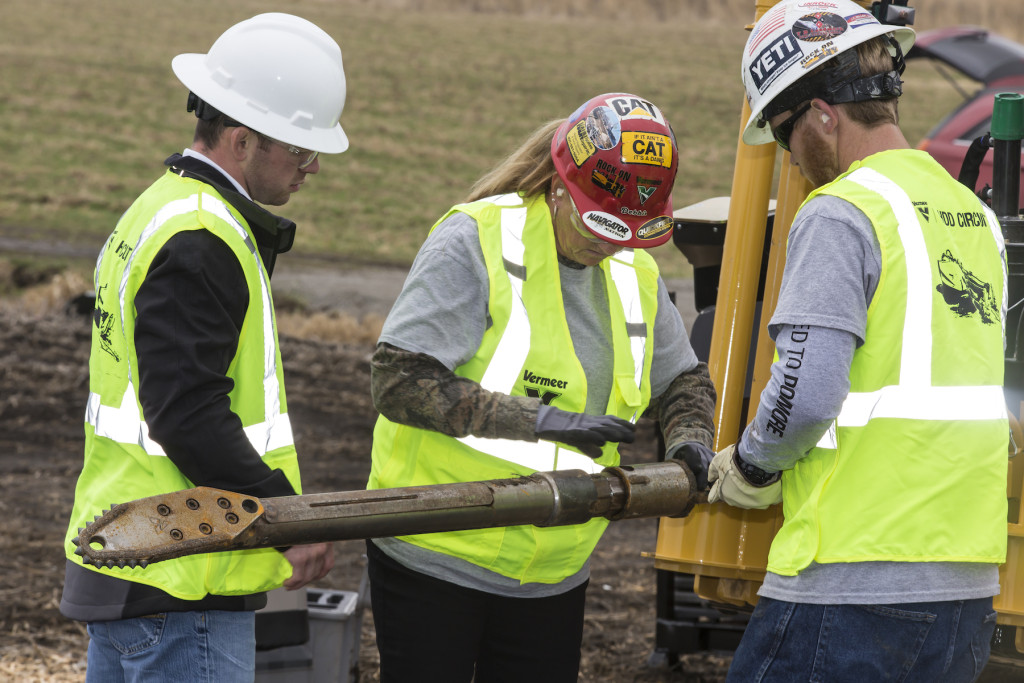 (DMACC). Today we’ll take a closer look at the most frequently asked questions about this new program.
What is Vermeer HDD Circuit program?
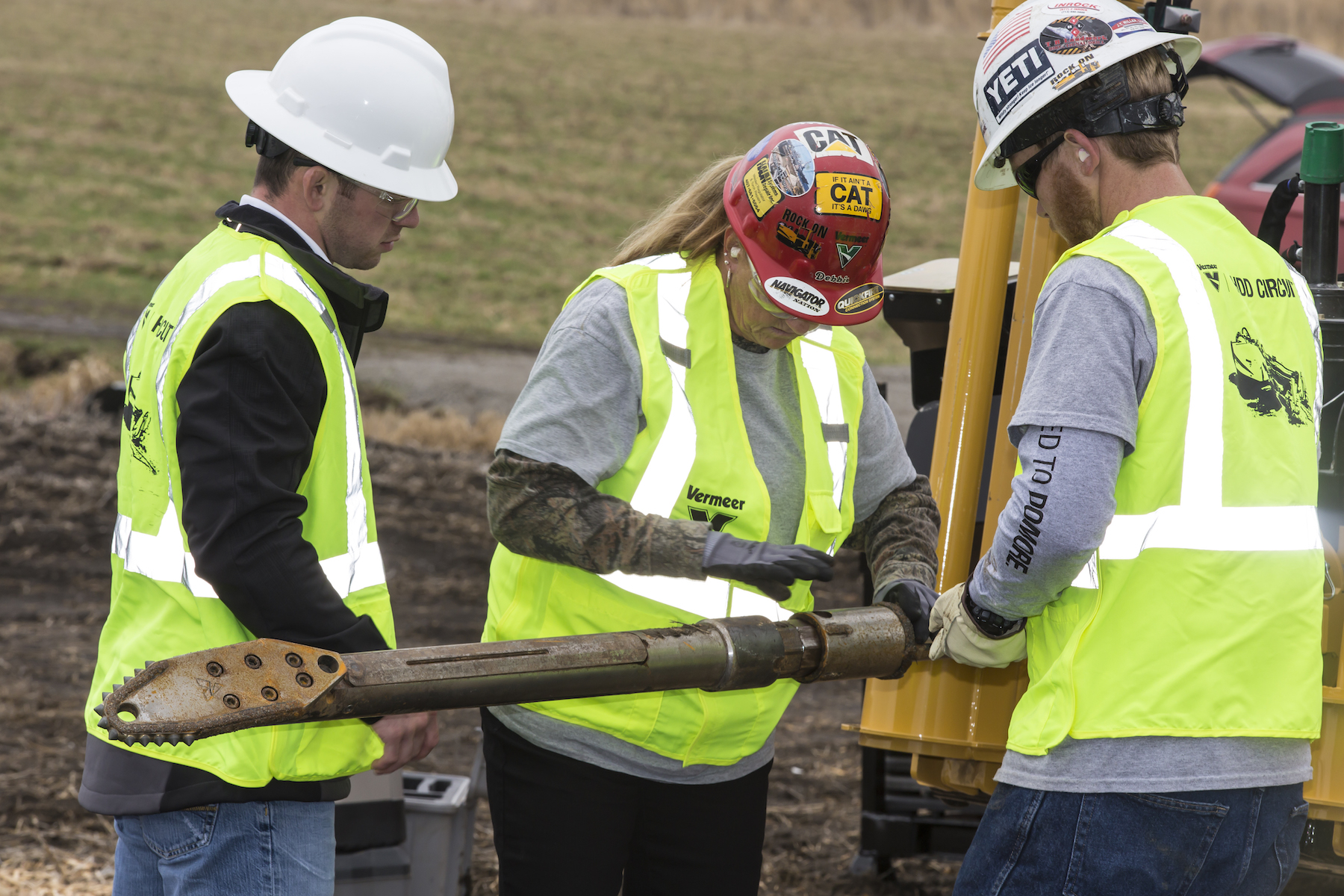
The Vermeer HDD Circuit training program is a tuition-based, two-week instructor-led program that provides a mix of classroom time with hands-on experience in a small-group learning environment for anyone interested in a career in the growing horizontal directional drilling (HDD) industry.
During each two-week course, students are exposed to topics on HDD safety, jobsite evaluation and setup, drilling operation best practices, underground utility locating and potholing best practices, drilling fluid mixing and testing, proper bore and pullback techniques including the development of a bore plan, as well as basic drill maintenance and inspection.
The curriculum covers all aspects of horizontal directional drill operation from walking the bore plan, potholing, creating the bore plan, mixing the mud, proper drill maintenance and actual hands-on time with the drill. The goal of the training program is that each student who successfully completes the program will be able to be a productive drill operator. HDD Circuit program students must complete and pass a written test and hands-on evaluation in order to finish the program and become a certified HDD operator.
The goal of Vermeer is for students to leave the training program very confident in their abilities to operate a drill, use a locator and communicate with fellow crew members, as well as get more people into the industry.
Why should I consider a career in horizontal directional drilling?
For several years, Vermeer has received feedback from its customers and dealer network that there is a need for qualified operators in the horizontal directional drilling industry. Existing contractors are having difficulty completing work or taking on new business due to lack of qualified drill operators. With HDD Circuit program, Vermeer is working to help grow the industry and cultivate a pool of potential drill operators that will make HDD a career.
How does HDD Circuit program differ from other training programs?
Vermeer limits training classes to eight individuals, so each locator-operator team gets one-on-one attention from a drilling expert. During the two-week HDD Circuit program, each locator-operator team will get approximately 40 hours of classroom time and 40 hours of hands-on experience — 20 hours locating and 20 hours operating the drill in the field.
The curriculum focuses on setup, safety, transportation, preparation and execution. To help prepare crew members for real jobsite challenges, the demo site utilizes a designated utility zone where the students will locate and vacuum excavate these utilities instead of using dummy setups. Participants will learn how to pothole and locate these utilities, load a trailer, set up a drill, mix and test drilling mud, create a bore plan and pullback actual product.
We recognize that not every ground condition or situation a drill operator may face in the field will be present during the training. What we’re teaching is how to fundamentally be an operator and/or locator, so participants start to know what to look for, what to feel for and how to properly handle situations.
What equipment will be used during the training?
Class participants will learn to use a Vermeer D20x22 S3 Navigator® HDD, a Vermeer MX240 mixing system, a McLaughlin vacuum excavator and DCI® F5 locator. Since telematics are a growing trend, participants will be exposed to the Vermeer bore planning tools and Vermeer BoreAssist productivity tools. Vermeer will also teach participants how to create bore plans by hand, in case they don’t have access to the software once they return home.
What is the importance of the certified HDD operator designation?
Each student that successfully completes the HDD Circuit program will be classified as a certified HDD operator. Other HDD training programs provide participants with a certificate of completion. However, due to the partnership with Des Moines Area Community College (DMACC), HDD Circuit program is now the only certified HDD operator training program of its kind in the nation. This means contractors employing individuals who have completed the HDD Circuit training program know they have received extensive training and can walk a bore, plan to bore, set up a bore and complete a bore.
Vermeer has partnered with DMACC to certify the HDD Circuit program curriculum. DMACC is an accredited two-year college and their administration reviewed, approved and agreed to include the HDD Circuit program curriculum as part of the college’s academic non-credit class offering beginning fall 2016.
Who will lead the training?
Vermeer will provide instructors with extensive directional drill operating experience to lead and provide all of the hands-on experience and classroom training at our training site in Pella, Iowa.
How often will the training be offered?
Vermeer plans to hold one two-week class almost every month from March through November.
How can veterans use their GI Bill benefits to attend the training program?
DMACC and Vermeer worked with the Veterans Administration to review and certify the HDD Circuit program curriculum. Because the HDD Circuit training program is now certified by the Veterans Administration, veterans can use their GI Bill benefits to help cover the cost of tuition and lodging, in addition to making employers eligible for partial wage reimbursement once hired. This provides an opportunity for veterans to obtain training and help address the shortage of drill operators in the industry.
Can someone exploring a career change enroll in HDD Circuit program?
The answer is yes. Now that HDD Circuit program is certified by DMACC, anyone looking for a career in the construction industry can enroll in HDD Circuit program and receive training.
What happens when a trainee goes back home and has a question?
The Vermeer training team follows up with program attendees to see how things are going after they return home. If the crews have questions, Vermeer can help address those, as well as refer them back to their HDD Circuit training program manuals. Attendees are also supported, following the class, by their local Vermeer dealer.
How do individuals register for an HDD Circuit training program session?
Interested individuals should go to Vermeer.com to learn more about the HDD Circuit training program. To register for an upcoming training session, the interested individual will click on a link and be redirected to the DMACC registration site or visit DMACC.edu. Here they can review the training schedule, select a training session and pay tuition fees.
What is the cost of the program?
Vermeer provides training on state-of-the-art machines and uses cutting edge technology to ensure the attendee is equipped with the right skills for the job. The cost of the two-week training program is $4,000 plus lodging and some select meals.
Who do I contact for more information?
To learn more about HDD Circuit program and register for an upcoming training class, go online at Vermeer.com or DMACC.edu or contact Vermeer at HDDCircuit@Vermeer.com.
Uncategorized
Written by: Desiree Willis, Technical Writer, 253.872.4490
Robust Machine Tackles DigIndy Network of Tunnels in Autumn Launch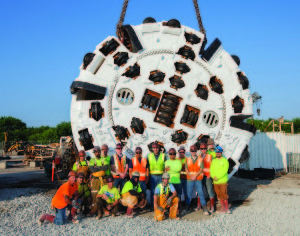
On Tuesday, September 6, 2016, one of the longest-running Robbins TBMs embarked on its most extensive project yet. The 6.2 m (20.2 ft) Main Beam machine, owned by the Shea-Kiewit (S-K) JV, is boring the 8.5 km (5.3 mi) long White River Tunnel as the first in the next phase of the DigIndy wastewater tunnels below Indianapolis, Indiana, USA. In addition to that work, the machine will bore the Lower Pogues Run, Fall Creek, and Pleasant Run Tunnels—a scope of work totaling about 28 km (17 mi) through limestone and dolomite rock.
The rebuilt Robbins hard rock TBM was first used in Indianapolis on the 12.5 km (7.8 mi) long main tunnel, called the Deep Rock Tunnel Connector (DRTC). On that tunnel, the speedy machine achieved world records in its size class of 6 to 7 m (20 to 23 ft), including “Most Feet Mined in One Day” (124.9 m/409.8 ft); “Most Feet Mined in One Week” (515.1 m/1,690 ft); and “Most Feet Mined in One Month” (1,754 m/5,755 ft). “It’s nice to start the job with a machine that has already been proven and successful,” said Stuart Lipofsky, Project Manager for S-K JV.
However the DRTC was far from the TBM’s first job. The machine, originally built in 1980, has been used on New 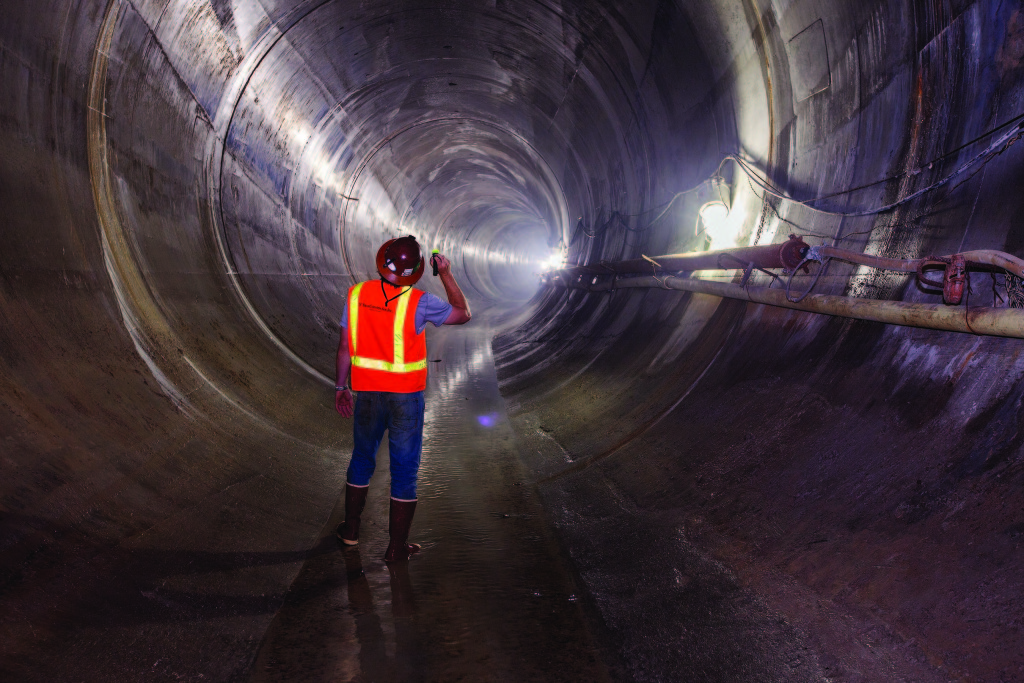 York City’s Second Avenue Subway, as well as projects in Massachusetts and Canada. Once the machine has completed the DigIndy network of tunnels, it will have bored more than 51 km (32 mi) of tunnel—an achievement making it one of the hardest working Robbins TBMs ever put into service. “The age of the machine wasn’t a concern for us, it was a positive. We knew it could perform in harder, abrasive rock,” said Lipofsky.
The machine was launched from the 67 m (220 ft) deep White River shaft following a refurbishment that included new motors, gearboxes, electronics, and other elements. As of the last week of September, the TBM has bored over 300 m (1,000 ft) of the White River Tunnel. About one mile into the White River Tunnel, the drive will bifurcate eastwards to bore the 2.7 km Lower Pogues Run Tunnel in front of Lucas Oil Stadium in downtown Indianapolis. The machine will then be backed up to the bifurcation point before continuing north for completion of the White River Tunnel.
As the machine bores, Robbins continuous conveyors remove muck in an extensive system that was highly successful at the DRTC. Much of the conveyor structure remains the same for the new tunnels, with new horizontal and conveyor belting provided. The conveyors will wind through curves as sharp as 300 m (1,000 ft) in radius, as the tunnels follow the path of the White River overhead.
The S-K JV has until 2021 to complete the White River and Lower Pogues Run tunnels for local owner Citizens Energy Group, and until 2024 to complete all the tunnels. The use of one TBM was seen as a positive: “The use of one machine was more efficient for our crews. The schedule allowed us to run with one TBM and we feel we can do it with one machine. It also was a less costly option than running two machines in terms of the owner funding the project,” said Dan Martz, vice president for J.F. Shea. Once complete, the EPA-mandated deep tunnel project will reduce the amount of raw sewage overflows and clean up tributaries along the White River.
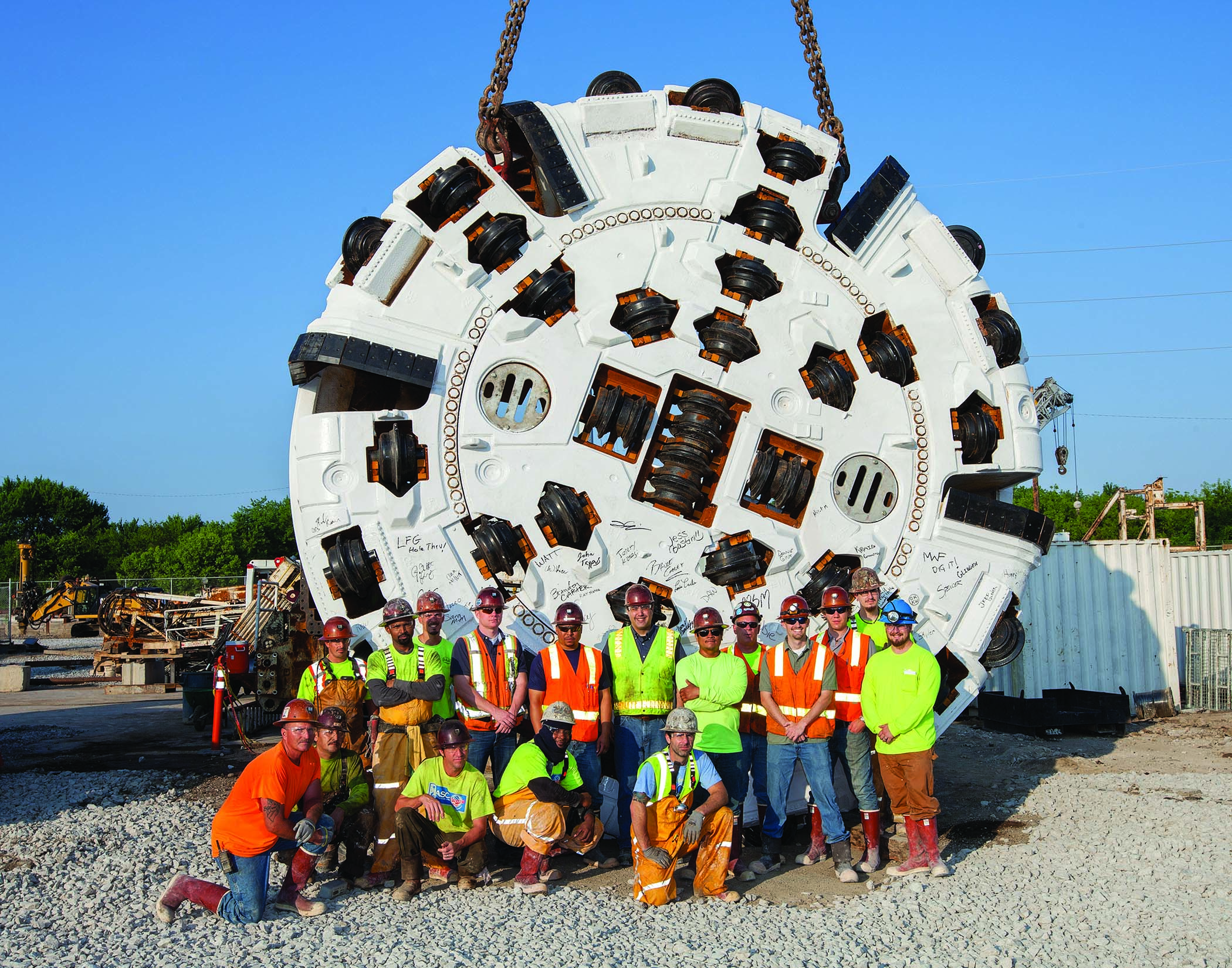
Image 1: The S-K JV stands proudly in front of the cutterhead for the 6.2 m (20.2 ft) diameter Robbins TBM currently boring the DigIndy tunnels.
Image 2: Robbins continuous conveyors will remove muck from the windy route that follows the White River overhead and contains curves as sharp as 300 m (1,000 ft) in radius.
Uncategorized
New anchor ideal for protecting historic buildings in areas of high seismic activity
CINTEC International,a world leader in the field of structural masonry retrofit strengthening, repair, and preservation, announces that it has developed a new type of dissipative wall anchor. The new anchor solves the issues of how to protect heritage buildings in some of the most earthquake-prone parts of the world.
This new product is an innovative dissipative anchor designed for use with Cintec’s proven wall anchor system.
“We believe that this anchor is a major breakthrough in further protecting the world’s iconic buildings, especially in areas of high seismic activity,” said Peter James, Managing Director of Cintec International. “This anchor has been four years in development within the NIKER program. It has undergone extensive testing at Bath University, and in Italy.”
The standard Cintec anchor system consists of a stainless steel anchor body encapsulated in a fabric sock. Diamond holes are drilled into the building and each anchor is placed in a hole. A specialized grout in pumped to the far end of the anchor, filling from back to front until the entire sock is inflated like a balloon. After the anchor has been inflated, the walls have been securely strengthened without affecting the outside appearance of the building.
For buildings subject to regular earthquake activity, there is a possibility of pull-out damage at the anchorage head. The new anchor solves this problem by allowing for small amounts of movement through a sliding mechanism.
The Cintec dissipative anchor consists of a set of stainless steel plates to which four bolts apply pressure, creating friction to an adjustable degree. There are built-in stops to restrict the sliding motion, and connectors that link to Cintec’s standard anchor rods. The anchor allows a controlled and repairable drift for the walls, managing the amount of seismic energy fed into the structure and therefore minimizing damage to the building.
The development of this anchor resulted from Cintec’s involvement with the European NIKER project. In 2011, Cintec was chosen as the only British commercial company to actively participate in this project, the aim of which was to protect the artistic value of cultural heritage sites from earthquake-induced damage. Cintec has been working in collaboration with the University of Bath to create and test the dissipative anchor since then, and has now patented the finished product.
Cintec anchors have been used to strengthen and restore historically significant structures around the globe, including Egypt’s pyramids, Windsor Castle, and even the White House.
About CINTEC
CINTEC International is a world leader in the field of structural masonry retrofit strengthening, repair, and preservation. CINTEC America of Baltimore, MD, has associated offices in Newport, Wales, UK; Newcastle, Australia; Ottawa, Canada and in India.
The principal activity of the company is the design and manufacture of the CINTEC Reinforcing Anchor System, a micro cement anchoring and reinforcing technique. CINTEC offers complete structural analysis and design services, turn-key solutions, as well as masonry repair and reinforcement anchors used for blast protection, seismic reinforcement, historic preservation and overall building strengthening.
CINTEC was awarded the 2002 Queen’s Award for Enterprise in Innovation and received two U.K. Historic Bridge Awards and an Engineering Excellence Award from The Institution of Engineers, Australia in 2001.
For more information, call 1-800-363-6066; fax: 1 800.461.1862; e-mail: solutions@CINTEC.com or visit www.cintec.com.
Uncategorized
Vac-Tron Equipment is now rolling out a new size of the PTO (Power Take Off) truck driven vacuum excavator system. This new truck is available on a Ford F-550 and has a 300-gallon size debris tank. It is also available with our patent pending remote debris tank and air compressor.
The Power Take Off of the truck drives a positive displacement vacuum blower that produces 1,000 cfm. This unit is standard with a high pressure water system, full hydraulic rear claw door, reverse pressure, and the patented “Big Red” filter housing that cleans the air down to 0.5 microns (best in the industry) before it passes back through the vacuum pump. Hydraulic booms are also available on the PTO series units.
A major benefit of the PTO Driven unit is that all components are controlled from the truck eliminating the extra weight, space, and cost of the pony motor. The available towing package is another benefit allowing you to tow other equipment to the job site to help with efficiency.
This is an exceptional vacuum excavator for many projects as well as directional drill site cleanup, confident utility locates, job site safety, and productive job site management.
For more information about the HTV PTO, contact Vac-Tron Equipment at 888-822-8766 to request a free demo or visit www.vactron.com.
Uncategorized
 Bolsters research and development to design drilling technologies for the future.
THOMPSON, CONNECTICUT USA, July 28, 2016– Numa, the world’s leading designer of DTH hammers and bits, has recently expanded its engineering group with the addition of Ross Douglas. The addition of Ross will further bolster the company’s research and development initiatives in order to advance drilling technologies for the future.
Ross comes to Numa with a background in mechanical design engineering across multiple verticals including technology, aerospace, and surgical instruments. He is experienced in program, project, and design engineering management; due diligence and feasibility studies; rapid prototyping; test validation; and is a Six Sigma Green Belt.
Previous to Numa, Ross was at EMC Corporation where he led programs and prototype methods for the design and development of hardware products and peripherals. He brings broad experience to the company in the form of tailoring products to customer needs, gaining insight into materials, and identifying new techniques and processes. During his career, he has published in excess of 120 formal packages starting at concept and ending at proven, worldwide production of released design.
“Numa has been and always will be at the forefront of advancing DTH technology. With over 100 hammer and bit products already designed and with more in R&D, we continue to deliver the performance-driven products drillers require,” said Numa President, Ralph Leonard.“The addition of a talent like Ross to our engineering team further reinforces our position as the world’s leader in drilling technology.”
ABOUT NUMA
Numa is the world’s leading designer of rock drilling equipment with over 100 DTH Hammer and Bit products serving 11 different industries. Our products are capable of drilling vertical, horizontal, and reverse circulation holes from 3½ to 48 inches (89 – 1219 mm) in diameter and are used in 105+ countries. We have built our customer-centric reputation on providing the highest value in products, performance and personal service available in the rock drilling marketplace.