Uncategorized
This is an excerpt from a technical paper presented at NASTT’s 2016 No-Dig Show in Dallas, Texas.
Paper TM2-T4-03 written by:
Simon Asinor Adamtey, Bowling Green State University, Bowling Green, Ohio
Lameck Mairura Onsarigo, Bowling Green State University, Bowling Green, Ohio
Alan Atalah, Bowling Green State University, Bowling Green, Ohio
ABSTRACT
Culverts are very critical to drainage and transportation of fluids under highways. State Departments of Transportation maintain thousands of these culverts under highways, road and freeways. The Ohio Department of Transportation alone maintains over 85,000 culverts under Ohio’s priority and general highways. Through regular inspections and condition assessment of these culverts, a course of action ranging from routine maintenance to replacement is recommended. Pipe bursting is a viable alternative to replace deteriorated culverts. However, a high percentage of these culverts are made of corrugated metal pipes which are challenging to burst because the ridges tend to fold under the compression stress making it difficult, and often times, impossible to burst. The research team at Bowling Green State University (BGSU) in collaboration with two pipe bursting manufacturers (TT Technologies and Hammerhead) conducted pipe bursting research tests aimed at finding solutions to bursting corrugated metal pipes. This paper provides an overview of the pipe bursting operations through which four corrugated metal pipe culverts (12”, 18”, and 24” in diameter) were successfully replaced through this collaborative effort.
INTRODUCTION
The State Departments of Transportation (DOTs) are responsible for a large number of highway assets including culverts, which are important drainage structures under roads. The main purpose of these culverts is to transport water or fluid from one side of the highway to the other. During the industrial growth in the 1950s, culvert construction became necessary as a result of the freeway construction projects initiated in United States through the Federal-Aid Highway Act of 1956 (Camp, Boyce, & Tenbusch, 2010). Corrugated pipe, and in particular, corrugated metal pipe (CMP), was generally the material of choice on these low bid projects because of the relative low cost for a given strength of the pipe. The corrugations add strength to the pipe while permitting a reduction in wall metal thickness resulting in lower pipe material cost per foot of pipe (Tenbusch, Dorwart, & Tenbusch, 2009). Many of these culverts were designed for a 50-year life cycle, which is now ending (Camp, Boyce, & Tenbusch, 2010). For these assets to continue to perform their intended function and meet future demands, they have to be replaced or rehabilitated.
As underground structures, culverts are less noticeable and are often ignored until a catastrophic failure occurs (Gee, 2007). These failures lead to temporarily roadway closure, disruption of traffic flow, and considerable re-installation costs. A complete collapse of the culvert may result in the collapse of the roadway posing a major safety risk or hazard to motorists. With factors such as aging and deteriorating national infrastructure, increasing congestion, highway safety challenges, and limited funds, state departments of transportation are looking for innovative ways to manage their transportation assets (Gee, 2007). Consequently, the selection of economic alternatives to replace deteriorated culverts has become an important aspect of managing these assets.
Open-cut, which is the traditional method for culvert rehabilitation, is an expensive alternative for deep installations due to the massive excavation and need for shoring. Apart from the direct cost, there are social costs such as traffic disruption, road closures, business interruptions, noise pollution, environmental impact, and reduced safety for both workers and road users associated with open-cut. Trenchless rehabilitation methods such as cured-in-place pipe, slip lining, fold and form and other relining techniques have the disadvantage of reducing the internal diameter of the existing pipe and hence not applicable where there is the need to increase the diameter and flow of the existing pipe.
Pipe bursting provides an innovative and practical alternative to open cut without the disturbance and the cost of excavating a trench (Atalah, 2008). Pipe bursting has several advantages over the traditional open-cut method; it is much faster, more efficient, and less expensive especially in gravity applications due to their deeper depths. Pipe bursting is the only trenchless rehabilitation method that can replace an existing pipe with an entirely new pipe resulting in total replacement of the existing deteriorated pipe (Lueke, 1999). Pipe bursting also has the advantage of maintaining or increasing the flow capacity of the existing deteriorated pipeline by increasing the diameter of the replacement pipe. Pipe bursting has been used to replace almost all types of pipes including lightly reinforced concrete pipes, ductile iron pipes, clay pipes, steel pipes, vitrified clay pipes (VCP), cast iron, plain concrete, asbestos and some plastics. However, corrugated metal pipe (CMP) is not considered a good candidate for pipe bursting because the ridges of CMP fold like an accordion under compression thickening the wall and making it almost impossible to burst or slit or split.
The Ohio Department of Transportation (ODOT), alone maintains over 85,000 culverts and about 20% (17,500) of these culverts are corrugated metal pipes (ODOT Culvert Database, 2014). Considering the large number of existing CMP culverts and the continual use of CMP for culverts, it is essential to expand the pipe bursting applications to these culverts, which will in turn provide an alternative rehabilitation method for municipalities and transportation agencies.
To determine the system and tools for successful bursting of corrugated metal pipes, field tests were conducted that involved the replacement of actual culverts under existing roads. The two pipe bursting manufacturers, TT Technologies and Hammerhead, contributed their bursting equipment and technicians. These tests provided the opportunity for the manufacturers to investigate different accessories, designs, and system configurations to successfully burst corrugated metal pipes.
Through the collaboration of ODOT, the manufacturers, and the research team from BGSU, four CMP culverts were successfully replaced using pipe bursting. The pipe bursting tests were done in ODOT’s Districts 2, 5, and 10. All the pipes were replaced with high density polyethylene (HDPE) DR 17 pipes which were delivered and fused on site. The District 10 test was done with a pneumatic bursting system, while the District 5 and 2 tests were done with a static bursting system.
To read the complete paper, download it here. Downloads are complementary for members so be sure to log in first.
Copyright 2016 by the North American Society for Trenchless Technology.
Original paper distributed at NASTT’s 2016 No-Dig Show.
All rights reserved.
Uncategorized
The UKSTT Awards and Gala Dinner in Association with Westrade
Venue: The Marriott Hotel, Peterborough Business Park, Lynch Wood, Peterborough, PE2 6GB
£2,000 bursary prize for the winner of the ‘Young Professional’ category!
Every year, the UKSTT presents the winner of the ‘Young Professional’ category with a £2,000.00 bursary to help fund their travel and accommodation to any part of the world, allowing them to undertake further research into their chosen area of Trenchless Technology.
The Society recognises the need to encourage the work that young professionals are bringing to the industry and are keen to recognise this at the awards ceremony.
Young Professionals (<30 years) are asked to submit a 1500 word entry that best demonstrates their contribution to the field of Trenchless Technology. UKSTT will be looking for evidence of an understanding of Trenchless Technology, the individual’s contribution made, the quality of the submission and the candidate’s vision for the future of Trenchless Technology.
Find out what other winners of this prestigious award experienced as a result of this bursary, visit our website http://ukstt.org.uk/about-ukstt/news/82-news/756-liammacfarlane
CALL FOR ENTRIES
This year submitting an award couldn’t be easier! A new online submission form has been created for each category that can be filled in and submitted on-line. For further information regarding the Awards or the Gala Dinner please visit the UKSTT website
Deadline date for all entries is the 1st July 2016
To sponsor the Awards & Gala Dinner– Please contact Paul Harwood at pharwood@westrade.co.uk
To book tickets or reserve a table, please contact Chantel Avis at cavis@westrade.co.uk
Uncategorized
New name reinforces editorial direction, executive-level audience
BRECKSVILLE, OHIO — UIM: Water Utility Infrastructure Management, the leading professional journal covering the municipal water and wastewater sector in North America, is changing its name to Water Finance & Management.
The partial rebranding will include the name change, a new logo, redesign of the print journal and a new website, waterfm.com, all launching in June 2016.
While the editorial direction of the publication is not changing, the new name will bring a more focused title to the content covered in the journal and redefine what the publication was initially built on – the finance and management of water systems. The journal’s distribution and audience of executive-level utility managers, decision-makers, elected officials and consultants will also remain the same.
Originally launched in 2004, UIM was initially branded by publisher Benjamin Media as Underground Infrastructure Management. Soon after, the emphasis became all about water and the name was tweaked to UIM: Water Utility Infrastructure Management.
“Our journal has always been about finance and management, so in that respect, nothing has truly changed,” said Bernie Krzys, CEO of Benjamin Media. “We felt there was an opportunity to improve the identification of our brand with a more direct name that emphasizes what we’re all about. So circling around in a matter of speaking, this well-regarded journal’s name has evolved to become Water Finance & Management.”
The new name will better outline the editorial coverage of the journal. On the finance side, coverage includes traditional sources of utility funding, private financing and P3s, rate setting, affordability, regional cooperation and more. On the management side, coverage includes asset management, implementation of new technology, data management and application, smart water networks, water loss, leak detection and more.
The name change also streamlines other initiatives within the UIM brand, namely its two conferences – the Water Finance Conference and Water Asset Management Conference. The new Water Finance & Management logo has also been redesigned to convey the executive-level tone of the brand and reincorporates the goldfish from the UIM logo, representing the ecology of clean water and its importance to quality of life and environmental progress.
Be on the lookout for Water Finance & Management in the coming weeks as we look forward to continuing to serve the water market!
Editorial:
Andrew Farr
330.752.1919
Advertising:
Hannah Schiffman
330-315-2135
Conferences:
Jeni Leist
330.315.2209
Uncategorized
Intermediate Breakthrough is a Milestone in Difficult Ground
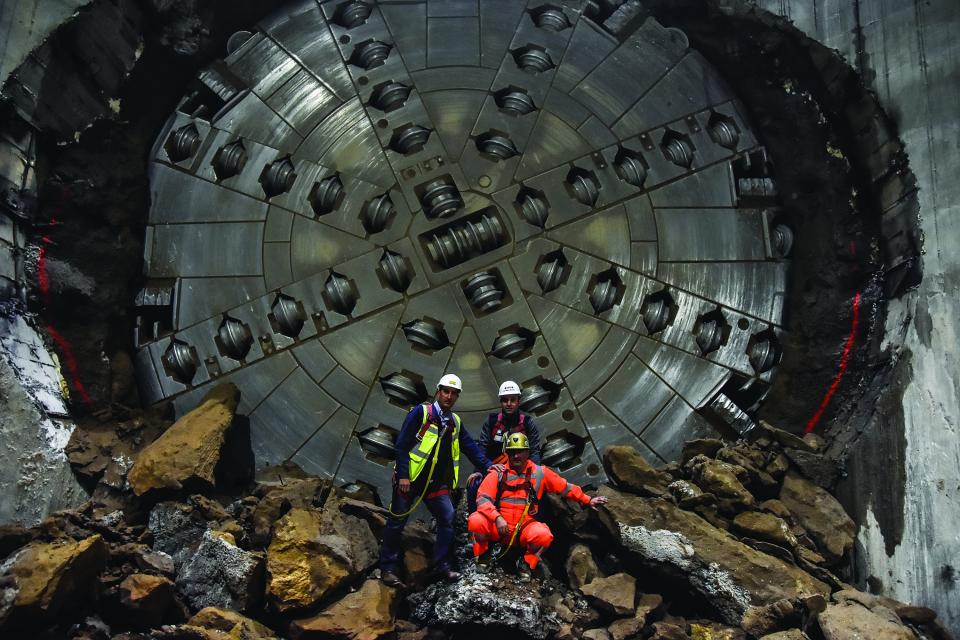
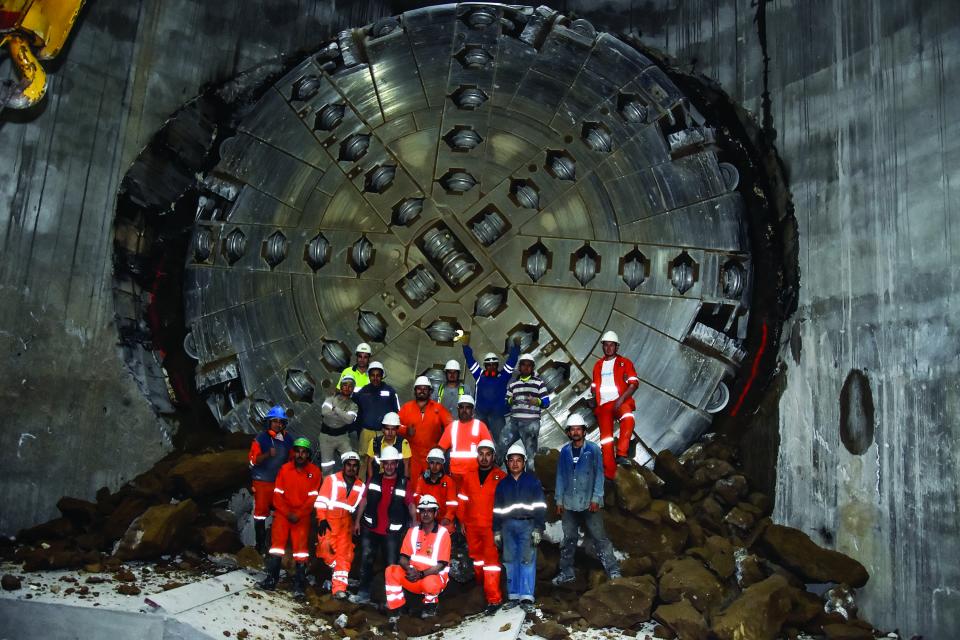
On March 29, 2016, North America’s first Crossover TBM broke new ground in Mexico City.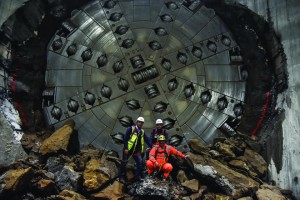 The 8.7 m (28.5 ft) diameter Robbins XRE—a cross between a rock TBM and an EPB—emerged into an intermediate shaft at Túnel Emisor Poniente (TEP) II.
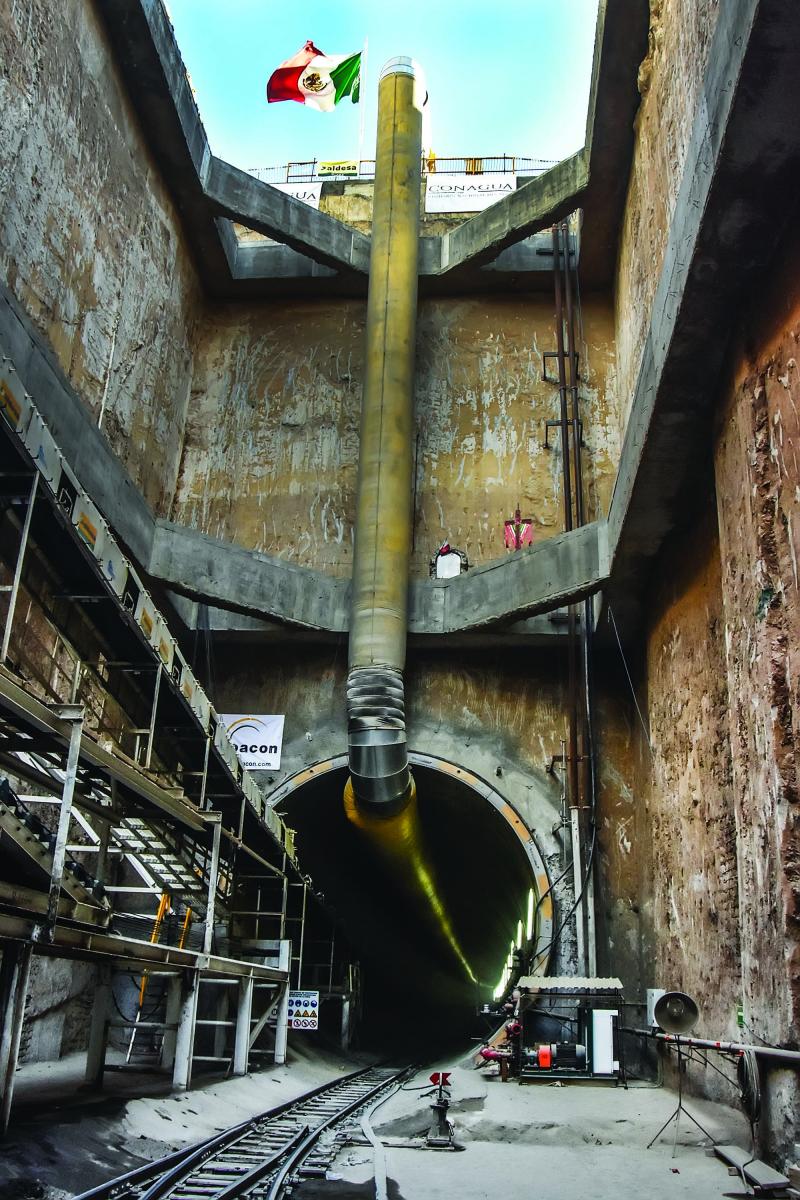
The machine is undergoing some maintenance before continuing on to bore the final 3.2 km (2.0 mi) of tunnel. The customized TBM, for a consortium of Aldesem, Proacon, and Recsa, was chosen based on a number of parameters that included challenging ground conditions below an area to the west of downtown Mexico City.
The tunnel path travels through a mountain with cover as high as 170 m (560 ft), through fault zones and in a section with cover as low as 8.0 m (26.2 ft) above the tunnel crown. Much of the tunnel consists of andesite rock with bands of tuff, and softer material in fault zones as well as an 874 m (2,870 ft) long section in soft ground at the end of the tunnel.
“The geological profile of the project comprises six different lithologies, among them hard rock such as dacite. To get the best operation in both areas required use of dual mode technology such as the Crossover TBM,” said Enrique del Castillo of contractor Aldesem. The 8.7 m (28.5 ft) diameter Robbins XRE (Crossover between Rock/EPB) is a design that allows for the TBM to effectively bore in both hard rock and mixed ground.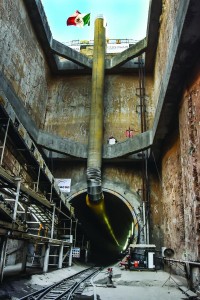
The machine setup includes a canopy drill and positioner for enhanced ground consolidation, as well as gear reducers to adjust torque and RPM based on ground conditions. The TBM, initially launched in hard rock mode, can be operated in EPB mode later on by switching out the belt conveyor with a screw and converting the cutterhead.
The Robbins Crossover machine began its journey in August 2015, and advance rates picked up quickly. Project records were set in January 2016 after the machine achieved a best day of 42.8 m (140 ft) and a best week of 185.1 m (607 ft). By mid-March the machine had bored through the first of the contact zones, a 30 m wide section of fractured and blocky rock. While the excavation through the contact zone was slow going, progress picked up again in the more competent rock. Final breakthrough is expected in autumn 2016.
Once complete, the 5.8 km (3.6 mi) tunnel will supplement an existing and overtaxed wastewater line built in the 1970s. The deep drainage tunnel will serve to prevent recurrent flooding in Valle Dorado, and will benefit the cities of Cuautital Izcalli, Tlalnepantla, and Atizapan de Zaragoza, an area with a total population of 2.1 million inhabitants.
Image 1:Jobsite personnel celebrate the breakthrough of the 8.7 m (28.5) diameter Robbins Crossover (XRE) TBM for the Túnel Emisor Poniente (TEP) II project.
Image 2: The 5.8 km (3.6 mi) Túnel Emisor Poniente (TEP) II will prevent recurring flooding in three key areas surrounding Mexico City once complete.
Image 3: The crew for the Aldesem/Proacon/Recsa consortium had much to celebrate at the intermediate breakthrough of North America’s first Crossover TBM.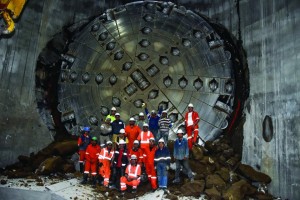
Uncategorized
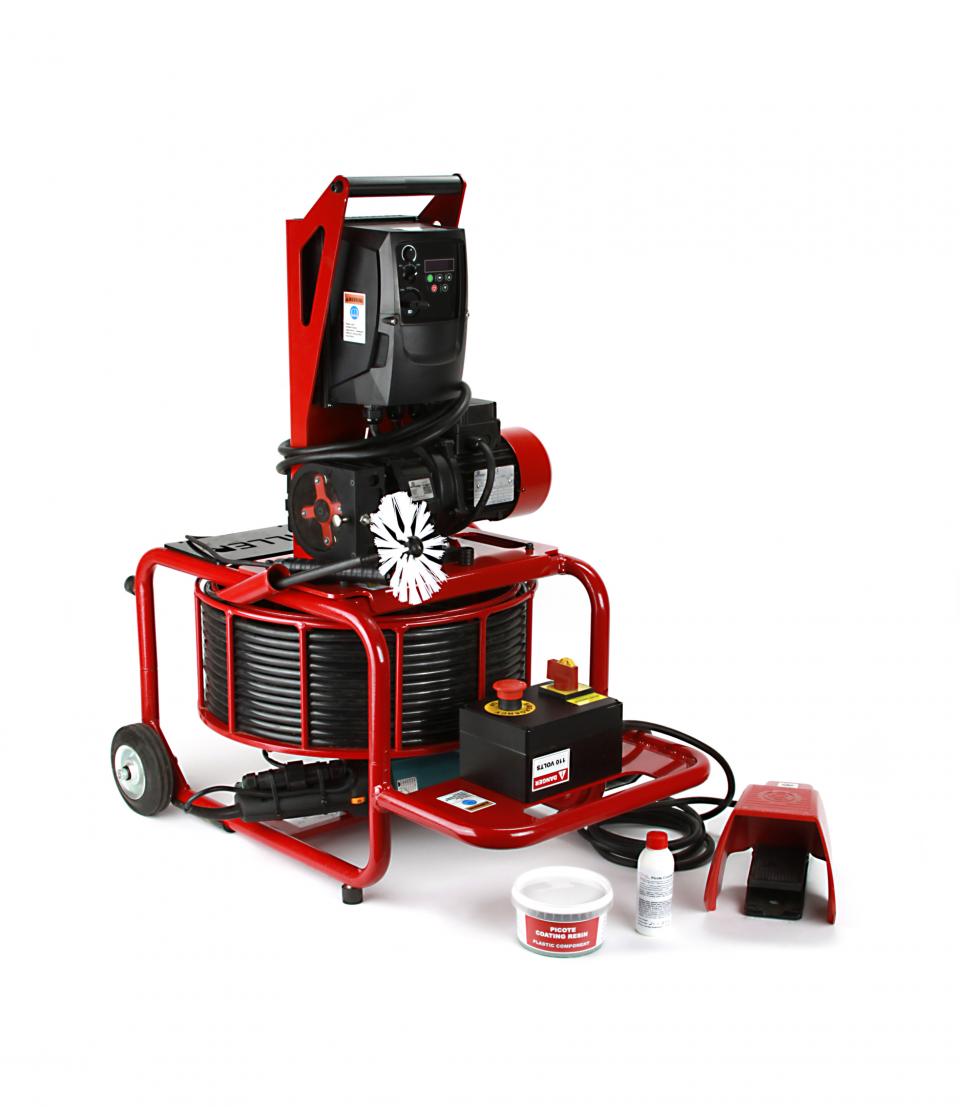
April 25, 2016 – LAKE MILLS, Wisc.– HammerHead® Trenchless Equipment, a Charles Machine Works company, now offers the Picote Pipe Coating System and the Picote Smart Spider pipe cleaning tool. These new additions to the Picote product line allow HammerHead Trenchless Equipment to offer solutions for a larger range of pipe rehabilitation projects and conditions.
The Picote Pipe Coating System renovates pipes 1 ¼ to 6 inches in diameter up to 60 feet in 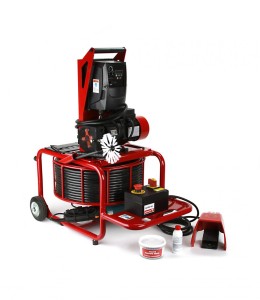 length with a brush-cast, resin coating to form a new wear-resistant, non-corrosive pipe from the existing one. It is cost-effective alternative to pipe replacement because it leaves the existing pipe in place, eliminating the need for extensive demolition and restoration. It can be used to renovate an entire pipe system or finish off a point repair for a wide range of pipe materials including cast iron, PVC, concrete and clay.
Jake Saltzman, worldwide technical director for Picote Solutions Inc., said the slick inner surface of the cured coating increases flow rate and minimizes the risk of blockages similar to cured-in-place-pipe (CIPP) lining systems: “And the Pipe Coating System is actually comparable to CIPP in ease of application, durability and cost per linear foot. So it offers a cost-effective, noninvasive, trenchless alternative that can be used where CIPP and point repair can’t or in conjunction with them.”
Unlike inversion-process liner systems, a brush-cast application isn’t limited by abrupt angles. And unlike spray-on coatings that simply cover a substrate, brush-cast application works the coating into the substrate, pushing past residue and deeply into the surface material for the strongest bonding and adhesion.
Brush-cast pipe coating can be used to line pipes that are subject to high pressure, high temperature or frequent exposure to some chemical substances. Pipe coating also offers high production capability in larger, complex jobs, since the completed coatings do not require return trips to cut, trim and reinstate mid-run joints or fixtures.
HammerHead Trenchless sent its field technicians to Picote’s international headquarters in Finland for factory training to provide customers with top notch field support.
Ryan Boldan, product line manager for HammerHead Trenchless Equipment, said, “This means we not only can expand your range of solutions but can offer the same level of HammerHead product support and technical expertise we provide for all our lines. Picote is a quality brand offering proven solutions for the trenchless industry. You can use the Picote products with confidence knowing HammerHead will be right there with you, as always.”
A compact system that weighs only about 33 pounds, the Picote Pipe Coating System is easily used for projects in tight spaces. Applications are approximately 1/16 inch per pass, requiring just two to four coats to build the desired thickness.
The urethane coating dries to the touch within hours, reaching full hardness in seven days. Pipes can be reconnected in a day. Even after reaching full hardness after seven days, the coating remains flexible enough to withstand shock and bending, which greatly prolongs the service life of the pipe up to 50 years.
Use of the Picote Pipe Coating System requires a CCTV camera and Mini Miller to power the system. Brushes, hoses and shaft come in a variety of styles and sizes for a customized package.
Available in both 4- and 6-inch sizes, the Picote Smart Spider is a new tool designed to work in all pipes, including PVC and pipes with gaps that can catch a chain-style cleaner. The Spider operates at 1,000 rpm and is driven by a Picote Maxi Miller. The tool easily navigates 90-degree turns.
The Smart Spider is rebuild-able, offering users the economy of replacing individual components rather than the entire tool.
The Picote Pipe Coating System and Picote Spider are available directly from HammerHead Trenchless Equipment at www.hammerheadtrenchless.com or by calling 800.331.6653. (International: + [1] 920.648.4848).
Photo 1: Picote Pipe Coating System offered by HammerHead Trenchless Equipment
Photo 2: Picote Smart Spider offered by HammerHead Trenchless Equipment
Uncategorized
MASON COUNTY, TX– When Steve and Pam Bolt of Sonora, Texas purchased acreage on 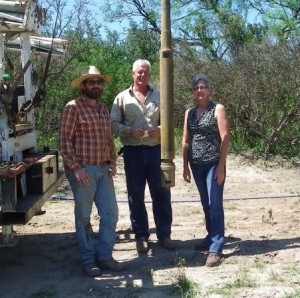 the Llano River in Mason County they knew they had some work in store for them. The land required a lot of time and energy to clear and clean-up the property after several years of growth and non-management. After putting in the time, their efforts paid off when they were able to add a custom built cabin as their vacation home on the river banks.
However, one aspect of vacation living still remained. The home needed a water source to serve the Bolt’s personal and landscaping needs. They hauled water for a few years but a long term solution of drilling a water well on the property was required. The Bolt’s called in a water well company to drill but unfortunately the company was not successful. The difficult unconsolidated Texas ground conditions resulted in the hole caving-in after drilling only 10 feet and the operator had no other solution. The Bolt’s were in a bind.
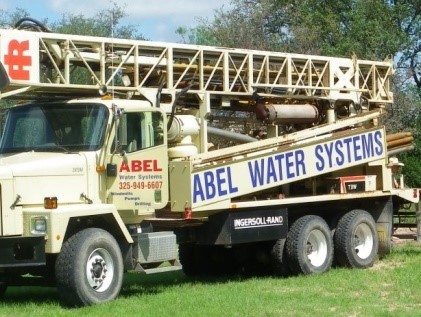
Disappointed but not beaten, the Bolt’s contacted President Clark Abel of Abel Water Systems in San Angelo, TX based upon his expertise in difficult drilling conditions. Clark discussed the complications of drilling a well in the unconsolidated formation of gravel, sand, and fractured limestone. He further detailed that a well location situated close to the river added additional issues to the well planning and drilling process. Clark explained how this well would take special equipment and careful drilling in order to be successful. 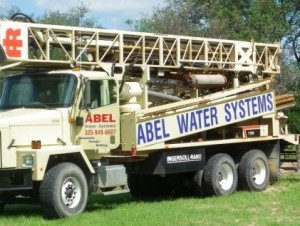
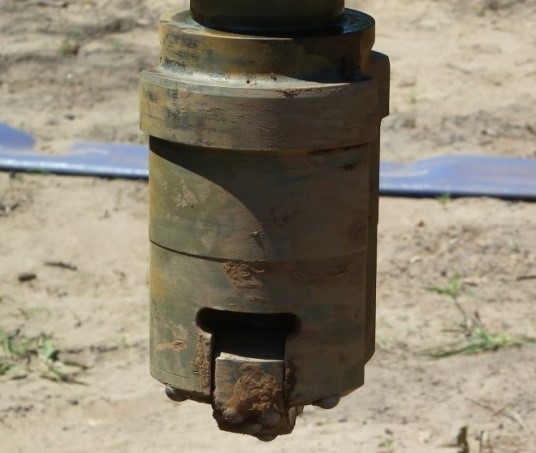
Abel Water Systems contacted Kathy Wagoner from ToolHand, LLC of Menard, TX to discuss the complications of drilling the well. ToolHand suggested running the Numa Super Jaws® Overburden Drilling System. ToolHand informed Clark that the Numa Super Jaws System sets the well casing simultaneously while drilling the hole. With its unique wing design, the Super Jaws bit goes inside of casing and its wings extend out further than the casing OD. This allows Super Jaws to drill and advance the casing at the same time to prevent hole collapse in unconsolidated formations. Another benefit is the wings retract back into the guide body for extraction of all tooling while leaving the casing in place. Saving time and money for drillers.
ToolHand and Abel Water Systems agreed the Numa Super Jaws Drilling System was the perfect solution for the Bolt’s water well. They designed a well plan that incorporated a T140 Super Jaws System for setting the 6 5/8” casing and taking into account the close proximity to the river. Clark presented Steve and Pam with the well plan, pointing out the dependable performance of Super Jaws drilling through unconsolidated ground conditions. The Bolt’s agreed to proceed so they could get running water in their vacation home.
It was now time to get to work. Abel Water Systems, ToolHand, LLC and Numa field technical support were all welcomed on the drill site by the Bolt’s. The IR T3 rig was set up and the Super Jaws System was prepared for installing the 6 5/8” casing. The unconsolidated river formation was as tough and unpredictable as expected but it was no match for Super Jaws. Numa’s bit was able to drill and case the complete hole in one easy application. The 81’ (27.4 m) water well was simultaneously drilled and cased in about four (4) hours.
“Super Jaws opens new markets in which we haven’t been able to drill before. It allows for 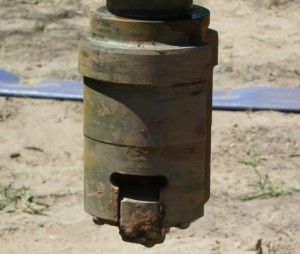 drilling in any kind of unconsolidated formation, such as riverbed rock,” commented Kathy Wagoner of ToolHand.“Also, Numa provided great field support on this project but, as Abel Water Systems will attest, Super Jaws was real easy to deploy and use.”
The Bolt’s were delighted with the results and amazed with the successful drilling. The Super Jaws well now provides plenty of water to supply their Mason County vacation home and property. There was only one way to give the Bolt’s the water well they required. So when ToolHand and Abel Water Systems had to be right, they choose the Numa Super Jaws overburden bit to get the job done for their customer.
For more information on Numa products and services, please email us at info@numahammers.com, call us on 860.923.9551, or visit our website at www.numahammers.com
ABOUT NUMA
Numa is the world’s leading designer of rock drilling equipment with over 110 DTH Hammer and Bit products serving 11 different industries. Our products are capable of drilling vertical, horizontal, and reverse circulation holes from 3½ to 48 inches (89 – 1,219 mm) in diameter and are used in 105+ countries. We have built our customer-centric reputation on providing the highest value in products, performance and personal service available in the rock drilling marketplace.
ABOUT TOOLHAND LLC
ToolHand based in Menard, TX carries a diverse selection of products designed to keep your operation running. From hammer bits to air drill foam, ToolHand has what you need at prices you can afford. ToolHand experts ensure your air hammer drilling equipment is always in the best shape for maximum efficiency. In addition to general maintenance, we also inspect and repair your drilling equipment. We also sharpen carbide bits in the shop and on location. Backed by more than 30 years of industry experience, 20 of which our service manager spent in the shop and field, ToolHand is trusted by many air hammer drilling contractors to handle their equipment with integrity and respect. For more information on ToolHand, please contact:
ToolHand, LLC
Kathy Wagoner
Menard, TX. 76859
325-396-4563
325-456-0407
kwagoner@toolhandserviceandsupply.com
Uncategorized
Good deals to be found with used equipment, but do your homework before buying
By Gregg Hennigan, features writer
In the construction industry, so much of the focus is on new equipment. But the market for used equipment is growing.
Bob Martin, who follows these trends in his role as solutions manager at Vermeer, believes the availability of information in today’s world is the major reason for this.
“The Internet and social media are wonderful tools for researching pre-owned equipment,” he says. “Not only are people researching specific pieces of equipment, but they’re researching what to look for in specific pieces of equipment. And with social media, they can post questions and get responses about certain types of equipment or even sellers.”
Navigating the used equipment market can still be tricky, however. Buyers need to determine the quality of a piece they are interested in, the dependability of the seller, and whether buying something that’s already been owned really is the best option for them.
“It can be like buying a used car: Under the wrong circumstances, you may not know what you’re getting,” says Chad Van Soelen, general manager at the Vermeer Midwest dealership.
REASONS TO BUY USED
To continue with that comparison, contractors often consider used equipment for the same reason drivers do used cars. They can get a nice piece of equipment for a good deal.
Price is inarguably a big reason why contractors purchase pre-owned equipment. This is true for all types of companies, but Martin and Van Soelen say it can be a significant advantage for startup businesses.
“They usually do not have a lot of capital to put into equipment, and sometimes a new company can’t get financing from a lender on a brand-new piece,” Van Soelen says. “But they may have enough money to purchase a used piece to get the business started.”
Another reason contractors buy used equipment is it’s not an item they need on every job, but they need it frequently enough that owning it makes more sense than renting. A rockwheel for an underground contractor who occasionally has projects in hard rock is one example.
Availability also is a factor. Contractors sometimes get attached to certain models and features. As equipment is updated, the used market becomes the place they can still get the models they prefer.
Finally, the growing prevalence of aftermarket service contracts is increasing contractor interest in pre-owned equipment.
“One reason customers feel confident with new equipment is the manufacturer stands behind it with a warranty,” Martin says. “If they can feel close to that same degree of confidence with used equipment, they’ll absolutely go in that direction.”
One example of this is the Vermeer Confidence Plus® asset protection program. Vermeer equipment receives a detailed inspection from a Vermeer dealer technician and can provide a comprehensive parts and labor service contract for major components.
USED NOT ALWAYS A FIT
This is not to suggest that buying used equipment is always the right choice. Some of the reasons why are related to the benefits just mentioned. For instance, while some contractors prefer older models, those won’t have all of the updated features and technology found on the newest models, and adding them to a machine may not be cost-effective or even possible.
The same goes for a warranty on new equipment versus a service contract on used equipment. While there are growing service contracts options out there, in some cases the manufacturer may not have available a service contract for used equipment, or the contract’s coverage may not be as comprehensive as the contractor prefers.
“When a buyer is looking to purchase used equipment, having a service contract from the manufacturer can be a big benefit,” Martin says.
Another potential roadblock is that, although the pre-owned equipment market is an international business, some equipment is off limits to overseas buyers. For example, emission regulations can limit which countries some equipment can be operated in.
WHAT TO LOOK FOR
Contractors should be thorough when looking at used equipment. First and foremost, know the item’s history. Who owned it? Was it properly serviced? Has it been modified? How would the seller rate its condition? How did they use it? If it was a horizontal directional drill, for example, was it primarily used in softer ground conditions, or was it used on rock bores? Think of the car analogy again — the wear and tear of city miles versus highway miles.
Ask to see service records. They may show not only what’s been done (or not done) to the machine, but also if there is a chronic issue.
“There should be no reason that you should not be able to walk up and say, ‘Hey, can I see all of your service invoices for this machine for the last 12 months?’” Martin says.
Another tip is to get an independent assessment by a trained technician.
There are also potential warning signs you can look for on a machine. One thing to watch out for is a new paint job. It may be covering up damage or trying to distract the buyer.
“Are you really getting a quality piece or are you getting something that’s just been repainted that has a lot of internal issues?” Van Soelen says.
Get under the machine and look for signs of unusual wear on the frame, weld joints and other places. The powertrain is another big one that deserves attention.
Then, of course, start up the machine and insist on seeing it in action. Make sure it functions as it should. Listen to it. If something sounds off, that may be a sign something is not right.
SOURCES OF EQUIPMENT
Who you’re buying from is another important part of the evaluation process.
“The biggest thing to look for is to make sure you’re buying from someone you trust,” Van Soelen says.
Sources of used equipment include local dealers, auctions and fellow contractors. There are pros and cons with each of these.
Buying directly from a contractor means you’ll be dealing with someone who should have intimate knowledge of the machine’s history. The question is how forthcoming they are with that information, especially if it’s negative. And in Martin’s experience, it often costs more to buy from a contractor because that person has an emotional attachment to the machine.
“They’re proud of that piece of equipment and can tell you stories about how it did amazing things for them, and they kind of lose sight of the fact that it’s one of many other pieces of equipment like it on the market,” he says.
Also, if an item is being sold online, such as through Craigslist or eBay, the buyer may have to evaluate it based on photographs selected by the seller.
That also may be true for auctions, as more and more online auction sites proliferate. At in-person auctions, a potential buyer usually can inspect the equipment, but they probably won’t be able to demo it.
Martin says auctions have a reputation for buyers walking away with great deals, but as auctions have become more mainstream, the prices have climbed. Also, people often end up paying more than they were planning to if there’s competition for a piece.
“It’s emotional bidding,” Martin says. “Nobody likes to lose.”
Auctions also can create doubt on the part of a buyer. Why, one may wonder, is a piece of equipment being sold at auction rather than at retail? Could that be an indication something is wrong with it? Van Soelen says that, at the dealer level, he has lots of experience with repairing equipment someone got at an auction.
“They may save money on the initial price, but a lot of times, they could end up putting more money in it in repairs because it came from an auction where it wasn’t checked out as extensively as it should have been,” he says.
Then there are dealerships. They don’t always have a large selection of pre-owned equipment, but if they are part of a dealer network, they may be able to source a piece of equipment from another location. Dealers also can offer support after the sale. They have in-house technicians who are very familiar with the equipment.
Demos are more likely with a dealer. Van Soelen says potential customers can come to his yard and test out a piece of equipment.
“We have space where a contractor can operate a drill or a trencher,” he says. “We keep a stack of wood here so someone can run it through a brush chipper or a grinder.”
Some people may be reluctant to buy used equipment, either because of a bad experience or general apprehension. But with the availability of information and the maturation of the market, now is the time to reconsider.
“Before it may have felt like the deep dark corners of the marketplace,” Martin says, “but now it’s a very viable opportunity for contractors.”
Vermeer, the Vermeer logo, Equipped to Do More and Vermeer Confidence Plus are trademarks of Vermeer Manufacturing Company in the U.S. and/or other countries.
© 2016 Vermeer Corporation. All Rights Reserved.
Uncategorized
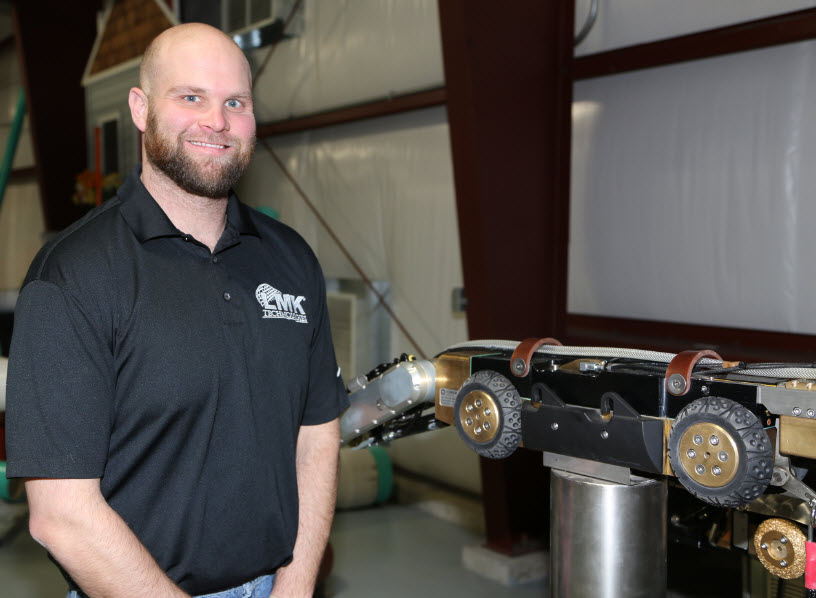
Ottawa, IL, April 4, 2016 – LMK Technologies is proud to be one of the North American 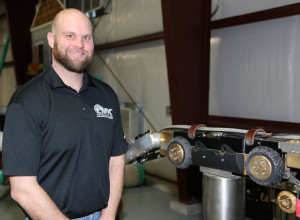 distributors for Schwalm Robotics, the premier robotic system for use in trenchless sewer rehabilitation. For 8 years, LMK has been selling, servicing and maintaining Schwalm robots from its Ottawa, Illinois corporate headquarters.
With over 80 robots in service in North America, the Schwalm robotic system and components are considered to be one of the most versatile robot systems in the industry. Recently, Kenny Cochrane, LMK Robot Specialist, moved to Greenville, SC to open Schwalm USA in order to establish a North American arm of Germany-based Schwalm Robotics.
The German engineered Schwalm robots can significantly save time when compared to traditional winch-in-place robotic cutter systems and are not only faster and extremely more efficient, but the capability of the robots has advanced the pipe renovation industry in North America to a level that offers truly trenchless options that until now were simply unavailable. They effectively and completely reinstate sewer service lateral connections from one manhole access point at one time and the remotely operated cutting tools are engineered to remove protruding taps, clean, trim offset joints and cut open CIPP turnbacks. These robots have also been purchased specifically for use in potable water lines and have shown positive results.
The Talpa 1330 robot operates in 6 inch to 12 inch lined pipes, while the Talpa 2060 operates in 8 inch to 24 inch lined pipes. Each robot is equipped with an interchangeable color, pan/tilt, zoom or focus camera and a lens washing device, ensuring that the operator has a clean, clear view of the work being performed. Each self-driven robot system can easily adapt to a mainline camera system which ultimately saves the buyer money.
Josh Morris, who is entering his third year at LMK, has assumed the position of Robot Specialist and is available 24/7 to troubleshoot and answer questions regarding repair and maintenance. Robots and robotic components can be serviced at LMK’s Ottawa location with efficient turnaround service.
To learn more about Schwalm robots and components, please contact LMK at 815-640-9302.
LMK Technologies, a world leader specializing in trenchless methods to renew lateral sewer infrastructure, has more than one hundred U.S. and foreign issued patents for its advancements in trenchless technology. Headquartered in Ottawa, IL since 1993, LMK serves the municipal and residential markets through a network of licensed and certified contractors. For more information regarding LMK, please visit www.lmktechnologies.com, call 1-815-640-9302 or email info@lmktechnologies.com.
Photo: Josh Morris, Robot Specialist
Uncategorized
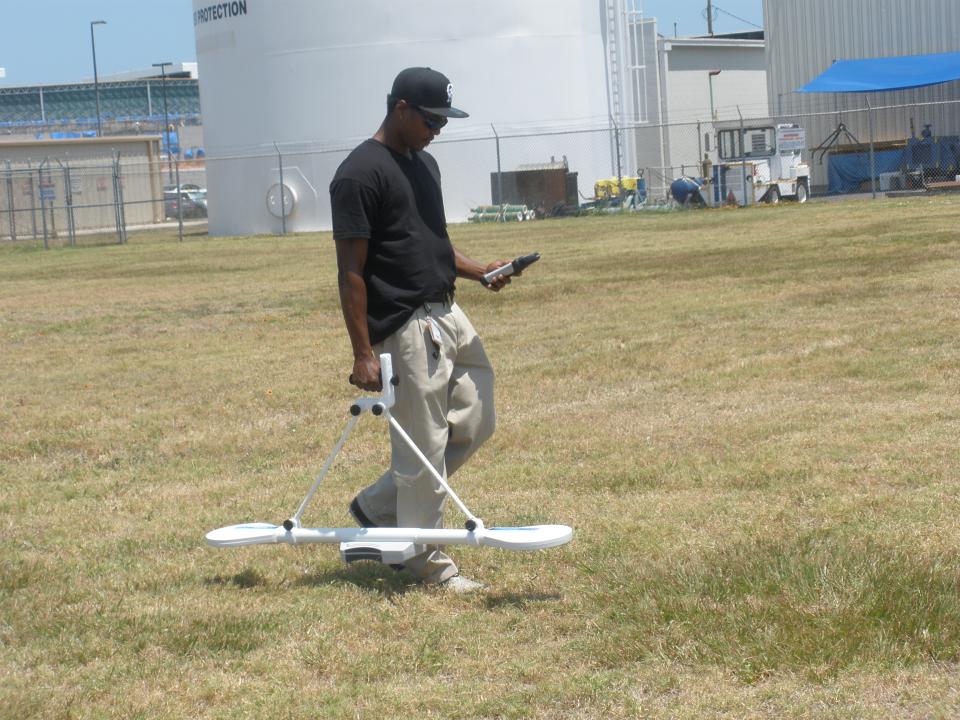
GSSI, the world’s leading manufacturer of ground penetrating radar (GPR) equipment, 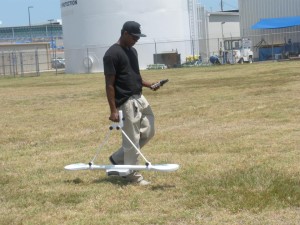 announces the availability of its Profiler™ EMP-400 multi-frequency electromagnetic (EM) conductivity meter for use in geological investigation, site assessment, ground water investigation, and other environmental assessment applications. With a user-friendly design and unmatched signal stability, this powerful electromagnetic induction tool allows for reliable and accurate examination of soil conditions and subsurface targets on both small and large scale sites.
“The GSSI Profiler EMP-400 is a valuable tool that provides our clients with more efficient and comprehensive geophysical surveys. We have been impressed with its simplicity to deploy in the field and the data it outputs to create an easy to understand sub-surface image of our geophysical survey areas,” said Fletcher S. Thompson of E.F. Thompson Geotechnologies, Inc.
Featuring a lightweight, environmentally sealed EM instrument and handheld interface with integrated GPS, GSSI’s Profiler offers users premium mobility and ease of transport. Advanced software features offer the user several options to view the data in real time, thereby enhancing survey efficiency. For instance, the “freeway” collection mode allows the user to collect data by using GPS coordinates as reference points rather than setting up a physical grid on the ground. The Profiler then provides real-time data output via a color-coded map, which enables the user to quickly and easily identify areas of interest on site.Additionally, the Profiler stores files in a Microsoft Excel format in internal memory for later access.
The Profiler EMP-400 is commonly used in concert with GSSI’s UtilityScanÒGPR system, an industry leader in environmental assessment. The Profiler EMP-400 provides a fast and effective survey method for large-scale environmental assessments, such as UST and drum locating, plume mapping and landfill delineation. Users can employ the Profiler as a quick reconnaissance level survey tool to narrow down areas of interest on large survey sites, and then use the UtilityScan GPR system to concentrate on anomalies. Additionally, GSSI offers unlimited, free training for 2 years, free lifetime support, and a 2 year warranty with the Profiler product.
About GSSI
Geophysical Survey Systems, Inc. is the world leader in the development, manufacture, and sale of ground penetrating radar (GPR) equipment, primarily for the concrete inspection, utility mapping and locating, road and bridge deck evaluation, geophysics, and archaeology markets. Our equipment is used all over the world to explore the subsurface of the earth and to inspect infrastructure systems non-destructively. GSSI created the first commercial GPR system nearly 45 years ago and continues to provide the widest range and highest quality GPR equipment available today.
Uncategorized
(New York, N.Y. – May 2, 2016) The U.S. Environmental Protection Agency has allotted $8,249,000 to the United States Virgin Islands to help finance improvements to water projects that are essential to protecting public health and the environment. The funds will primarily be used to upgrade wastewater systems and drinking water systems throughout the territory.
“Clean drinking water and proper wastewater treatment are fundamental to protecting people’s health, but aging water infrastructure needs to be upgraded and repaired,” said EPA Regional Administrator Judith A. Enck. “This funding will help the U.S. Virgin Islands upgrade their drinking water and sewage treatment systems, both of which are imperative for healthy communities.”
The Clean Water State Revolving Fund program, administered by the Virgin Islands Department of Public Works, was allotted $4,129,000. The program provides grants for water quality protection projects to make improvements to wastewater treatment systems, control pollution from rain water runoff, and protect sensitive water bodies and estuaries.
The Drinking Water State Revolving Fund program, administered by the Virgin Islands Department of Planning and Natural Resources, was allotted $4,120,000. The program provides grants to finance improvements to drinking water systems, with a particular focus on providing funds to small and disadvantaged communities.
Since 1989, the EPA has awarded $78,424,380 million to the U.S. Virgin Islands through these programs, which are funded annually.
For more information on the Clean Water State Revolving Fund program, visit https://epa.gov/cwsrf
For information on the Drinking Water State Revolving Fund program visit https://epa.gov/drinkingwatersrf
Follow EPA Region 2 on Twitter at http://twitter.com/eparegion2 and Facebook at http://facebook.com/eparegion2