Uncategorized
LAKE MILLS, Wisc. –HammerHead Trenchless Equipment has introduced the HammerHead ROUGHNECK™ R600, the largest of its pneumatic percussion drilling systems for use in horizontal directional drilling applications. Designed for drilling solid rock with bit diameters of 7.25 to 8 inches, the R600 gives HDD contractors the ability to complete larger diameter bores in fewer passes as well as access to a wider range of single-pass boring applications.
Josh Hood, HammerHead HDD product manager, said the R600 opens up new possibilities for the horizontal driller: “A typical large-diameter bore might take several passes to open to the final diameter. A larger pilot can help save time and money by eliminating some intermediary passes.”
The larger bits driven by an R600 also increase the range of single-pass applications the driller has access to, Hood said, such as in communications and or other service installations.
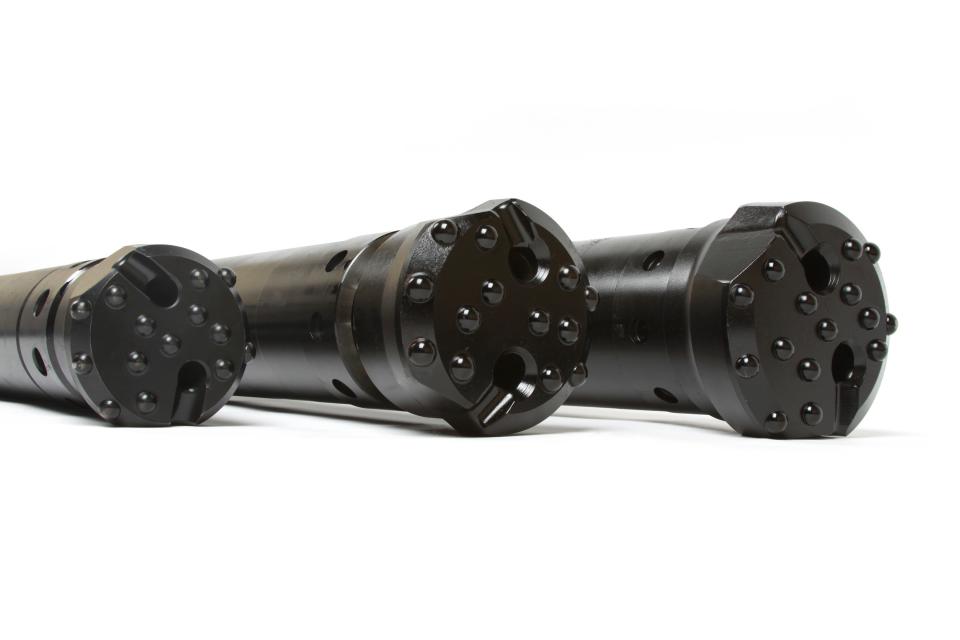
The R600 completes the range of existing HammerHead ROUGHNECK rock drills available to HDD customers. It joins the R400 designed for 5.25-inch straight and offset bits and the ROUGHNECK R500 for straight and offset bits to 6.25 inches in diameter.
All three ROUGHNECK hammers turn any horizontal directional drill in the construction industry into a high-production rock drilling machine. Capable of penetration rates of 150 feet or more an hour, the rock hammers feature heavy-duty, high-flow housing; patent-pending pullback kit; control station/oiler; and drill conversion kit.
Their heavy-duty housing permits directional drilling in varying rock conditions without changing out the housing. The larger bore diameter of the ROUGHNECK housings allows the hammer to send more air to the internal piston for maximum efficiency, resulting in faster and harder blows. Standard API thread makes housing connections easy. And a patented, pinned-on lid design and isolation package secures and protects electronic investment.
The patented offset rock bit design increases steering precision, allowing the operator to navigate a wide variety of ground conditions. Integrated face-cleaning exhaust ports of the hammer ensure reliable performance, and the patented check valve located within the bit eliminates ingestion of debris.
The control station utilizes the drill’s existing mud pump to efficiently deliver air, oil and fluids down hole, reducing footprint size and weight. Integrated electronics facilitate the drilling operation and provide the operator with control and increased productivity without leaving the drill operator’s station.
All ROUGHNECK control stations can be installed with a tee and a ball valve on the high pressure side of the mud pump, which directs airflow to the drilling fluid supply line.
As with all HammerHead products, ease-of-maintenance is built in. The ROUGHNECK system is equipped with patented spanner wrench holes in the front and rear of the hammer, reducing the number of breakout tongs required to change out the bit or service the tool.
The ROUGHNECK R600 rock hammer system is available worldwide from HammerHead Trenchless Equipment or from authorized dealers. Authorized dealers can be found on the web at www.hammerheadtrenchless.com or by calling 800.331.6653. (International: + [1] 262.567.8833).
HammerHead Trenchless Equipment, a Charles Machine Works Company of Lake Mills, Wisconsin, USA, manufactures a full line of pipe bursting, pipe ramming/HDD Assist, pneumatic boring equipment, HDD tooling and accessories, and CIPP lateral lining systems and consumables. All of these products are recognized around the world for their advanced design, rugged construction, long-term durability, ease of use, and reliability. HammerHead offers worldwide sales, support, service and parts through a network of authorized dealers. Construction professionals can find more details about products, event updates, special financing offers, videos and other informative special features on HammerHead’s official YouTube®, Facebook® and Twitter® pages.
For more information about HammerHead Trenchless products, please call 800-331-6653 or visit www.hammerheadtrenchless.com.
Photo: Full line of HammerHead ROUGHNECK™ rock hammers—R400, R500, and the new R600
HammerHead and HammerHead Logo are registered trademarks and Roughneck is a trademark of HammerHead Trenchless Equipment in the U.S. and/or other countries.
Uncategorized
CHICAGO (April 22, 2015) — U.S. Environmental Protection Agency Region 5 Administrator Susan Hedman today awarded the University of Illinois at Chicago and the University of Illinois at Urbana-Champaign first and second prizes in the EPA Campus RainWorks Challenge at an Earth Day “EcoJam” in Chicago.
EPA’s Campus RainWorks Challenge is a national competition in which college students design green infrastructure plans and projects — such as rain gardens and green roofs — to manage stormwater on campus.
“Congratulations to the student teams from UIC and Urbana-Champaign for placing first and second in EPA’s national Campus RainWorks Challenge competition to design campus stormwater Master Plans,” said Hedman. “These award-winning green infrastructure plans use innovative approaches to capture rain where it falls – to prevent pollution from reaching our lakes and rivers.”
EPA launched the Campus RainWorks Challenge in 2013 to help inspire the next generation of engineers, planners and landscape architects to develop innovative green infrastructure systems. The winning UIC and Urbana-Champaign student teams will receive cash awards and each campus will receive funding for faculty research on green infrastructure.
The UIC team was composed of seven students from civil engineering, materials engineering, urban planning and policy, and earth and environmental sciences. The students won first prize for an integrated green infrastructure plan to reduce runoff on the east side of the UIC campus by 25 percent.
The Urbana-Champaign team was composed of 12 students from environmental economics, civil engineering, architecture and landscape architecture. The students won second prize for a plan to expand the current network of green infrastructure on campus to reduce stormwater runoff into Boneyard Creek by over 35 percent.
This year, over 500 college students from 64 teams in 23 states submitted entries in two design categories. Teams included students and faculty advisors from a variety of academic disciplines. Expert judges from the American Society of Civil Engineers, the American Society of Landscape Engineers and the Water Environment Federation helped EPA evaluate the entries.
The University of Maryland at College Park, Queens College at the City University of New York and Georgetown University are also winners in other Campus RainWorks Challenge categories.
EPA plans to announce the fourth annual Campus RainWorks Challenge in the fall of 2015.
More information: http://www.epa.gov/campusrainworks.
Contact Information: Media Contact: Peter Cassell, 312-886-6234, Cassell.peter@epa.gov
Uncategorized
 Jon Robison, PE, was recently promoted to Principal Geotechnical Engineer at GeoEngineers’ Springfield, Missouri location.
Jon Robison has been providing geotechnical, geohazard analysis, construction and geophysical project management and engineering services since 1997, and he is a registered professional engineer in 14 states. He joined GeoEngineers in 2008 and leads the firm’s Springfield Office geotechnical engineering group. Jon has specialized training and expertise in managing large scale engineering and construction projects, geotechnical investigations, transportation infrastructure, geophysical assessments and karst investigations/analyses. In addition to his work with traditional geotechnical and trenchless engineering projects, Jon has led the development of GeoEngineers’ Direct Pipe design process since 2011.
Quick Facts About GeoEngineers, Inc.
· GeoEngineers is a national earth science engineering and technology company ranked 197 in 2014 among top engineering design firms nationally by Engineering News-Record magazine—a jump of 23 spots from the year prior. Other quick facts about GeoEngineers include:
· More than 300 staff (including 29 in Springfield, MO)
· Founded in 1980 in Seattle, WA
· Employee owned
· Business—Earth science, engineering and technology
· 13 locations in seven states— Louisiana, Missouri, Washington, Oregon, California, Idaho and Utah
· For more information: www.geoengineers.com
Uncategorized
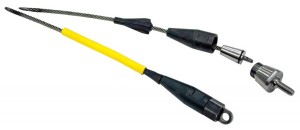 AURORA, Ill.—TT Technologies, Aurora, Ill., offers a wide range of plastic pipe splitting heads developed by working directly with gas utilities to create optimum splitting head configurations. The designs are capable of splitting and replacing plastic gas service and main lines from ½-inch to 4 inches in diameter. The hardened heat-treated steel cutting blades are available in various designs and sizes to best match the type of plastic host pipe, as well as soil conditions. For service line splitting, the splitting heads are paired with a Mini Grundotugger winch or pulled with a backhoe. For main line splitting, a larger Grundowinch cable pulling system is used.
During the process, small launch and exit pits are dug at either end of the service or main line being replaced. A winch cable is rodded from the exit pit, through the existing line, to the launch pit. The splitting head configuration is attached and then pulled through the exiting line. An expander forces the split pipe into the surrounding soil.
For more information visit www.tttechnologies.com.
Uncategorized

EPA developed the NCOD to satisfy the statutory requirements set by Congress in the 1996 amendments to the Safe Drinking Water Act (SDWA) to maintain a national drinking water contaminant occurrence database using samples data for both regulated and unregulated contaminants in public water systems.
This site describes water sample analytical data that EPA is currently using and has used in the past for analysis, rulemaking, and rule evaluation. The data have been checked for data quality and analyzed for national representativeness.
Click here for more information and to read data links.
Source: EPA.gov