Industry News, trenchless products, trenchless projects
The following is a post from Akkerman. For more details and additional job site photos, visit their website.
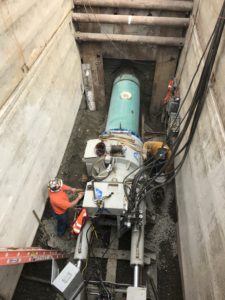 Northwest Boring Co. Inc. (NWB) of Woodinville, WA was subcontracted by Shoreline Construction for an emergency replacement of the City of Mill Creek’s failed 30-inch CMP stormwater pipeline that had been causing flooding in the suburban neighborhood, just north of Seattle.
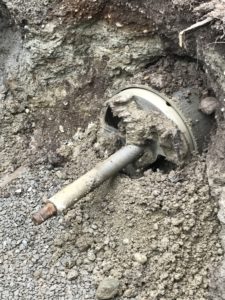
The need for the stormwater system’s repair became apparent when a sinkhole appeared in December 2017, between the Sweetwater Ranch and Douglas Fir neighborhoods. Temporary repair work was conducted, but another sinkhole developed in the same location just one month later. After inspection, it was determined that a failed coupler and damage to the 36-inch corrugated metal stormwater pipe was the root cause.
Because the City of Mill Creek had declared this an emergency project with a budget less than $300,000, a public bidding process was not required. Shoreline Construction was selected as the contractor, who subcontracted the trenchless work to NWB.
 The alignments scheduled for replacement were positioned within a narrow easement between two homes at an 11-foot depth in difficult ground. With minimal real estate, the depth of installation and geological conditions, NWB knew that their guided boring system would be an ideal installation choice for the new stormwater connections.
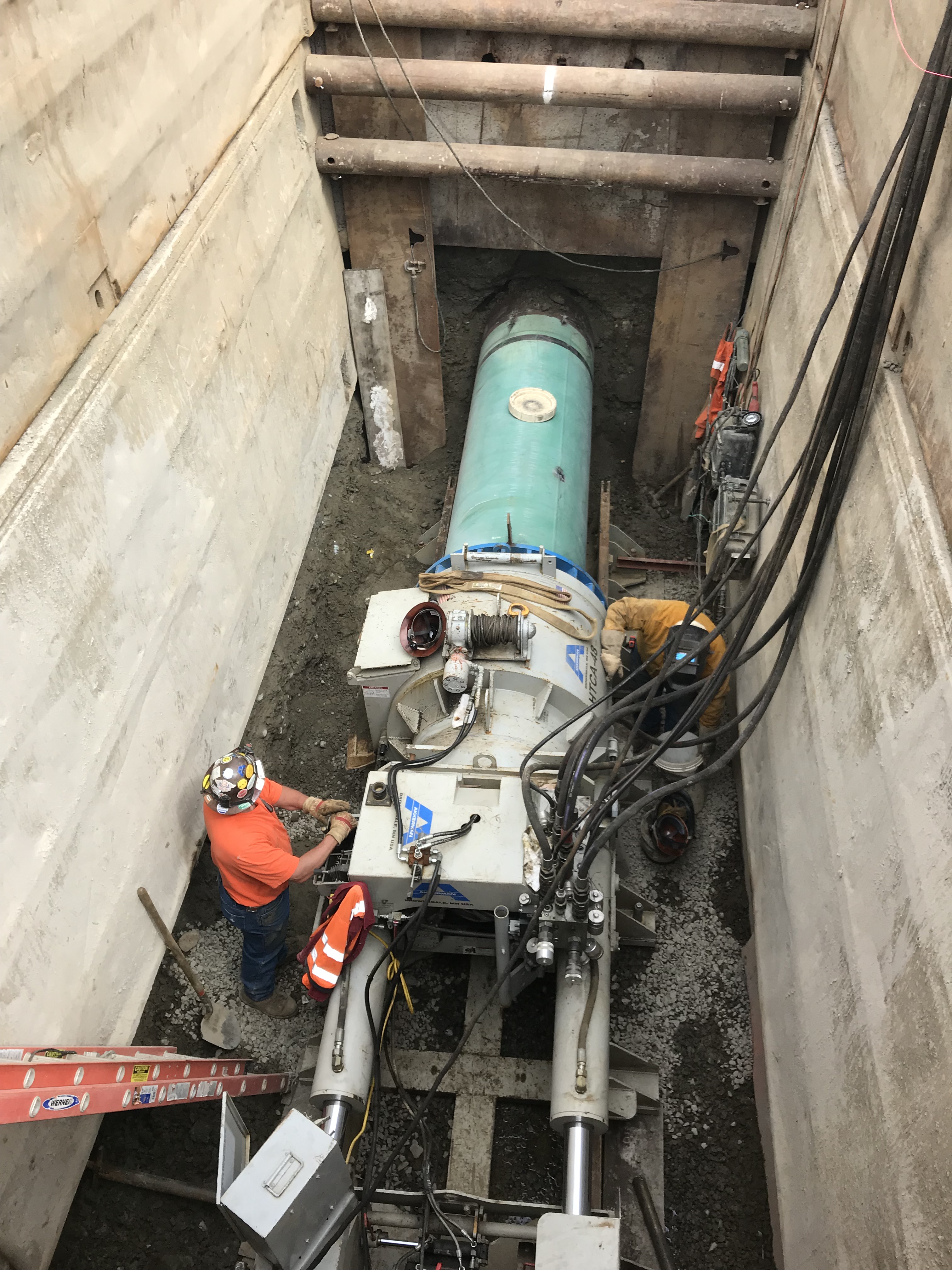
NWB employed the use of their Akkerman GBM 4800 Series Jacking Frame with a high-torque casing adapter attachment for auger boring. The combination made it possible to install the pilot tube passes and 10-foot pipe segments with the torque and jacking force of an auger boring machine but within a smaller shaft. The design utilized one launch shaft to initiate the runs from both directions which further reduced disruption to resident’s properties and saved on project costs.
The ground conditions present were glacial till with rock, which is typical for this region. This ground cannot be displaced with a standard pilot tube steering head so NWB arranged to use special tooling for up to 12,000 psi UCS ground. The drill bit of choice, the Rock Drill Adapter with TriHawk® drill bit, lead the pilot tube passes which established the 140 and 110-linear foot alignments at the necessary line and grade for gravity flow. Simultaneously, a soil appropriate lubrication regime was applied to flush the excavated cuttings back to the launch shaft for removal. (continued)
Crews then prepared to direct jack the 110 and 140-linear foot, 36-inch steel casing. In advance of the casing, NWB launched a guide rod swivel with a 36-inch cutter head which matched the 36-inch casing diameter. The swivel portion of the tooling absorbed the auger rotation while the cutter head, equipped with durable carbide gage cutter bit tooling, excavated the difficult ground. This second pass was completed with the guide rod swivel with cutter head for both stormwater sections.
The alignments were then finished with 27-inch Vylon® carrier pipe was positioned inside the casing and connections to the existing infrastructure were made.
From start to finish the entire project was finalized in just under a month, resolving the City’s dilemma in a timely manner with minor intrusiveness to residents.
Industry News
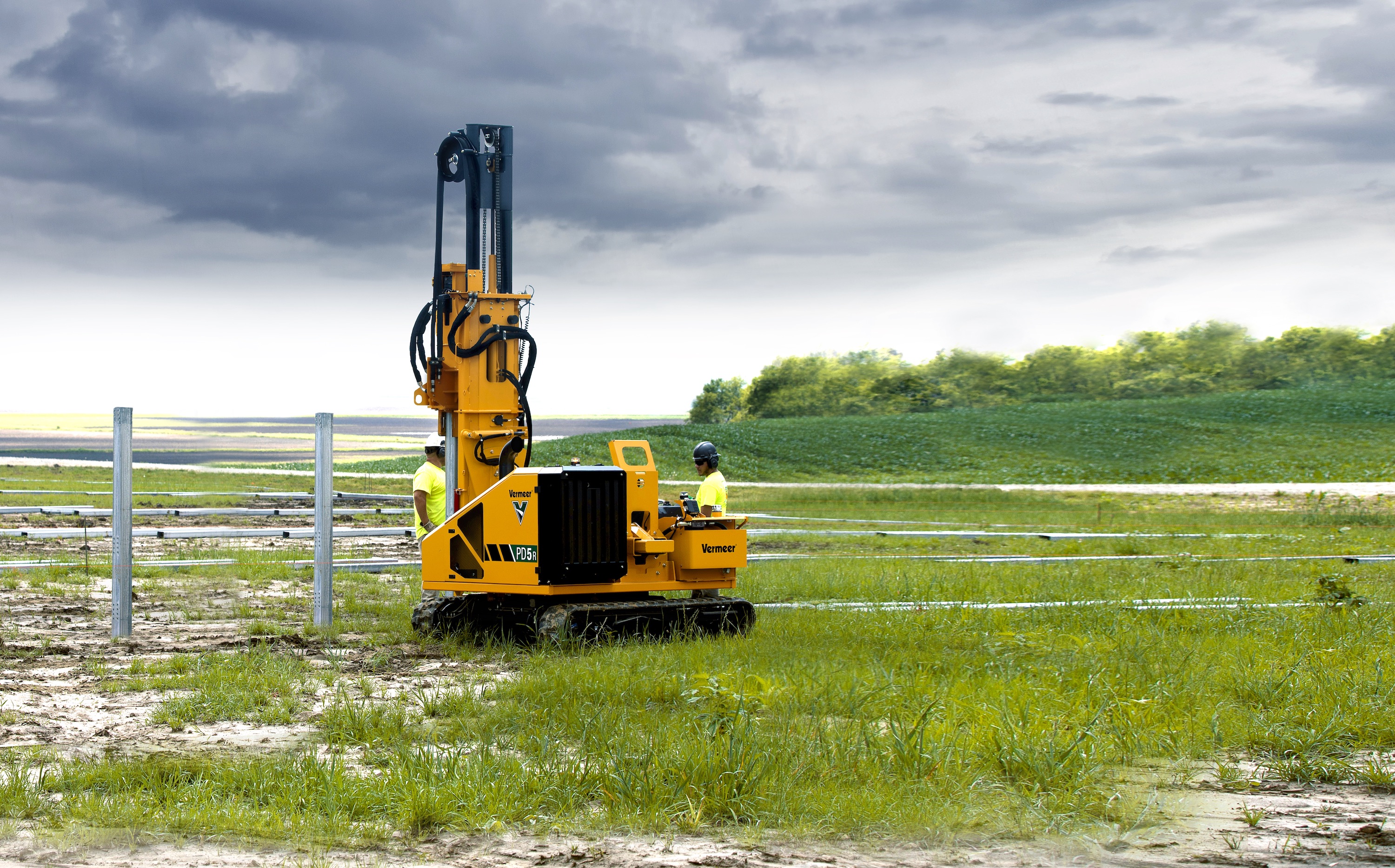
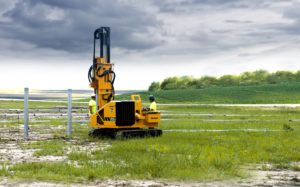 PELLA, Iowa, Oct. 15, 2019 — Vermeer is expanding its pile driver product line with the introduction of two new models. The Vermeer PD5 and PD5R pile drivers combine efficient operation and accuracy into a compact, lightweight machine well suited for working on smaller solar installation projects, congested jobsites and civil fencing and guardrail installation applications.
With a 15 foot (4.6 m) mast that can remain fully assembled when transporting and aided by a 90° rotating platform, the design of the PD5 and PD5R can help ease the setup and teardown process. With transportation weights of 10,350 pounds (4694.7 kg) for the PD5 and 10,300 pounds (4672 kg) for the PD5R, multiple units can be transported on a single trailer.
The PD5 features machine-integrated controls located on the side of the machine. The PD5R features a full-function wireless remote control that can engage the hammer, accurately align the pile to complete verticality using the auto plumb feature and position the machine. Both machines can use an optional laser receiver or a compatible third-party GPS system to help improve productivity by better aligning the machine to the specified pile install location.
“The solar industry has experienced tremendous growth in the last few years, and the Vermeer PD10 and PD10R pile drivers have been among the most widespread machines used for installing ground mount solar piles,” explains Ed Savage, product manager at Vermeer. “Of course, not every jobsite is the same, so we created the new PD5R and PD5 pile drivers to give contractors smaller and more lightweight options. These units include many of the same features as the PD10 and have similar productivity in a variety of soil conditions.”
Both pile drivers are powered by a Cat 49 horsepower (36.5 kW) Tier 4 Final diesel engine, have a forward travel speed of 2.6 miles per hour (4.18 km/h) so operators can move quickly from pile to pile and feature a mast pull-down that is rigidly attached to the mast chain to deliver powerful force.
Both machines will be available early 2020.
For more information about the Vermeer PD5 and PD5R pile drivers, visit Vermeer.com or contact your local Vermeer dealer.
Industry News, trenchless projects
The following is a post from Akkerman. For more details and additional job site photos, visit their website.
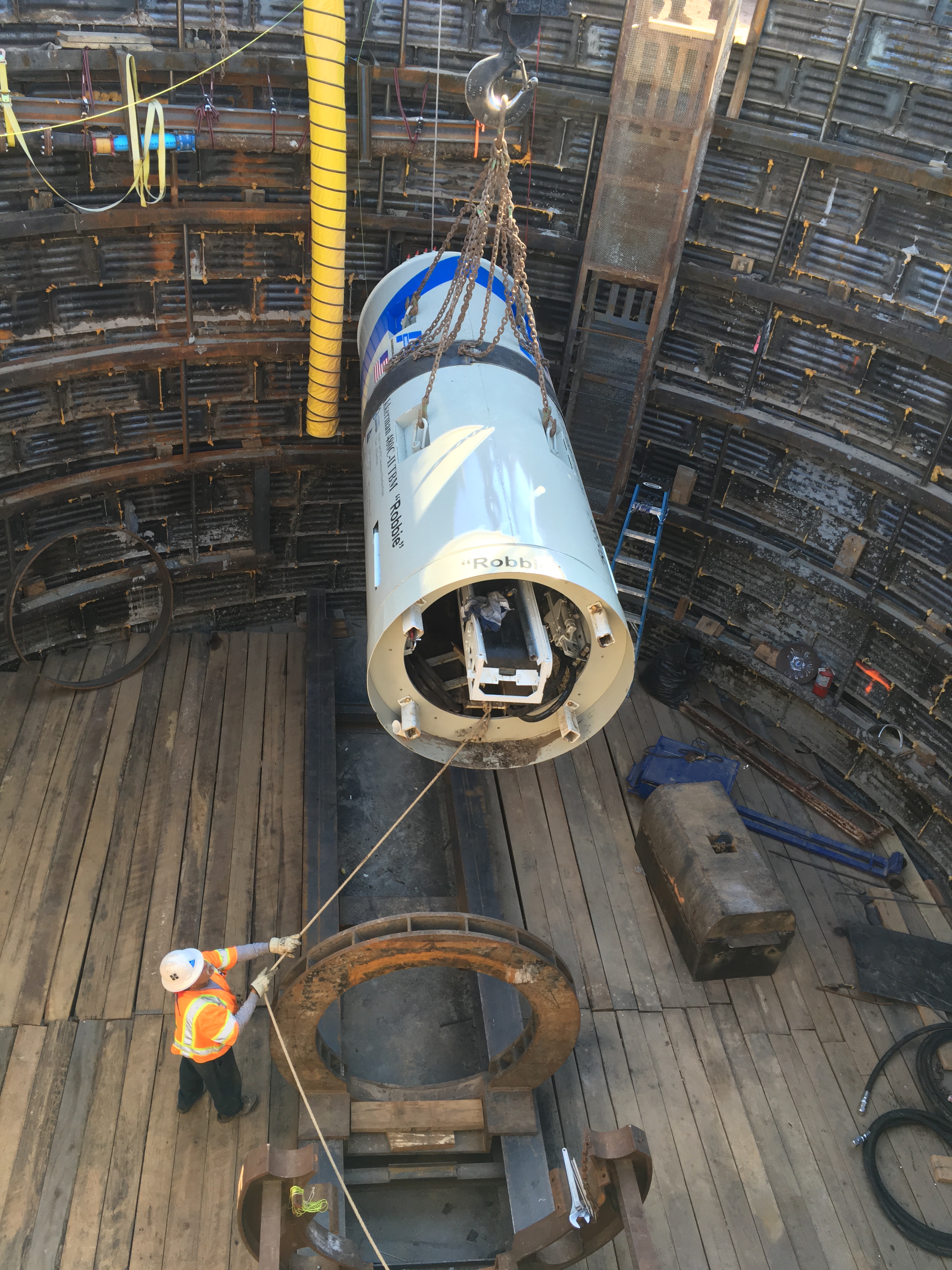
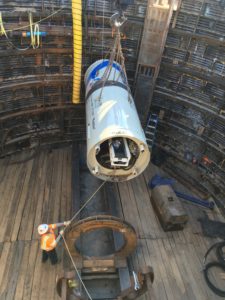 BRH-Garver Construction LP, a Houston based civil construction contractor pipe jacked 885-linear feet of 66-inch ID Permalok® casing filled with 48-inch carrier lines to convey treated water from the Canal Water Treatment Plant (WTP) for El Paso Water in El Paso, TX. The project risks and rewards existed in equal measure for all stakeholders.
The Canal WTP, also known as the Robertson Umbenhauer, was constructed 75-years ago and is situated between the Rio Grande River and a 100-year old BNSF rail yard. The new transmission lines culminate to tie in at San Antonio Avenue in downtown El Paso.
The water lines on the Canal Water Treatment Plant Discharge Main Tunnel project traveled under Highway I-85, and 18 BNSF rail yard tracks in soft ground conditions presenting many opportunities for settlement. El Paso’s water table is prone to seasonal variability due to its proximity to the river, and the likelihood of contaminated ground, existing utilities and obstructions in the 100-year old rail yard posed a potential threat to tunneling personnel and loss of production. Since the launch shaft was in an active BNSF rail yard, frequent and diligent communication and coordination with the railroad personnel transpired for safety, and equipment and material staging.
Several factors contributed to project cost savings including the use of a more cost-effective Tunnel Boring Machine (TBM) system over a microtunneling system, a value-engineered design to initiate both bores from one launch shaft inside the rail yard to emerge into one reception shaft, the downsizing of casing diameter from 72 to 66-inch, and the avoidance of deep well dewatering, which also reduced settlement risk.
The contractor’s pipe jacking experience informed the resolution of the project’s more difficult challenges when completing the 570- and 315-linear foot tunnels. When unforeseen cobbles were discovered, the hydraulic doors on the TBM cutter head provided passage for the cobbles with minimal loss of production. When unpredicted boulders were discovered, although (continued)tunneling had to pause to allow chemical grout to be used to stabilize the bore, the hydraulic doors provided essential access for breaking the boulders to a size that allowed for their passage to successfully complete the tunnel. When the crew ran into unanticipated PPCA ground conditions, the crew persevered by using a full-face mask filtration system to resume mining operations.
The project was deemed successful, and the TBM named “Robbie” in honor of the 75th anniversary of the Robertson Umbenhauer WTP, proved to be the right method.
- Breff Cooling of BRH Garver, comments on the equipment selection, “The versatility of the Akkerman TBM with hydraulically-operated doors, gave us some options that a MTBM would not have. A slurry machine may have been the preferred choice under critically located structures in ground that varies from clay, to sand seams, to running gravels. However, the small but real possibility of boulders, or steel fish plates and other obstructing debris sometimes found under rail yards, tipped the balance towards selecting a manned-entry TBM for accessing any obstructions. With the benefit of hindsight, we can say that the TBM turned out to be the better choice in this case because we ended up discovering unforeseen boulders.”
Cooling also credits the railway stating, “We are grateful for the exceptional cooperation from BNSF for accommodating our field operations inside their busy 24-hour around-the-clock rail yard operations.”
The Canal Water Treatment Plant Discharge Main Tunnel project was designed by a partnership between CDM Smith and Parkhill, Smith & Cooper who also provided site supervision and contract administration. Tunneling technical support, oversight and settlement monitoring was performed by Killduff Underground Engineering.
Cooling concludes, “This is the third time BRH-Garver has partnered with an engineering firm for a design-build project, and the first for time for a tunneling project. The partnership accepted transfer of nearly all risk for the client and proved very effective for BRH to apply three decades of tunneling experience towards the optimum tunneling solution for the design changes. Our preference would be for this type of project delivery all of the time.”
Industry News, trenchless people
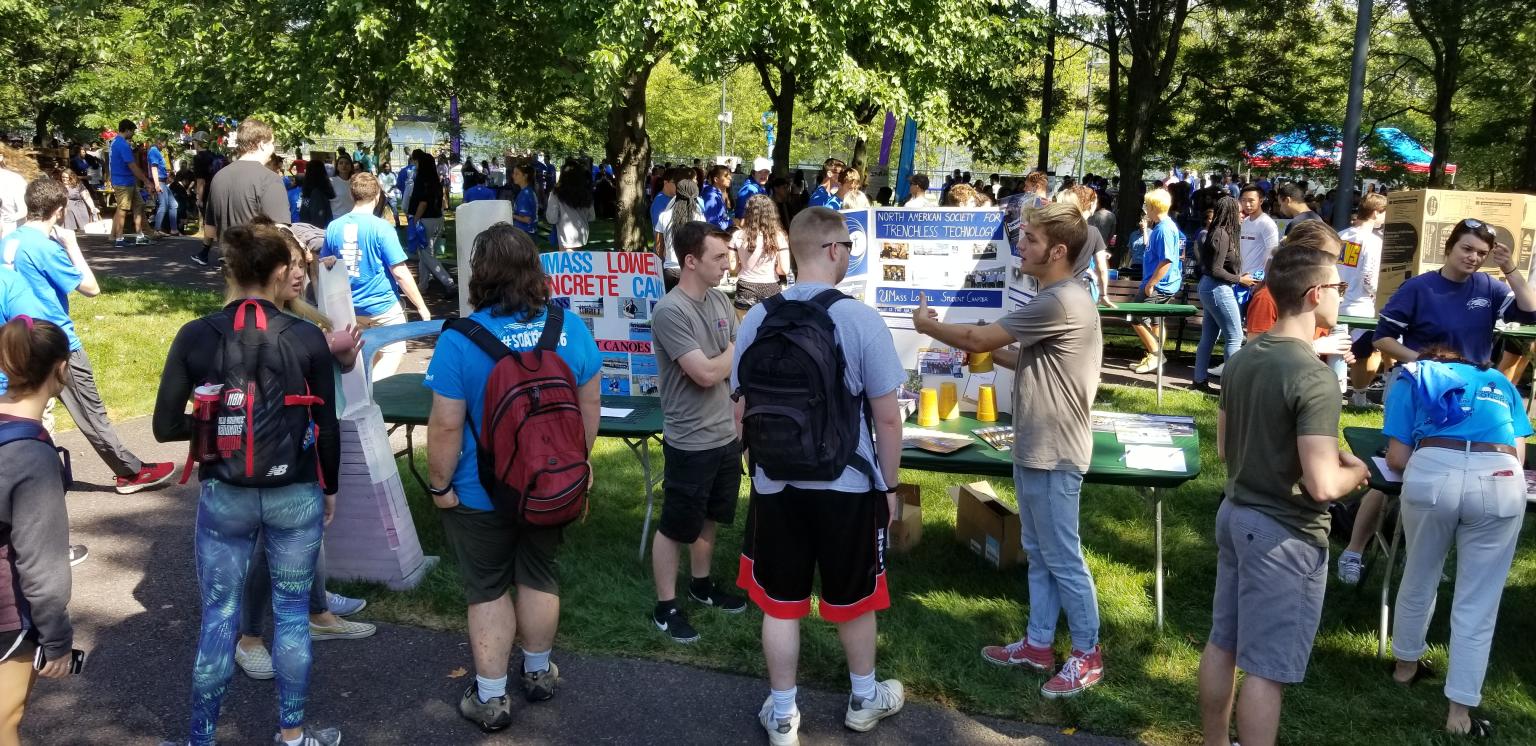
 Recently the NASTT Student Chapter at UMASS Lowell participated in the school’s annual campus club recruiting event. They had a table at the event outlining what the student chapter does and why trenchless matters. These students are passionate about growing interest in the trenchless industry!
NASTT volunteer instructor and “Trenchless Guru” (yep, that’s his X handle!), Dennis Doherty, is very involved with the students at UMASS Lowell and volunteers his time to mentor these future trenchless champions. Dennis is the National Practice Leader of Trenchless Technologies at Haley & Aldrich. Dennis said, “Get involved with our students. They are our future”. We couldn’t agree more!

Industry News, trenchless people, trenchless projects
When contractors provide estimates that include a sewer bypass, accuracy is essential—each project is unique, and accounting for these nuances is critical to maintaining margins. Failure to plan on the front end may lead to an influx of change orders and a big hit to the bottom line. Damages could go further than money alone: An estimating mistake might lead to a sanitary sewer overflow (SSO). Following an SSO, you can expect large sums for cleanup and DEQ penalties, along with negative PR and a ripple effect that could impact future projects.
Before submitting a bid, it’s critical to cover all the bases and avert potential problems on the job. The following lessons learned can help contractors avoid estimating mistakes, win bids, and complete projects at a profit—and without visits from the DEQ.
Lesson 1: Take a bottom-up approach to estimating.
Often estimators have little choice but to use unit costs, like cost per foot of pipe, for an estimate. But that doesn’t eliminate the need to check the latest prices. Inserting the cost from the last project without checking it seldom produces a safe number. Even if a job appears to be the same size and complexity as a previous project, treat every job individually and get a current price for every item.
Lesson 2: Always visit the project site with a knowledgeable individual.
Unforeseen site conditions are the largest contributor to project change orders and increased costs. Plans and drawings alone do not provide the information needed to route pipe, situate pumps, and manage flow for a sewer bypass. Avoiding this mistake is easy: Always visit the site with the engineer or a representative from the municipality—whoever has the most in-depth knowledge of the project. The sewer bypass subcontractor should also attend to explain the capabilities, as well as the limitations, of the pumping system. Consulting with the entire team will help ensure a solid quote for that portion of the contract.
Lesson 3: Insist on backup detail for subcontractor quotes.
Contracting firms often use subcontractors to design a sewer bypass for a larger project. Even if the subcontractor has complete confidence in the system as designed, never take their word that it will handle the sewer bypass flow for the cost they plan to charge. Instead, request the engineering calculations and system drawings, and then ask the design engineer to review them. Based on the information the subcontractor provides, the scope of equipment, system layout, and performance should be clear.
Lesson 4: Do due diligence on labor costs.
Labor costs often comprise the largest portion of a sewer bypass budget. Costs for prevailing wage and certified payroll add up quickly. Different project conditions can impact labor costs significantly, even for the same task. For example, a team working on a city street with heavy traffic may install less bypass piping each day than one working in an open field. Therefore, it’s critical to examine labor costs in detail over the project timeline, including hours and types of labor for each task. Then, make sure your bypass subcontractor offers a firm commitment on the cost.
Lesson 5: Factor in risk and the potential for lost revenue when accepting a low bid.
Although selecting the subcontractor with the lowest bid can be tempting, ultimately the project may cost more. Never assume a subcontractor will take responsibility for problems that result from lack of experience or expertise. Instead, consider all the worst-case scenarios that could occur, such as a sanitary sewer overflow. Ensure the subcontractor can manage each and every problem that may arise. Double check contract limitations and exclusions, the safety plan, and the spill and emergency response plan. In addition to liability considerations, it’s critical to review a bypass subcontractor’s bid to ensure it is complete. Have they included enough in labor costs to complete the project? Are fuel costs included, or even tax? Low bids may leave out these important components which can result in lost profits.
Lesson 6: Review the engineering submittal with the subcontractor.
To ensure all the estimate information is correct, always review the engineering submittal against the specifications with the subcontractor to make sure it matches the information in the request for quote. As a best practice, the engineering submittal should include not only the information required within the specifications, but also all the pertinent details about the temporary pumping system. It should be clear and concise so anyone who reads it will fully understand how the system is designed, set up, and operated. It should also have all the supporting documentation such as fluid calculations, drawings, and specification sheets on the equipment being used.
Checking the engineering submittal against the specifications will help to reduce or eliminate the engineer sending the submittal back for changes. Until the submittal is approved, the job cannot go forward, so in order to keep the project on track, it’s important to cross-check the documents before sending to the engineer.
Lesson 7: Assume the cost quoted can never be modified.
Do not count on subcontractors to take responsibility for problems and resolve them in a timely manner. The contractor is ultimately on the line and will be held to the amount put in every box on every bid. To be competitive, a firm’s margins must remain as low as possible while still providing a profit. If a quote does not include every item down to the last fitting and bolt, the margin and profit will suffer. The bypass subcontractor and firm should work together to determine the right costs to put into the bid tabulation sheet. Also, to avoid being buried in unanticipated invoices, be certain to incorporate a billing schedule with the bypass subcontractor that indicates when invoices will be received and what they are for.
Abiding by these seven lessons learned should avert many potential problems that occur in sewer bypass and ensure a winning bid that leads to a profitable and successful project.
For more information, visit www.sunbeltrentals.com or call 800-736-2504.

 Northwest Boring Co. Inc. (NWB) of Woodinville, WA was subcontracted by Shoreline Construction for an emergency replacement of the City of Mill Creek’s failed 30-inch CMP stormwater pipeline that had been causing flooding in the suburban neighborhood, just north of Seattle.
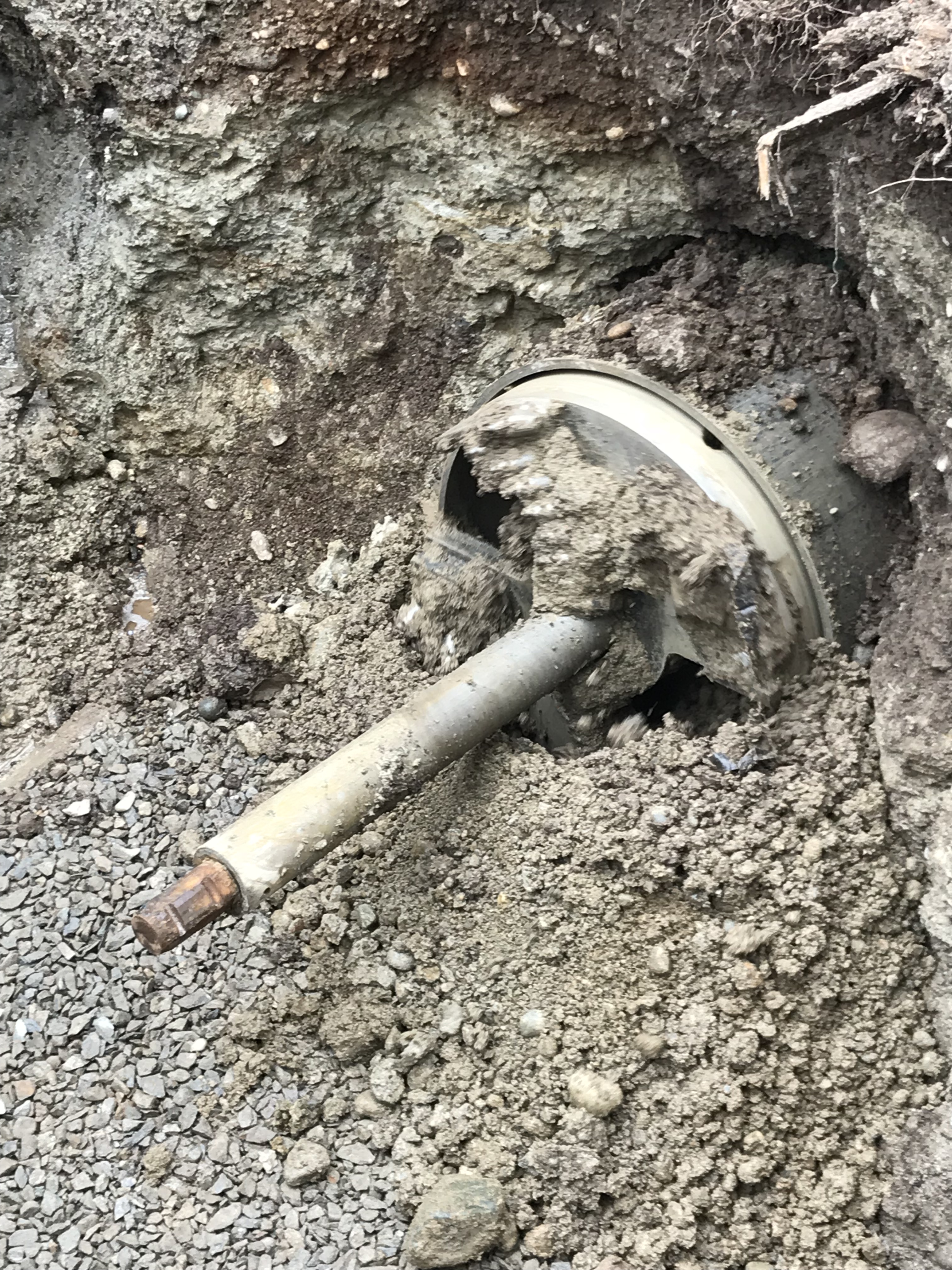 The alignments scheduled for replacement were positioned within a narrow easement between two homes at an 11-foot depth in difficult ground. With minimal real estate, the depth of installation and geological conditions, NWB knew that their guided boring system would be an ideal installation choice for the new stormwater connections.