Uncategorized
GREENVILLE, S.C.— McLaughlin has introduced a new truck-mounted vacuum excavator  series that fills a hole in the market by giving utility contractors productive potholing at an affordable package price, with the capacity and power they need to stay on the job longer.
The MEGA VX200 6-inch (15.2 cm) vacuum excavator series features spoil tank capacities ranging from 1,200 to 3,000 gallons (4,542.5 to 11,356.2 L) and a standard option of 800 gallons (3,028.3 L) of fresh water. It has a 6-inch (15.2 cm) hose diameter with a 3,200 CFM (91 m3/min) blower at 18 inches of mercury.
The tank, power pack and water system all have a modular design — versatility that allows a contractor to mount the unit on either a new or a repurposed truck chassis.
The MEGA VX200 6-inch series was designed after listening to customers who said they wanted a vacuum excavator for their potholing jobs and fluid management needs that fills a gap between smaller trailer-mounted vacuum excavators and the largest truck-mounted units.
“It has really been the customers who have shaped the specifications of this vacuum excavator,” says Jeff Wage, McLaughlin vice president. “The MEGA VX200 will help them be more productive and, with the options for spoil tank capacity, stay on the job longer while reducing time away from the jobsite dumping spoils. It also has the reliability they need and is supported by the extensive Vermeer global dealer network.”
The MEGA VX200 6-inch series is powered by a 200-horsepower (149 kW) John Deere Tier 3 engine.
The MEGA VX200 features the McLaughlin industry-exclusive 3-stage cyclonic filtration system that allows for both wet and dry vacuum excavation while prolonging filter life and helping to keep maintenance costs low.
Additionally, the McLaughlin patented cam-over hydraulic rear door provides a 360-degree positive seal, without additional clamping requirements to keep fluids securely in the debris tank. No components are inside the tank, so maintenance is external.
The MEGA VX200 6-inch (15.2 cm) vacuum excavator will be available this fall through the Vermeer global dealer network.
For more information on McLaughlin products and services, visit www.mclaughlinunderground.com or email McLaughlin at mmole@mightymole.com.
For over 85 years, McLaughlin has been actively involved in the drilling tool industry. During that time McLaughlin has developed a reputation for designing and building dependable, low maintenance trenchless construction equipment. McLaughlin takes pride in providing solutions for OEMs and the underground industry.
© 2015 McLaughlin Group, Inc.
All Rights Reserved.
Please send all reader inquiries to:
McLaughlin Group, Inc.
2006 Perimeter Road
Greenville, SC 29605
Please send all sales inquiries to:
Uncategorized
Release Date: 10/22/2015
Contact Information: Emily Bender, EPA Region 1, 617-918-1037, bender.emily@epa.gov
The Long Island Sound Study has released a new Comprehensive Conservation and Management Plan for restoring and protecting the Long Island Sound, setting 20 ambitious targets to be achieved by 2035. Among these goals are: a reduced number of beach closures due to sewage pollution; a reduced area of the Sound with unhealthy oxygen levels; improved water clarity; restored coastal wetlands; increased open space; and a reduction in the amount of plastic marine debris in the Sound. This plan builds on the successes of the original 1994 CCMP by incorporating scientific and technological advances, incorporating the current needs of Sound communities, and addressing new environmental challenges, while emphasizing sustainability, climate change resilience, and environmental justice.
In addition to being a critical environmental and ecological resource for the region, the Long Island Sound and its watershed is a critical economic driver, providing tens of billions of dollars in estimated annual economic goods and services annually.
“This CCMP update builds on the progress made to date and provides an action plan for 21st century challenges, said EPA New England Regional Administrator Curt Spalding. “This plan outlines action on climate change impacts and pollution management. It is important that the plan makes sustainability and resiliency an integral part of achieving a cleaner, healthier Long Island Sound for people to enjoy.”
“Hurricane Sandy changed forever how we think about our coasts and coastal communities,” said Judith A. Enck, EPA Region 2 Administrator. “The plan highlights that actions can be taken to adapt to climate change, making Long Island Sound healthier and our communities and economy more resilient.”
“People from all over this region enjoy the use and beauty of Long Island Sound and benefit from its resources thanks in part to the dedication of those who took action in 1994 to create and adopt a plan to restore and protect it from the impacts of 300 years of human development,” said Robert Klee, Commissioner of Connecticut’s Department of Energy and Environmental Protection (DEEP). “It is now our obligation to make certain we leave a Sound that future generations are able to enjoy and benefit from as well. The new Long Island Sound CCMP builds on the successes we have achieved, details new present day initiatives and sets goals for the future. Key areas of focus in the plan will empower us to meet the challenges like climate change, and continued land use and development pressures, in order to ensure the future of this precious resource.”
“Long Island Sound is an important ecological and economic treasure, and the new CCMP provides a strong blueprint for all partners to follow in keeping it on the road to recovery,” said Marc Gerstman, Acting Commissioner of the New York State Department of Environmental Conservation. “New York State remains committed to advancing this ambitious agenda, and we look forward to working with our federal, state and local partners to build on the successes we’ve achieved over the last 20 years and utilize our best available science to tackle the emerging threats of climate change, nitrogen pollution and habitat loss that face this incredible ecosystem.”
The new CCMP includes 20 targets for the Long Island Sound, to be achieved by 2035. These include:
• Reducing beach closures due to sewage by 50%.
• Reducing areas of water with unhealthy oxygen levels by about 28%.
• Improving water clarity to support eelgrass.
• Increasing the area of natural vegetation within 300 feet of all streams and lakes in New York and Connecticut to 75%.
• Restoring 3,000 acres of coastal habitat by 2035.
• Conserving an additional 4,000 acres of open space in Connecticut and 3,000 acres in New York.
• Reducing the five-year average of marine debris collected from the sound by more than 300 pounds per mile surveyed.
Sponsored by the U.S. Environmental Protection Agency, the Connecticut Department of Energy and Environmental Protection, the New York State Department of Environmental Conservation, as well as nonprofit and community groups and businesses, the Long Island Sound Study partnership first released a Comprehensive Conservation and Management Plan in 1994. Implementation of that plan in the past 20 years has yielded tangible results.
• Under an innovative, bi-state program to reduce nitrogen pollution, there are now 40 million fewer pounds annually of nitrogen discharged from wastewater treatment facilities to Long Island Sound. In summer 2015, the area of the Sound affected by unhealthy levels of dissolved oxygen was the second smallest recorded in 28 years.
• More than a million gallons of recreational boat sewage are kept out of the water each year by the ‘No Discharge Zone’ for vessel waste in Long Island Sound, which was established by Connecticut and New York.
• The area of eelgrass beds, an important habitat for fish and shellfish, has increased by 29 percent between 2002 and 2012.
• Restoration of 1,650 acres of habitat, and the reopening of 317 miles of river and stream corridors to fish passage since 1998. Since 2006, Long Island Sound Study partners have protected 2,675 acres of open space and coastal habitat through easements and land acquisitions.
The CCMP was developed through a collaborative process involving federal, state and local governments, university scientists, and interested representatives of business, environmental, and community groups. The plan was finalized after careful consideration of 250 comments from the public on a draft version released in late 2014. Information on the Comprehensive Conservation and Management Plan is available at http://www.longislandsoundstudy.net/CCMPinfo.Visit www.longislandsoundstudy.net for general information on the Long Island Sound Study.
What they are saying about the Long Island Sound CCMP:
For our economy and environment, the Long Island Sound is our region’s most precious natural resource. Protecting and restoring its priceless waters and habitats is of utmost importance. Over the last 20 years, the Comprehensive Conservation and Management Plan has resulted in significant reductions in nitrogen levels and sewage and surface pollutants while restoring valuable habitats. Work is far from over, and the Sound continues to face new and old challenges, from rising sea levels to algae blooms. This latest plan is appropriately ambitious—building on past success and pushing forward with new, and much needed conservation and management efforts. I applaud the Environmental Protection Agency for its direction, and look forward to working together to protect the Sound for generations to come.
–Senator Richard Blumenthal, Conn.
My two young boys spend every summer along the shore of the Long Island Sound. For the families like ours who work and play along the Sound, this conservation plan is welcome news. By using proven science and technology to strengthen the Sound’s resiliency against extreme weather and environmental changes, these new efforts will go a long way to protect and preserve one of Connecticut’s most valuable natural resources.
–Senator Chris Murphy, Conn.
Long Island Sound has always played a critical role in our regional economy and ecosystem, and it is a treasure worth preserving for future generations. For over two decades, the Comprehensive Conservation Management Plan has united local, state, and Federal partners to manage our region’s largest estuary most effectively, and I hope to see the 2015 plan adopted swiftly to continue this legacy.
–Congressman Joe Courtney, Conn.
The Sound has always been of special importance to the people and communities of the 4th District. It’s where we live, work, and play and touches almost every aspect of our lives. Restoring the health of ecosystems around the Sound is not something we’re going to be able to achieve in a year, or even five years; it’s going to take dedicated long-term effort. That’s why I’m supportive of the Comprehensive Conservation and Management Plan, which takes the long view and lays out a detailed and thoughtful blueprint of how we can improve the vitality of the Sound for decades to come.
–Congressman Jim Himes, Conn.
The Long Island Sound is a regional and a national treasure, as well as a critical economic, recreational and environmental resource. This Comprehensive Conservation Management Plan will help us ensure its protection and preservation, and play an important role in leading us to a more resilient and healthy sound. As co-chair of the Congressional Long Island Sound Caucus, I will continue to fight for the funding needed to carry out the plan, and continue the restoration and protection of this ecosystem so that generations of Americans can continue to enjoy it.
–Congresswoman Rosa DeLauro, Conn.
The Long Island Sound supports a vibrant ecosystem and drives much of our region’s economy. It is imperative that we continue efforts to preserve both the Sound itself and the surrounding watershed for the good of our environment, economy, and generations to come. I commend the EPA for leading the effort to ensure we protect and preserve the Sound from natural and man-made threats.
–Congressman John Larson, Conn.
Over ten percent of our nation’s population lives within this 1,320-mile watershed. The Long Island Sound’s economic impact in Connecticut and across six states is critical—contributing nearly $10 billion to our economy each year. However, development along the shore has degraded the Sound’s ecosystem health. As a member of the U.S. House Long Island Sound Caucus, I wholeheartedly support the Comprehensive Conservation Management Plan, which will go a long way in restoring this unique and valuable ecosystem. This plan will ensure Long Island Sound’s unique ecological, economic, and recreational value is not lost on future generations.
–Congresswoman Elizabeth Esty, Conn.
This plan is a blueprint for action to make our beaches safe for swimming, and restore healthy waters for fish and wildlife. It’s time to move from blueprint to action.
–Curt Johnson, Conn. Co-chair of LIS Citizen Committee
As Co-chair of the Long Island Sound Caucus, my top local economic and environmental priority in Congress has been to protect and preserve the Long Island Sound. This updated comprehensive plan identifies achievable and bold goals that will ensure the health and sustainability of the Sound for future generations of New Yorkers.
–Congressman Steve Israel, New York
The effects of climate change are already being felt at home in our communities. Storms like Hurricane Sandy have exposed the grave threat our warming planet poses to the Sound Shore region, and unless we take a more proactive approach to preserving our shorelines, we will be left constantly fighting an uphill battle. The Long Island Sound is a precious resource, and I support the ambitious goals outlined in the Comprehensive Conservation and Management Plan, which if met, would make the Sound cleaner and more resilient for generations to come.
–Congressman Eliot Engel, New York
Long Island Sound deserves a modern management plan to address the modern problems of climate change, habitat loss, and sustainability. This updated plan will help all levels of government, organizations and the public to restore Long Island Sound and protect our communities.
–Nancy Seligson, New York Co-chair of LIS Citizen Committee
Uncategorized
NASTT turns 25 in 2015! What was happening 25 years ago?
On October 19, 1990, “Dances with Wolves” directed by Kevin Costner and starring Kevin Costner and Mary McDonnell premieres in Washington, D.C. It would go on to win the Academy Award for Best Picture in 1991.
Also, on October 19, 1990, a remake of the zombie classic, Night of the Living Dead, was released in theaters.
On October 21, 1990, The Plains of Passage by Jean M. Auel was a New York Times best selling book. This book told the story of the experiences of a couple on a trek on horseback across Europe in the Ice Age.
Check in every Friday in 2015 when NASTT posts more facts about 25 years ago…
Uncategorized
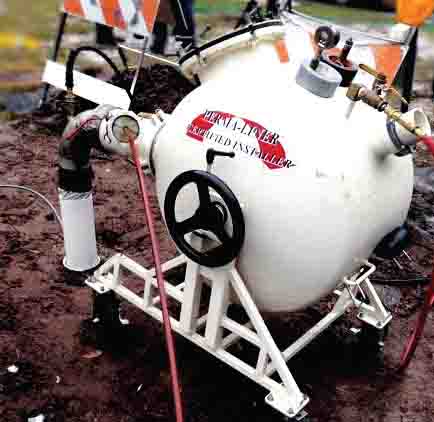
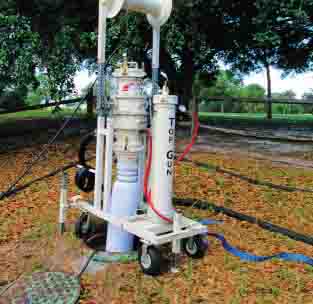
Perma-Liner Industries, LLC is hosting an open house in Clearwater, Florida, November 10-12, 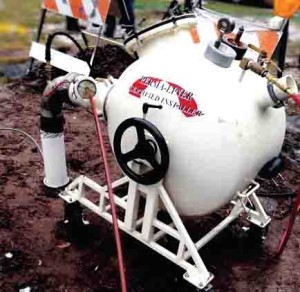 featuring live trenchless pipe repair demonstrations. The installations will be demonstrated in live municipal utilities. Take advantage of one-on-one time with Field Technicians, Sales and Marketing representatives.
DEMONSTRATIONS: Continuous Lining Top Gun F-6 & Top Gun F-10, Perma-Lateral™ Lining with Steam and Hot Water Cure, Sectional Point Repair, Pull In Place, Reinstatement Cutters, Cleanout Installation System, Manhole Rehabilitation… and more!
CHRISTMAS IN NOVEMBER: Discounts will be announced during the event and available only to attendees during the 3 day event.
FINANCING: Zero Down, No Payments for 90 Days. Let us show you how to pay for your equipment in 3-4 months! Get pre-approved before the show.
SPECIAL FEATURE: New Technology to be demonstrated exclusively for attendees!
REGISTERED? Call 1-866-336-2568 to confirm your reservation.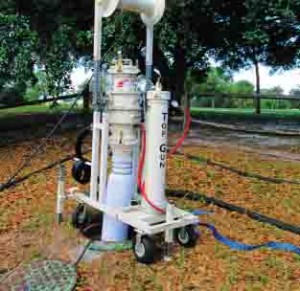
Enter to win an LG TV to be raffled off on November 12 (must be present to win)!
Uncategorized
WASHINGTON, DC — The U.S. Environmental Protection Agency (EPA) recognized the 2015 WaterSense award winners for creating, rebating, communicating and educating consumers about WaterSense-labeled products, homes and programs. These 17 winners and more than 1,700 other WaterSense partners have helped Americans save 1.1 trillion gallons of water and $21.7 billion in water and energy bills since 2006.
WaterSense announced the 2015 Sustained Excellence Award winners, Partners of the Year, and Excellence Award winners today at the WaterSmart Innovations Conference and Exposition in Las Vegas, Nevada.
“EPA is proud to honor these WaterSense partners for making a difference every day in communities across the country,” said Ellen Gilinsky, EPA Office of Water Senior Policy Advisor. “With pervasive droughts on the West Coast and Puerto Rico and water shortages expected in many other parts of the country, these leaders show how water efficiency can make the country more resilient to the effects of our changing climate.”
EPA’s WaterSense program protects the future of our nation’s water supply by offering people a simple way to use less water with water-efficient products, new homes and services. In helping preserve water resources, the important work of the WaterSense program supports the goals of EPA’s Clean Water Rule. Also, because saving water also saves energy, the program supports EPA’s Clean Power Plan, which will help communities save energy and reduce greenhouse gas emissions.
2015 Sustained Excellence Award Winners:
Kohler Co. received the WaterSense Sustained Excellence Award for the third consecutive year for its efficiency efforts in drought-affected areas. These efforts included partnering with The Home Depot in California to offer special promotions on WaterSense labeled products, as well as supporting the Johnson Foundation’s Charting New Waters Initiative to protect water resources across the country. Kohler also promoted WaterSense labeled products at nearly 200 events in 2014 with its “Trust the Flush” bus tour.
Delta Faucet Company earned its first WaterSense Sustained Excellence Award for promoting water efficiency and WaterSense labeled products. Delta collaborated with global hotel chains on studies targeting water efficiency improvements in hotels; worked with major retail chains to develop strategic plans for marketing WaterSense labeled products; and created internationally recognized WaterSense labeled faucets and a smart toilet.
The Home Depot, a three-time Retailer Partner of the Year, received its first Sustained Excellence Award for the significant WaterSense awareness it generated through in-store promotions, information on its own website, and online advertising campaigns, resulting in 518 billion media impressions. For Fix a Leak Week 2014, The Home Depot led a national water efficiency campaign and gave away household kits with WaterSense labeled products.
KB Home was recognized with a WaterSense Sustained Excellence Award for its continued work building WaterSense labeled homes, for which it previously earned Builder Partner of the Year for four years. In addition to building nearly 100 WaterSense labeled homes in 2014, KB Home also constructed model homes in California featuring innovative water-efficient products, along with graywater recycling systems that provide water for toilet-flushing or landscape irrigation.
2015 Partners of the Year:
Promotional Partner of the Year: The City of Charlottesville (Virginia) promoted WaterSense labeled products through a variety of outlets in 2014, including its annual Fix a Leak Week Family 5K race, the Virginia Discovery Museum’s Kid*Vention event, Charlottesville’s Local Energy Alliance Program, and a new “Blue Team” of high school students who distributed water conservation kits door-to-door.
Promotional Partner of the Year: Cobb County (Georgia) Water System’s promotion of every major WaterSense outreach campaign—including the H2Otel Challenge, Shower Better Month, Sprinkler Spruce-Up, and Fix a Leak Week—resulted in its fourth WaterSense Promotional Partner of the Year award. For example, during Shower Better Month in 2014, the utility gave 3,600 WaterSense labeled showerheads to retrofit all of the dormitory restrooms at Kennesaw State University.
Promotional Partner of the Year: Murray City (Utah) Corporation’s Tap Into Murray Quality campaign featured traditional media, along with a traveling event booth, to promote WaterSense labeled products and water-efficient practices to community members. The city also marketed its WaterSense labeled toilet rebate program with the help of local plumbers and plumbing suppliers.
Promotional Partner of the Year: Texas A&M Agrilife Research and Extension Center at Dallas used a Mobile WaterSense Home and dual-flush toilet and irrigation controller demonstrations to educate consumers about WaterSense labeled products at regional events. The Center’s successful Find It, Flag It, Fix It campaign helped homeowners identify irrigation system leaks for Fix a Leak Week 2014.
Manufacturer Partner of the Year: The Toro Company focused on educating contractors and end users about properly installing and programming its WaterSense labeled irrigation controllers through partnerships with water agencies and the Irrigation Association’s regional chapters and distributors.
Licensed Certification Provider Partner of the Year: Energy Inspectors Corporation certified 100 WaterSense labeled new homes in 2014 and continued working with KB Home to build even more communities of WaterSense labeled homes. The company also kept its inspectors’ knowledge current through creation of an online training video on the WaterSense indoor and outdoor criteria for homes.
Professional Certifying Organization Partner of the Year: The Sonoma-Marin (California) Saving Water Partnership, which sponsors the Qualified Water Efficient Landscape (QWEL) professional certification program, accepted four organizations that adopted the QWEL program and certified 200 new irrigation professionals in 2014. The partnership also updated and promoted a graywater training module.
Six Excellence Awards were also given to partners for their efforts in specific WaterSense program areas:
Learn more about the 2015 Sustained Excellence Award winners, WaterSense Partners of the Year, and Excellence Award winners at www.epa.gov/watersense.
Uncategorized
ULC’s Robotic Technology for the Repair and Rehabilitation of Cast Iron Gas Mains is Recognized as a Leading Robotics System in Construction, Mining and Energy by Robotics Business Review
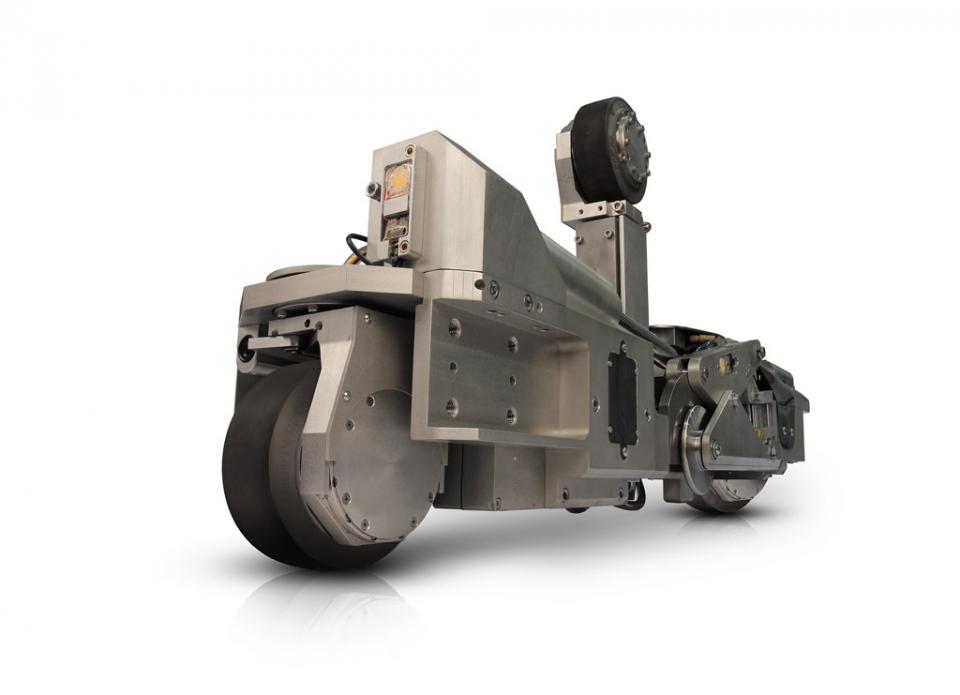
HAUPPAUGE, N.Y., October 5, 2015 – ULC Robotics, Inc. was recognized by Robotics 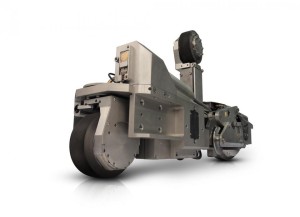 Business Review as a Game Changer Award winner in the Construction, Mining and Energy category for the company’s innovative CISBOT (Cast Iron Joint Sealing Robot) Robotic System. The award recognizes CISBOT for its ability to efficiently rehabilitate large diameter cast iron gas mains with minimal excavation, minimal disruption to the public and without the need to disrupt gas service to local residents and businesses.
“ULC is honored and excited to be recognized as one of Robotics Business Review’s Game Changer Award winners,” said Gregory Penza, president and CEO, ULC Robotics, Inc. “With the support of our customers we have been able to make CISBOT a very successful commercial operation and we will continue to develop game changing robotic systems to aid in solving difficult operational and environmental challenges facing the natural gas and energy industries.”
CISBOT operates underground through one small excavation to repair and reinforce joints in cast iron pipelines. CISBOT is revolutionizing the way gas utilities in the US and UK are maintaining these vital assets. The robotic system’s small site footprint and ability to work with virtually no excavation nearly eliminates the public disruption often associated with traditional pipeline repair or replacement. Residential and business gas customers appreciate CISBOT because gas service remains turned on during the procedure.
CISBOT was chosen as a Game Changer by a panel consisting of Robotics Business Review and Robotics Trends editors as well as by distinguished experts from the International Journal of Advanced Robotics Systems (IJARS). Products were judged based on standout attributes, design, functionality, impact and overall benefit to the robotics industry.
To view CISBOT’s Game Changer Award submission and see all Game Changer Award winners please visit www.roboticsbusinessreview.com.
About ULC Robotics, Inc.
ULC Robotics, Inc. is a leader in developing and deploying innovative technology and processes that help pipeline operators and energy companies repair, inspect and assess their infrastructure. The deployment of ULC Robotics’ range of products and services helps to eliminate costly and disruptive excavation while eliminating gas leaks, reducing greenhouse gas emissions and improving efficiency. Both ULC Robotics and their clients have shared accolades for developing some of the most innovative products in the energy industry. Recognition includes a Robotics Business Review 2015 Game Changer Award in Construction, Mining and Energy, 2014 Energy Innovation Award for enabling gas utilities to deliver a safe and reliable supply of energy to customers and inclusion on the 2014 Top 50 Global Robotics Companies by Robotics Business Review. For more information on ULC Robotics, Inc. and its products and services please visit www.ulcrobotics.com
Uncategorized
NASTT turns 25 in 2015! What was happening 25 years ago?
On October 11, 1990, Octavio Paz won Nobel Prize for literature.
On October 14, 1990, SF 49er Joe Montana passed for six touchdowns vs Atlanta (45-35).
On October 17, 1990, Green Day singer Billie Joe Armstrong dropped out of school to pursue a career in music.
Check in every Friday in 2015 when NASTT posts more facts about 25 years ago…
Uncategorized
By Erin Boudreaux, marketing manager, Hobas Pipe USA
In the United States an irrigation district is a cooperative, self-governing public corporation set up as a subdivision of the State government, with definite geographic boundaries, organized and having taxing power to obtain and distribute water for irrigation of lands within the district. It is created under the authority of a State legislature with the consent of a designated fraction of the landowners or citizens. Washington State Water Resources Association (WSWRA) is the coordinating agency for the irrigation districts in Washington State. It includes 35 irrigation district members covering 1.1 million irrigated agricultural acres. 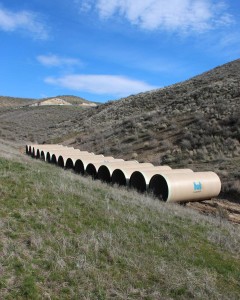
Naches-Selah Irrigation District (NSID) encompassing 11,000 acres located in north Yakima County, Wash. It is near the towns of Naches and Selah and it serves over 1,700 landowners. The Naches River is a tributary of the Yakima River in central Washington and it is about 75 miles long. After the convergence of the Little Naches and Bumping River the name becomes the Naches River. The Naches and its tributaries drain a portion of the eastern side of the Cascade Range, east of Mount Rainier and northeast of Mount Adams. In terms of discharge, the Naches River is the largest tributary of the Yakima River.
Selah Valley Canal (NSID’s Main Canal) was put into operation in 1892. As with many older systems, replacement was required as the facilities had passed their useful life and continued maintenance and repairs could not guarantee reliable operation. Also, the manually controlled canal system made it a challenge to operate. Selah Valley Canal includes 8,000 feet of wood flumes which are nine feet in diameter as well as concrete canals. Repairs up to this point have included approaches such as placing plywood sheeting over the leaking wood stave flumes. In other cases, where the flumes collapsed, the time required to fix them could be around two weeks. During the watering season, any disruption could be damaging to the crops.
The 2015 Main Canal Flume Replacement and Other Canal Improvements Project was the most recent phase toward the overall modernization and improvement plan. This project has a cost of around $7 million. Between 1910 to1956 the original materials installed in 1892 were improved to the existing wood and concrete facilities and this new phase is an improvement to them.
Replacement of the wood flume trestles was included in the 1995 Comprehensive Water Conservation Plan and again in the 2007 Modernization Plan. The amount of $9 million in capital improvements was completed during 2005 to 2014. “Improvements included canal lining, replacement of some wooden flumes, replacement of wood pipe and open canals with gravity pressurized pipe networks, modern pressurized farm deliveries and canal automation,” said Justin Harter, district manager, Naches-Selah Irrigation District.
The topography of NSID’s service area provides 200 to 300 feet of fall (available head pressure). Deliveries range from minimal pressure up to 40 to 90 PSI depending on the elevation difference from the canal that flows into the pipe networks. Over 3,000 acres have eliminated their need to pump resulting in a power cost savings.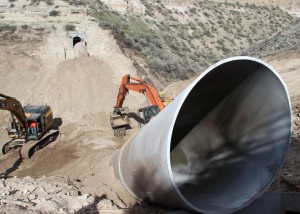
The replacement of 4,600 feet of wood flumes was completed along with 2,800 feet of canal lined with concrete. The wood flumes were replaced with 3,600 feet of centrifugally cast, fiberglass-reinforced, polymer mortar (CCFRPM) pipe with the remaining footage converted into sections of concrete lined canal. The concrete canal sections include a polyethylene lining that is placed under the reinforced concrete that prevents leakage. Hobas Pipe USA supplied 96-inch diameter CCFRPM pipe with a stiffness class of 36 psi.
“A number of pipe materials were considered. Steel pipe required maintenance of coatings with potential to require coating replacement in 50 years or less to manage corrosion. Although higher in initial costs, non-ferrous pipes provide a lower overall cost with a longer lifespan and less maintenance. Hobas was one of the few pipes that could meet the project schedule and performance criteria,” said Harter. Hobas was not intentionally sole sourced, but the higher specification requirements limited competition.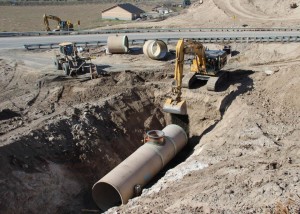
Tapani, Inc. of Battle Ground, Wash., began construction in November 2014 and was finished before the April 1st season start. There is limited time between October and April when the canal is not flowing. “This project had a very tight schedule to meet in order to supply water to the local farms for the 2015 growing season,” said Aaron Halling, project manager, Tapani, Inc.
There were eight wood trestles from heights of five to 75 feet and draws of 20 to 500 feet wide. In this case, a trestle is a rigid frame used as a support, especially referring to a bridge composed of a number of short spans supported by such frames. Many wooden roller coasters are built using design details similar to trestle bridges.
Other sections of wood flume were on grade, resting on existing soils that were leveled 80 or more years ago. “The 96-inch pipe was installed on grades as steep as 50+% and the existing access roads had to be widened in order to get the pipe to the place of installation. Access was limited and delivering to the further locations with off-road equipment took over a half hour per piece of pipe,” said Halling. 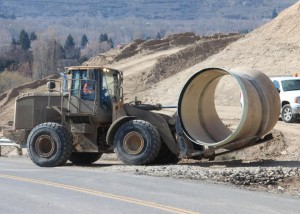
Wood stave flume trestles were replaced with inverted siphons. The large inverted siphons are used to convey water being carried in canals or flumes across valleys for irrigation. With no pump, they are powered by the fall of the water as it flows down the pipe under the pull of gravity, and discharged at a level lower than the surface of where it originated.
The pipe provided to Tapani included factory assembled FWC couplings. Useful for direct bury applications, the FWC coupling is a structural filament wound sleeve overwrapped and mechanically locked to an internal full-face elastomeric membrane. “We faced challenges, but the project was still an overall success and the pipe performed well,” said Halling.
Hobas manufactures pipe in sizes from 18 inches to 126 inches in pressure and non-pressure classes. For more information, please contact Hobas at 800-856-7473, 281-821-2200 or e-mail at info@hobaspipe.com. Facts are also available at www.hobaspipe.com.
Photos information:
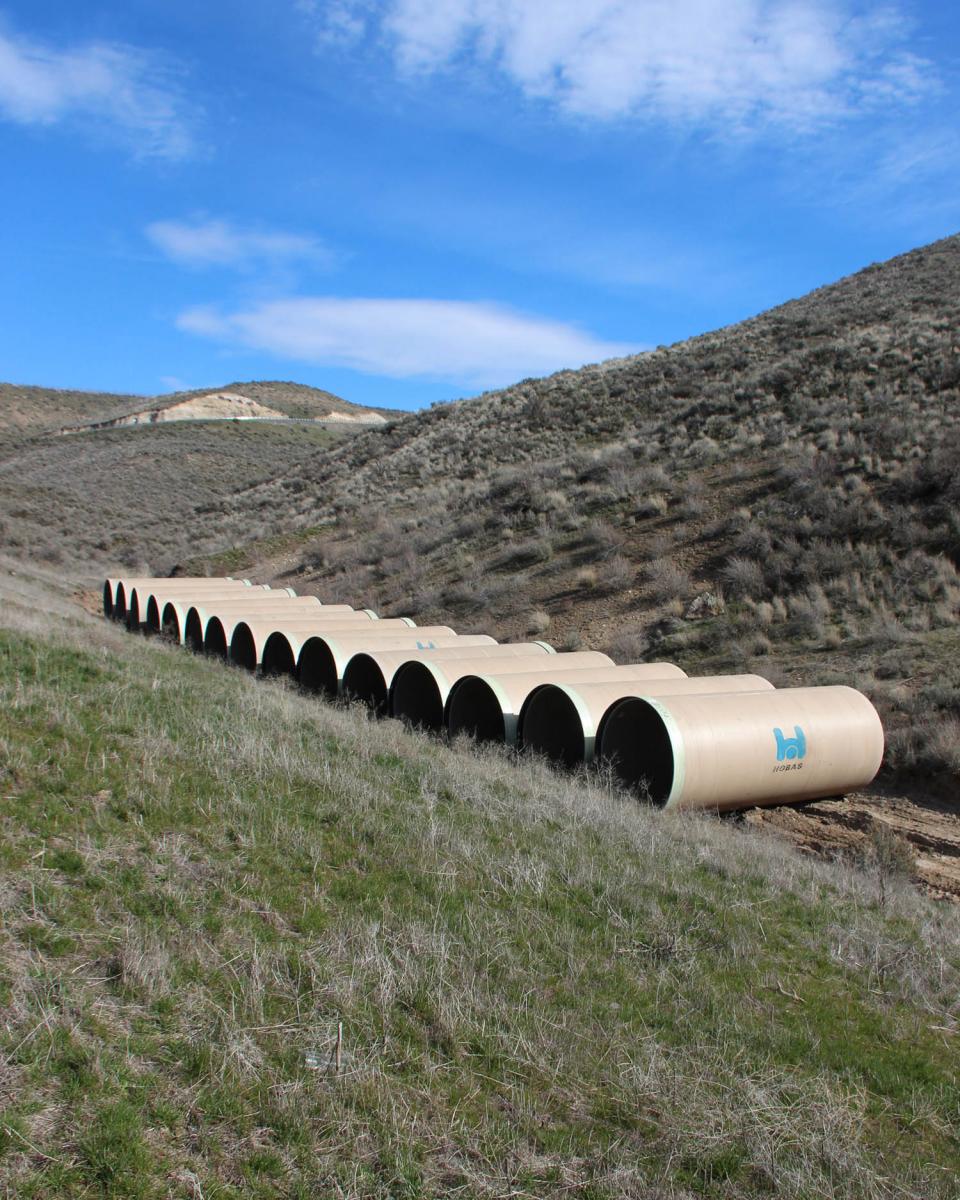
Hobas – pipes in a row.jpg
Light weight and easy to handle, the CCFRPM pipe awaits installation in a remote area.
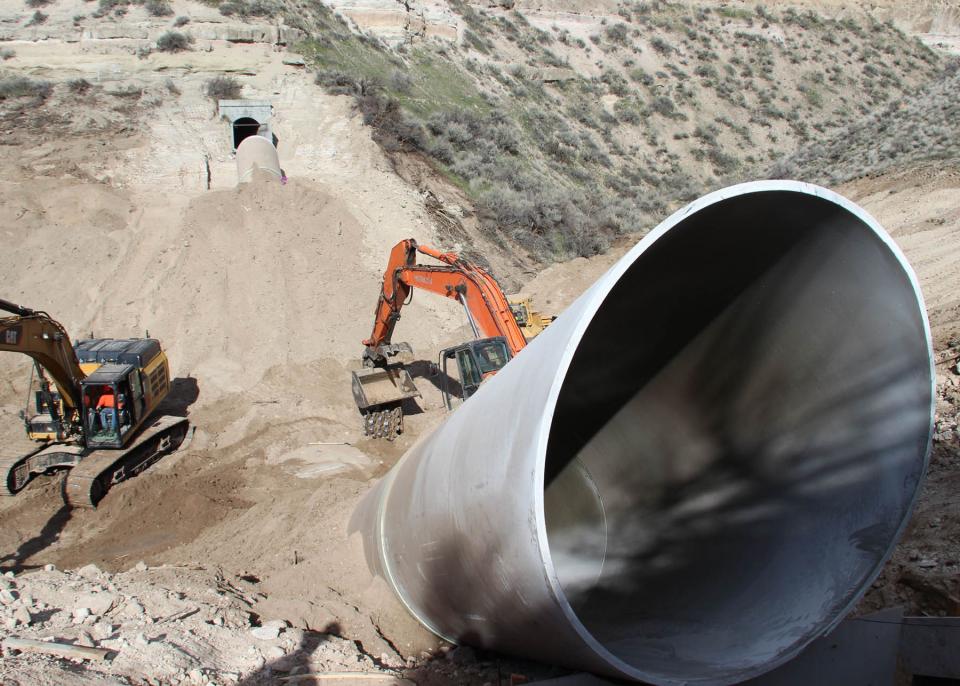
Hobas – siphon.jpg
The existing wood stave flumes were replaced with 96-inch inverted siphons made of HOBAS Pipe.
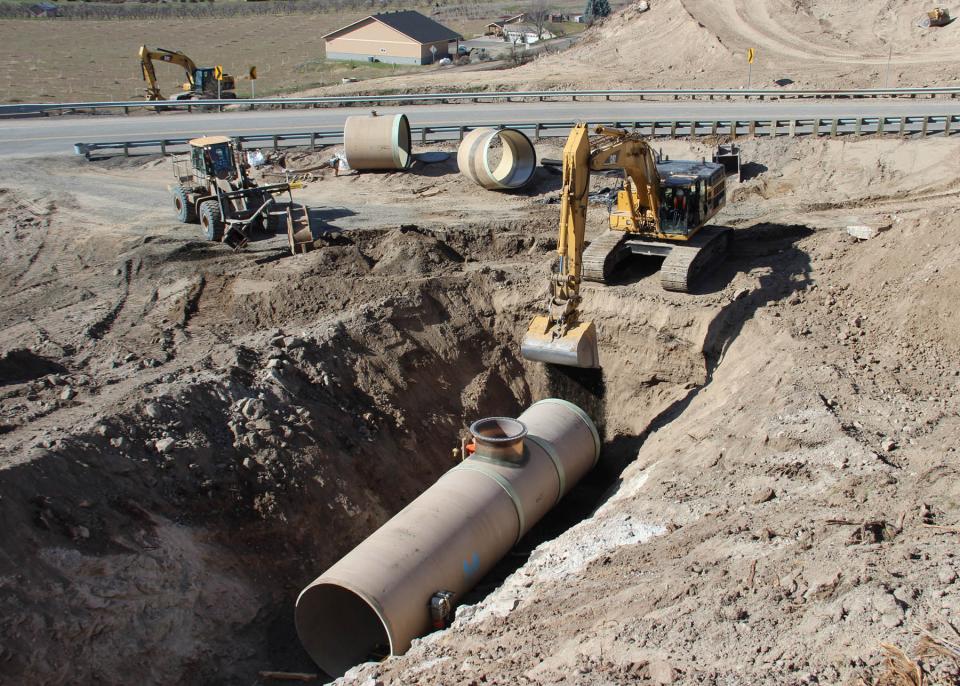
Hobas – project overview.jpg
Ease of installation allowed Tapani, Inc. to meet the project schedule in time for the start of the 2015 watering season.
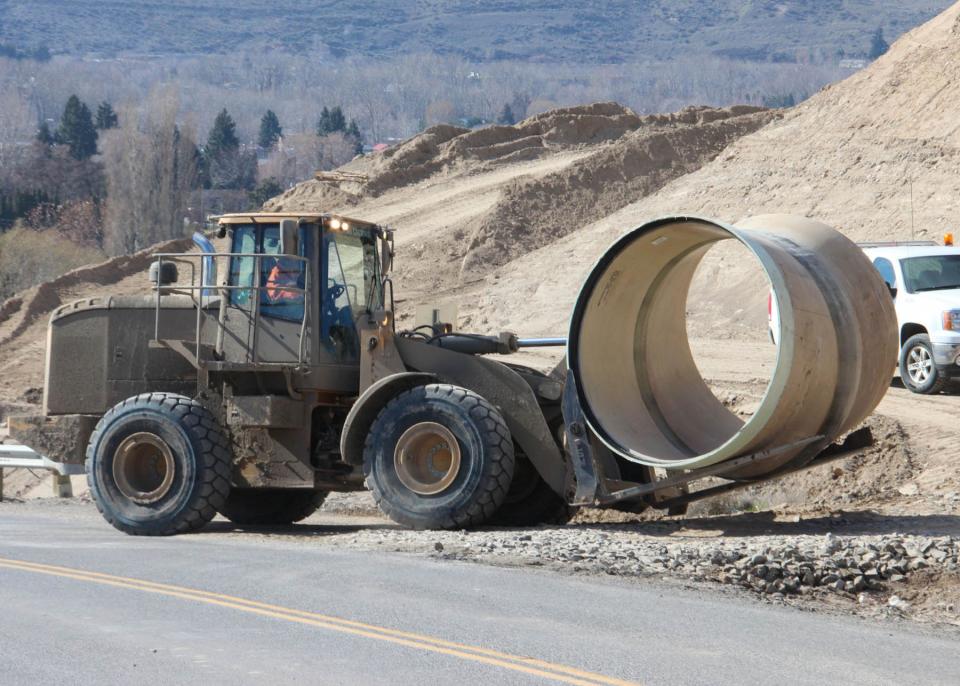
Hobas – elbow transport.jpg
Custom fittings were manufactured of the same material as the CCFRPM pipe to meet the design requirements.
Uncategorized
Geotechnical engineer and expert in trenchless technology for water and wastewater conveyance
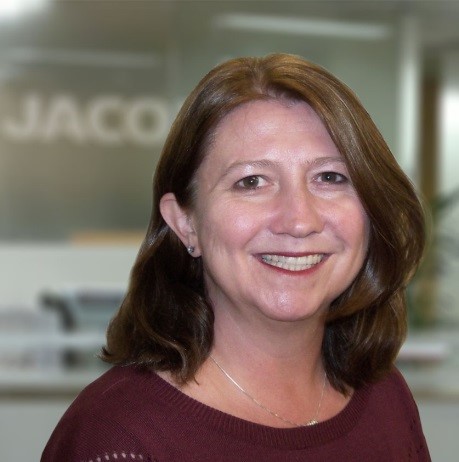
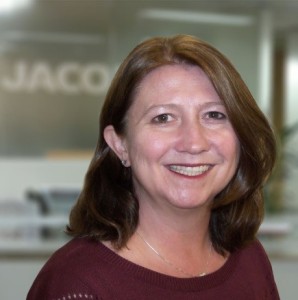 Michelle has more than 18 years of experience in geotechnical engineering, with a particular emphasis on trenchless design and involvement in the water/wastewater industry. From a young age, Michelle enjoyed playing in the dirt, solving problems, and helping people. Today, she feels fortunate to have found a career where she can continue to do all three. She brings a passion for assisting the needs of her clients and their trenchless engineering challenges. Jacobs is excited to have her on the team!
Prior to joining Jacobs, Michelle was a senior geotechnical engineer specializing in trenchless design and construction with GeoEngineers and Staheli Trenchless Consultants. Her trenchless expertise includes horizontal directional drilling, microtunneling, pipejacking, auger-boring, pipe ramming, and pilot-tube microtunneling—just to name a few. In addition to her extensive project experience, she has been active in the North American Society for Trenchless Technology (NASTT), is currently a member of the ASCE subcommittee on Trenchless Installation of Pipelines (TIPS), and is a regular presenter at national trenchless conferences.
Since joining Jacobs, Michelle has been assisting on projects across the nation. Some of the more noteworthy endeavors include:
- Two Design/Build efforts for Miami-Dade County Water and Sewer Department (MDWSD) that involve microtunnel crossings of waterways, railways, and congested intersections;
- An HDD project for a 42-inch diameter installation under the St. Johns River for JEA in Jacksonville, Florida;
- Multiple trenchless projects in Texas for the City of Temple and the City of Austin for water distribution and sanitary sewer projects; and
- The I4 Ultimate project in Orlando, where she is providing senior-level QA/QC for trenchless aspects.
Having spent most of her professional career in the Pacific Northwest, Michelle is thrilled to be able to expand her trenchless expertise to other regions. She finds it exciting to work with regional Jacobs offices that offer experience with local agencies and knowledge of local geology. Michelle is able to share her trenchless technology expertise (risks, benefits, and challenges of trenchless options) with Jacobs engineers across the nation, which ultimately provides clients and owners with the best combination of local knowledge and national experience.
For further information please contact:
Michelle Macauley – michelle.macauley@jacobs.com
Uncategorized
(10/08/15) SAN FRANCISCO— Today the U.S. Environmental Protection Agency recognized the Sonoma-Marin Saving Water Partnership, the Municipal Water District of Orange County, KB Home, Energy Inspectors Corporation, and 13 other winners as WaterSense Partners of the Year for creating, rebating, communicating and educating consumers about WaterSense labeled products, homes and programs.
EPA Region 9 is working with all levels of government, tribes, and NGOs to expand and scale-up improved and sustainable water management in response to the ongoing severe drought in the Pacific Southwest. This includes identifying tools to build long-term resiliency to future water supply shortfalls with key actions such as assisting water utilities identify and address losses from in their water distribution systems, advancing innovation in wastewater recycling, promoting stormwater capture for non-potable use and to replenish groundwater, and working with industry and consumers to conserve water through efficient fixtures and practices.
“EPA is proud to honor WaterSense partners for making a difference in drought-stricken communities,” said Jared Blumenfeld, EPA’s Administrator for the Pacific Southwest. “Our WaterSense partners are helping build stronger, more resilient water systems to meet the challenges ahead.”
WaterSense announced the 2015 Sustained Excellence Award winners, Partners of the Year, and Excellence Award winners today at the WaterSmart Innovations Conference and Exposition in Las Vegas, Nevada. By working together, these water efficiency leaders and more than 1,700 other WaterSense partners have helped Americans save 1.1 trillion gallons of water and $21.7 billion in water and energy bills since 2006.
2015 WaterSense Partners of the Year:
KB Home, headquartered in Los Angeles, Calif., was recognized with a WaterSense Sustained Excellence Award for its continued work building WaterSense labeled homes, for which it previously earned Builder Partner of the Year for four years. In addition to building nearly 100 WaterSense labeled homes in 2014, KB Home also constructed model homes in California featuring innovative water-efficient products, along with graywater recycling systems that provide water for toilet-flushing or landscape irrigation.
Energy Inspectors Corporation, located in Las Vegas, Nev., was recognized as the Licensed Certification Provider Partner of the Year for certifying 100 WaterSense labeled new homes in 2014 and its continued work with KB Home to build even more communities of WaterSense labeled homes. The company also kept its inspectors’ knowledge current through creation of an online training video on the WaterSense indoor and outdoor criteria for homes.
The Sonoma-Marin Saving Water Partnership was recognized as the Professional Certifying Organization Partner of the Year for its Qualified Water Efficient Landscape (QWEL) professional certification program. In 2014, four more organizations adopted the QWEL program and 200 new irrigation professionals were certified. The partnership also updated and promoted a graywater training module.
The Municipal Water District of Orange County, located in Fountain Valley, Calif., was recognized with an Excellence Award for its Sprinkler Spruce-Up campaign as a platform to promote and educate costumers about WaterSense labeled weather-based irrigation controllers and the importance of “sprucing up” irrigation systems.
EPA’s WaterSense program protects the future of our nation’s water supply by offering people a simple way to use less water with water efficient products, new homes and services. In helping to preserve water resources, the important work of the WaterSense program supports the goals of EPA’s Clean Water Rule. And, because saving water also saves energy, the program supports EPA’s Clean Power Plan, which will help communities save energy and reduce greenhouse gas emissions.
Learn more about the 2015 WaterSense award winners, including more information about the award winners in California and Nevada, at www.epa.gov/watersense.

 series that fills a hole in the market by giving utility contractors productive potholing at an affordable package price, with the capacity and power they need to stay on the job longer.