Uncategorized
SCHAFFHAUSEN, Switzerland, –Xylem Inc. (NYSE: XYL), a leading global water technology company dedicated to solving the world’s most challenging water issues,has launched a new YouTube channel dedicated to its Flygt brand. The new channel features informative, engaging content including a behind-the-scenes video of one of Xylem’s main factories producing Flygt branded solutions, a Flygt Experior non-clog test, service ‘how-to’ guides, product information videos and case stories demonstrating Flygt in action.
The channel aims to continuously provide customers with helpful information in an easy-to-access, entertaining manner. Country-specific playlists and local language captions offer a user-friendly experience.
“Xylem’s Flygt brand boasts a rich legacy of being at the forefront of solving water and wastewater challenges for more than 100 years,” saidVeronica Jergelind, Marketing Communications Manager for Xylem’s transport business. “Through this new channel we will share engaging digital content that demonstrates how our Flygt water and wastewater solutions solve complex water challenges around the world.”
Xylem’s Flygt brand provides customers with a complete range of products and solutions for moving water and wastewater, as well as advanced monitoring and control equipment to optimize solutions’ operation.
About Xylem
Xylem (XYL) is a leading global water technology provider, enabling customers to transport, treat, test and efficiently use water in public utility, residential and commercial building services, industrial and agricultural settings. The company does business in more than 150 countries through a number of market-leading product brands, and its people bring broad applications expertise with a strong focus on finding local solutions to the world’s most challenging water and wastewater problems. Xylem is headquartered in Rye Brook, N.Y., with 2014 revenues of $3.9 billion and approximately 12,500 employees worldwide. Xylem was named to the Dow Jones Sustainability Index for the last three years for advancing sustainable business practices and solutions worldwide.
The name Xylem is derived from classical Greek and is the tissue that transports water in plants, highlighting the engineering efficiency of our water-centric business by linking it with the best water transportation of all — that which occurs in nature. For more information, please visit www.xyleminc.com
Uncategorized
 Speedy Robbins Small Boring Unit finishes Crossing Two Weeks Early
In Bend, Oregon, USA, local contractor Stadeli Boring & Tunneling had a unique set of circumstances for a new gravity sewer interceptor. “We had a contract with general contractor Taylor NW to furnish and install 323 ft (98 m) of 36-inch (900 mm) steel casing under railroad tracks. Line and grade were very crucial, and the tolerances were very close. We had to be right on,” said Larry Stadeli, president and owner of Stadeli Boring & Tunneling. In addition to those parameters, the job was also in solid rock.
Fortunately, there was a solution available to help them. The contractor turned to The Robbins Company, a business that they had worked with many times over the years for their Small Boring Units (SBUs). Stadeli first contacted Robbins 10 years ago to rent a 30-inch standard Small Boring Unit (SBU-A), and has since rented dozens more. The company currently owns two SBU-As, but their Bend, Oregon job required precision guidance systems that their SBU-As lacked. “We met with Robbins in Ohio and told them what our needs were. They felt like their 36-inch (900 mm) prototype machine, which they had tested at one other job in Oman, would be a good fit. They listened to what we were wanting and needing to have done,” said Stadeli.
At Robbins, Kenny Clever, SBU Sales Manager, and a group of engineers were honing the prototype machine that fit the bill. Known as the SBU-RC, for Remote Controlled Small Boring Unit, the machine was equipped with a smart guidance system by TACS. The guidance system could show an operator projections of the future bore path so steering corrections could be made before the machine was ever out of line and grade. The feature was critical for the crossing below the railroad tracks, which could not be shut down if problems occurred.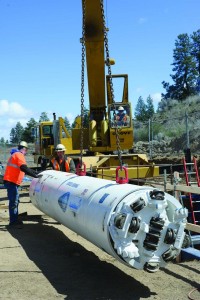
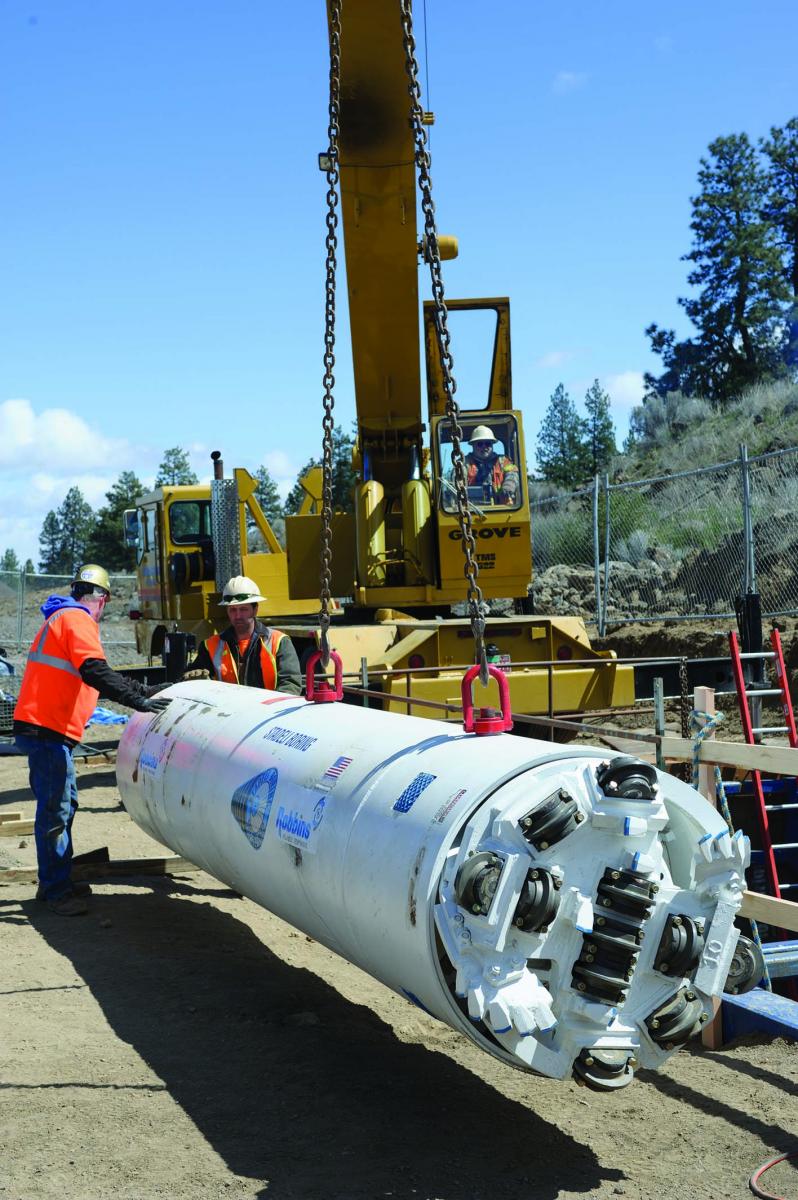
The SBU-RC is currently manufactured in the 36-inch (900 mm) diameter range, but could be designed as small as 30 inches (750 mm). The machine operates much like a Motorized SBU (SBU-M) with a circular cutterhead and cutting tools that can excavate hard rock or mixed ground conditions. An in-shield drive motor provides torque to the cutterhead, while a pipe jacking system or Auger Boring Machine (ABM) provides thrust. Clever explains the biggest differences: “There is no manned entry. It eliminates the human element, so it is safer and there is no need for ventilation and other things required when you have a worker in the tunnel. With its guidance system, it also eliminates much of the risk on line-and-grade-critical bores.” Muck removal is accomplished via a vacuum system connected to a vacuum truck. The machine is capable of excavating hard rock and mixed ground crossings up to 500 ft (150 m) long, depending on conditions.
While microtunneling machines have been used on jobs such as these, Clever cites key advantages for the SBU-RC: “There is no slurry to mix or contend with. With MTBMs the slurry must be cleaned, pumped, and treated. With the SBU-RC there is a clean and dry pit, with no spoils to remove. The way the SBU-RC operates is much more cost effective. The SBU-RC is also available for lease; MTBMs are often not cost effective to lease for contractors trying to stay competitive.”
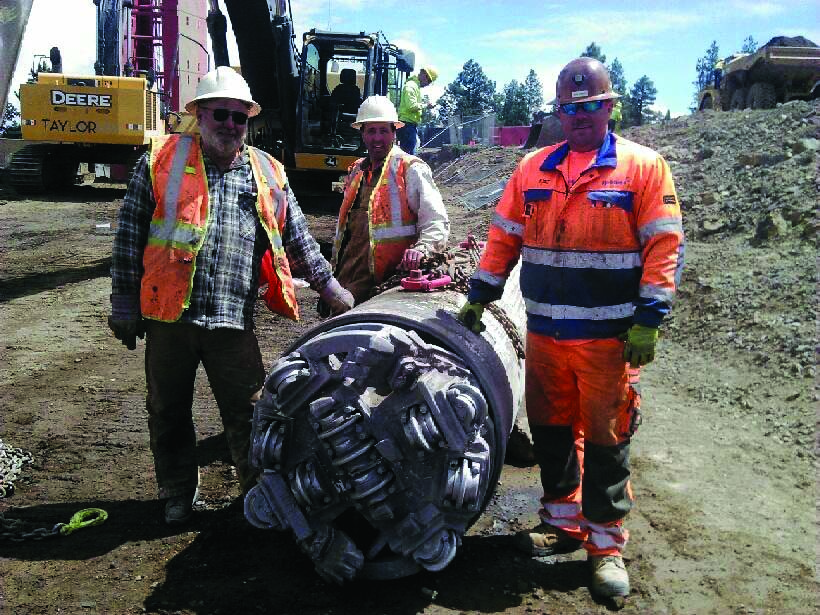
The SBU-RC was delivered on April 14, 2015, and was lowered into a launch pit 26 ft (8 m) deep. There were several early tweaks to the setup including a larger vacuum truck that improved suction, and some modifications to the cutterhead including grill bars. These modifications were expected and will be incorporated into later versions of the machine.
The machine began boring in volcanic basalt rock that was full of fissures, fractures, and rubble pockets between 5,000 and 7,000 psi (34 to 48 MPa) UCS. While the start-up was rough going, crews quickly began getting rates of 20 ft (6 m) per day. “As we got used to the machine we went up to 40 ft (12 m), and one day we even got 50 ft (15 m). We were able to cut off a couple weeks of our schedule time. Taylor NW was very pleased about it. When you look down the pipe now after it’s finished, it looks like a rifle barrel. There is no sag, it’s all in one straight line,” said Stadeli.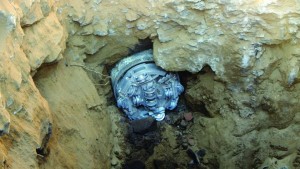
The early completion by the SBU-RC delighted the City of Bend and all those involved. “I think the SBU-RC is an exciting piece of equipment that has been compressed into a 36-inch size. To make it all work it is very compact. It’s impressive that the components have been sized down and it still works so efficiently,” said Stadeli.
With the clear success in Oregon, Robbins is looking to lease the machine on more projects and expand their offerings. As Clever put it: “Finally our industry has provided a small diameter, on-line-and-grade machine that will drill in solid rock at distance. This is a game changer, it will be the most innovative piece of equipment in our industry for a long time.”
The News in Brief
· The Robbins Remote Controlled Small Boring Unit (SBU-RC) is a new type of boring machine capable of excavating small diameter hard rock tunnels at long distances, on line and grade.
· The SBU-RC is currently manufactured in the 36-inch (900 mm) diameter range, but could be designed as small as 30 inches (750 mm) in diameter.
· The SBU-RC features a smart guidance system for pinpoint steering accuracy and is controlled from an operator’s station on the surface.
· Muck removal is accomplished through a vacuum system, making the Robbins SBU-RC more cost effective than MTBMs requiring slurry and cleaning plants onsite.
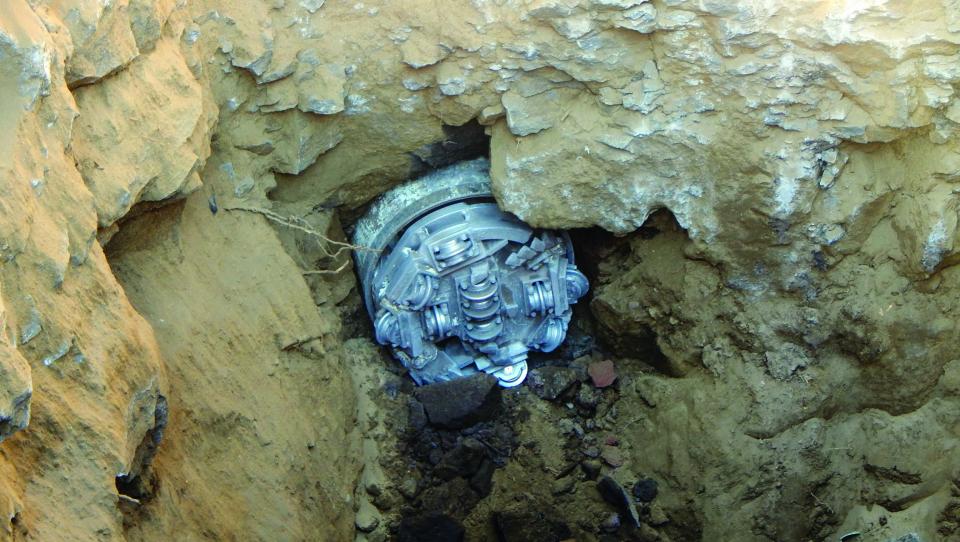
· A Robbins 36-inch (900 mm) SBU-RC completed a critical hard rock crossing below railroad tracks two weeks early in Bend, Oregon, USA, breaking through on May 5, 2015.
The SBU-RC holed through on line and grade after achieving up to 50 ft (15 m) of advance per day in abrasive basalt rock up to 7,000 psi (48 MPa) UCS.
Contact Information:
Desiree Willis
Technical Writer
Direct: 253.872.4490
29100 Hall Street
Solon, OH 44139
USA
Uncategorized
Release Date: 07/08/2015
Contact Information: David Sternberg sternberg.david@epa.gov 215-814-5548
(BALTIMORE – July 8, 2015) – The U.S. Environmental Protection Agency joined officials from local boating businesses, brewers and the National Aquarium at the Inner Harbor today to highlight what the Obama Administration’s Clean Water Rule means to Maryland’s rivers, streams and drinking water.
“It’s important that we protect the quality of water in our lakes and rivers by ensuring that the streams and wetlands that feed them are protected,” said EPA Mid-Atlantic Regional Administrator Shawn M. Garvin. “We need sufficient clean water for drinking water, recreation and to help our economy flourish with manufacturing, farming, tourism, and other economic sectors.”
The Clean Water Rule was enacted to ensure that waters protected under the Clean Water Act are more precisely defined and predictably determined, making permitting less costly, easier, and faster for businesses and industry. The rule is grounded in law and the latest science, and is shaped by public input.
Local business representatives echoed EPA’s concerns and spoke about how important it is that Maryland drinking water and waterways like the Chesapeake Bay are clean, safe and protected.
People need clean water for their health: about 117 million Americans – one in three people – get drinking water from streams that lacked clear protection before the Clean Water Rule. Clean and reliable water is an economic driver, for manufacturing, farming, tourism, recreation, and energy production.
The Clean Water Rule returns protections to streams that feed the drinking water sources for nearly four million Marylanders and one in three Americans. Millions of acres of wetlands, vital for flood control and filtering pollutants, will also again be shielded under federal law.
More information: www.epa.gov/cleanwaterrule .
Uncategorized
NASTT turns 25 in 2015! What was happening 25 years ago?
On July 6, 1990, “Jetson’s the Movie” with Tiffany, premiered.
On July 7-8, 1990, Martina Navratilova of the United States won the 1990 Wimbledon Championships – Women’s Singles and Stefan Edberg of Sweden won the 1990 Wimbledon Championships – Men’s Singles.
On July 8, 1990 (7/8/90), at 12:34:56 it was 1234567890!
Check in every Friday in 2015 when NASTT posts more fun facts about 25 years ago…
Uncategorized
GHD and Conestoga-Rovers & Associates (CRA) have completed integration of their operating platforms, with the merged company operating as GHD starting on July 1, 2015. The GHD name and brand have been adopted by the CRA family of companies, including Inspec-Sol.
The integration has created one of the world’s leading privately-owned engineering, environmental and construction services companies, with more than 8500 people globally and 4000 in the USA and Canada.
Ian Shepherd, GHD’s CEO, says, “This is one of the largest true mergers to have occurred in our industry. We have added significant growth and scale to our business, while retaining the advantages of our private, employee-ownership business model for creating value for our clients and people.”
Ian continues, “Our merger has already presented numerous opportunities to deliver additional value for our clients. We are positioned for further growth, as we continue to expand our services across our clients’ asset value chain.”
Steve Quigley, GHD’s General Manager in North America and formerly CRA Principal, says, “The GHD brand is renowned for client service and a culture of safety. Our formula for success is simple – we build strong relationships, exceed the expectations of our clients and create lasting community benefit. Our reputation and ability to perform are based on the technical leadership of our people and their commitment to high standards of safety, quality and ethics.”
Steve adds, “As part of our integration, we have combined systems and processes, building on the best practices of both organizations. Together, we have created a connected global network of 200+ offices across five continents.”
GHD is one of the world’s leading professional services companies operating in the global markets of water, energy and resources, environment, property and buildings, and transportation. Privately owned by our people, we deliver engineering, environmental and construction services to public and private sector clients across five continents and the Pacific region. Committed to creating lasting community benefit, we connect the knowledge, skill and experience of our 8500 people with innovative practices, technical capabilities and robust systems. www.ghd.com
For further information contact:
Saman Chaudry
Chief Marketing Officer
+1 415 296 3603
Uncategorized
New Technology Helps Pinpoint Leaks and Increase Reuse of Reclaimed Wastewater
SACRAMENTO, Calif.–(BUSINESS WIRE)–June 30, 2015–
Electro Scan Inc. announced today that the San Francisco Public Utilities Commission has placed an order for a Sewer Leak Detection Van to help locate and measure defects that allow infiltration into its wastewater collection system.
The San Francisco Public Utilities Commission(SFPUC) is a leader in using green technologies to manage its water resources, waste recovery, and water reuse; however, it faces the same challenge as other global communities where coastal salt water seeps into its sewers reducing the ability to fully utilize reclaimed wastewater.
“Our industry’s long term goal is to achieve 100% reuse of our potable water,” states Lewis Harrison, Manager, Wastewater Enterprise, Collection System Division, SFPUC. “But, with global warming, persistent drought, and an already high water table south of Market Street, it is important that we identify and patch unwanted openings into our combined sewer system to minimize salt water intrusion.”
“With Electro Scan, we will have a new technology to find leaks and help reduce salt water entering our system so we can increase the beneficial reuse of our reclaimed wastewater,” explained Harrison.
Using its patent pending technology, Electro Scan automatically measures the variation of electrical current that flows through cracks and defects in pipes without relying on closed-circuit television (CCTV) cameras, acoustic sensors, or third party data interpretation.
Results are immediately available in the Company’s award-winning Critical Sewers® cloud application.
“This specialized van identifies defects that are not typically seen by operators using camera based systems,” commented Douglas J. Lipps, P.E., Mechanical Engineer, Engineering Division, SFPUC.
“More importantly, it provides an estimated rate of infiltration in gallons per minute, for each defect and entire pipe, to help prioritize our repairs,” states Lipps.
Electro Scan’s low voltage technology is also the leading method to certify and accept rehabilitation, relining, and repairs for water and sewer pipes which previously relied on Acoustic or CCTV inspection techniques.
“I am delighted to support the resource recovery initiatives at SFPUC and help California achieve its goal for recycled water use,” states Chuck Hansen, Chairman and CEO, Electro Scan.
“New technologies, like Electro Scan, not only find problems that were previously undetected, but often change the way we prioritize rehabilitation and deliver needed benefits, sooner,” explains Hansen.
Each non-rainy day an average of 80 million gallons of wastewater is collected and transported to one of SFPUC’s two treatment plants.
When it rains, SFPUC’s wastewater system can collect and treat up to 575 million gallons a day (MGD) through a network of 1,000 miles of pipe.
High salinity or shock loads of sodium chloride adversely affect organic removal at the treatment plant, lowering the efficiency of the treatment process and lowering reusable water levels.
Additionally, high levels of unwanted water in a collection system means higher treatment and transportation costs due to greater pumping and electricity costs, contributing to higher C02 emissions.
The Company’s selection is an integral part of SFPUC’s ongoing commitment to pursue cleaner, greener, and smarter strategies to help manage its business.
Earlier this year, Electro Scan was awarded Best Project by the United Kingdom Society for Trenchless Technology. Previous awards include Best CleanTech Company (The New Economy Magazine), Best Technology Innovation (Water Environment Federation), and Best New Product (North American Society of Trenchless Technology).
Available as either a standalone mobile van or added to an existing CCTV truck, Electro Scan is able to assess pipes at the rate of ~50 feet per minute and estimate defect flows in gallons per minute, operated in accordance with ASTM F2550-13.
In March 2015 the Company announced its entry into the water leak detection market to locate and quantify water losses not detected by legacy in spection methods.
About Electro Scan
Electro Scan develops proprietary pipe condition assessment instrumentation and cloud applications that automatically locates, measures, and reports defects in sewer, water, and gas pipelines, not typically found by legacy methods.
Electro Scan Inc.
Carissa Boudwin, +1 916-779-0660
Uncategorized
Major storms and other types of incidents can be highly disruptive for water systems. Learn what water consumers can do to protect their water and what utility operators can do to protect their drinking water and wastewater systems. Visit:
· Our Water Emergency/Incident Information page for helpful information and resources.
· EPA’s Natural Disasters website for information on how to prepare for emergencies.
· FEMA’s Ready.gov website for more information to help you Plan, Prepare, and Be Informed.
For easy access to preparedness information on your smartphone, check out the FEMA app or download the free Hurricane, Tornado, Earthquake or Wildfires Apps from the American Red Cross.
Source: http://water.epa.gov/drink/
Uncategorized
NASTT turns 25 in 2015! What was happening 25 years ago?
On June 28, 1990, Susan Lucci loses the Daytime Emmy Award for the 11th time.
On June 30, 1990, East & West Germany merge their economies.
On July 4, 1990, 400 New Kids on the Block fans treated for heat exhaustion in Minnesota.
Check in every Friday in 2015 when NASTT posts more fun facts about 25 years ago…
Uncategorized
Drill sets industry standard for productivity, reliability and quiet operation
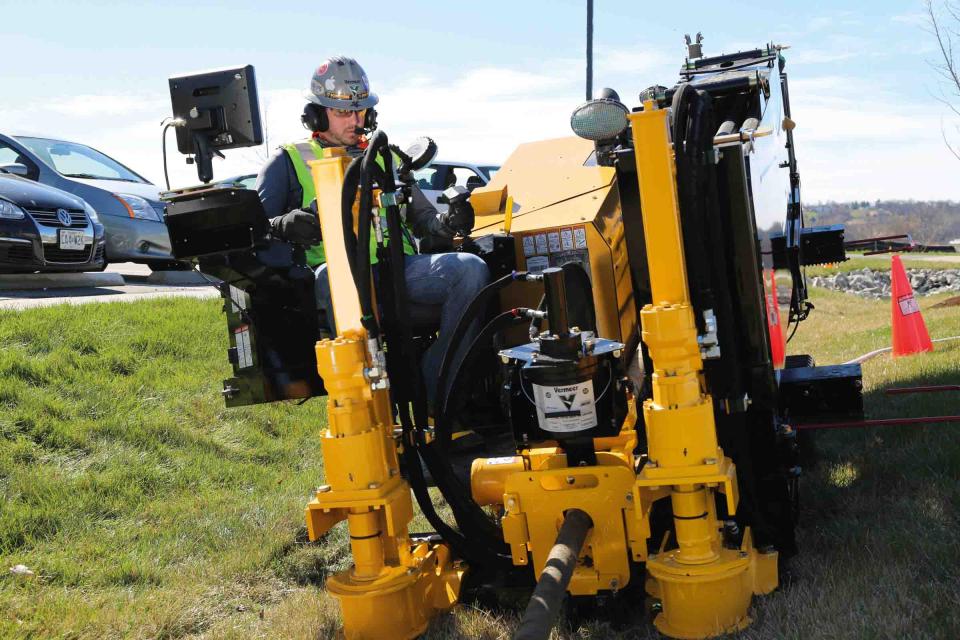
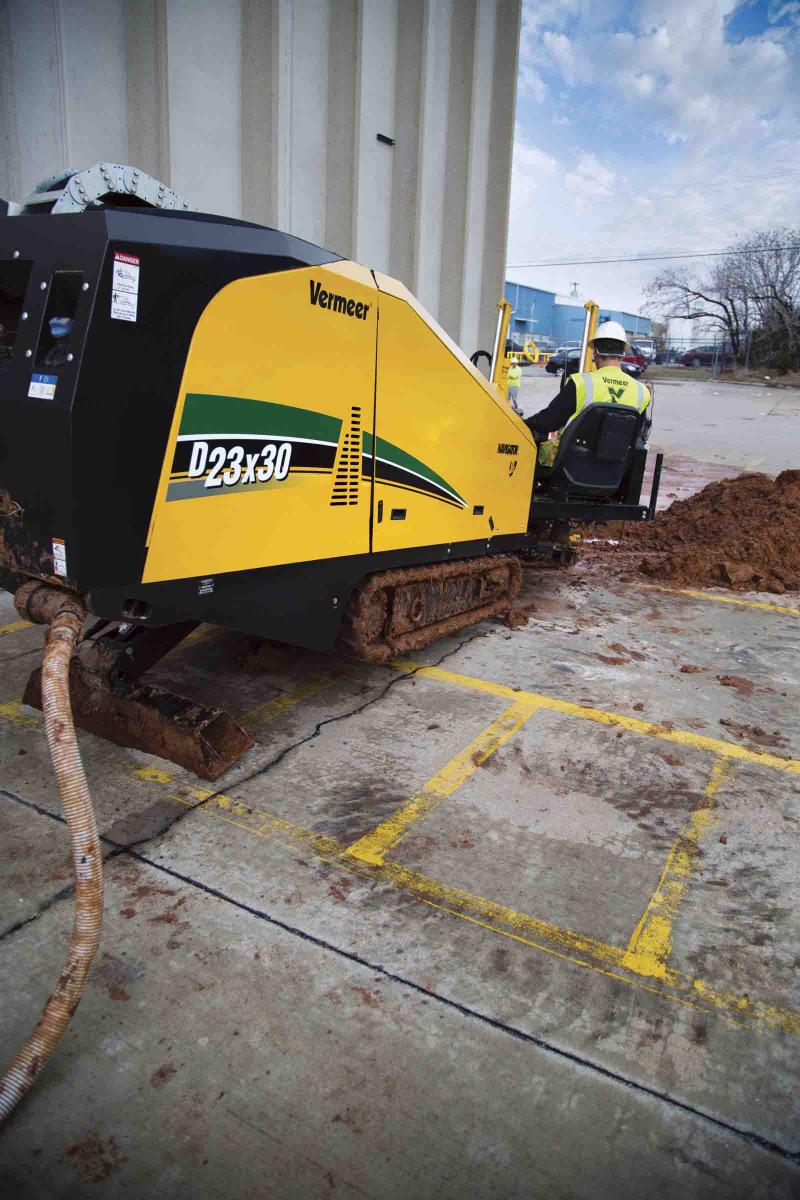
PELLA, Iowa — The Vermeer D23x30 S3 Navigator® horizontal directional drill (HDD) packs 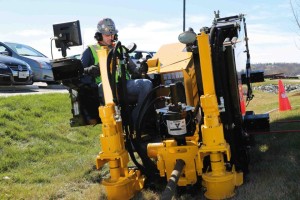 speed and power into a shorter, narrower design to help increase productivity when working in urban areas or compact jobsites. With 24,000 pounds (106.8 kN) of thrust and pullback and 3,000 foot-pounds (4,068 Nm) of rotational torque — an impressive increase over its predecessor, the D20x22 Series II Navigator HDD — the D23x30 S3 is equipped to maximize machine and jobsite efficiency.
Speed, simplicity and sound are the trademarks of the Vermeer S3 generation of directional drills. Each S3 model has been redesigned by listening to customer input to achieve sound reductions, enhanced speed and a simplified design.
The D23x30 S3 offers significant gains in sound reduction making it well-suited to working in congested commercial and residential areas, as the quieter working environment makes for less neighborhood disturbance. With a 99 dBA guaranteed sound power level and an operator ear rating of 78.7 dBA, the D23x30 S3 is one of the quietest drills on the HDD market.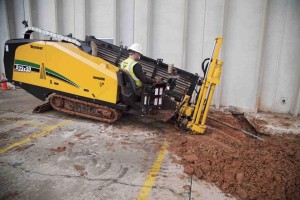
A carriage speed of 206 feet per minute (62.8 m/min), and a rotational speed of 219 rpm — which rivals larger drills — and enhanced rod breakout efficiency will help contractors install more linear feet per day. The D23x30 S3 also offers a ground tracking speed of up to 3.3 mph (5.3 km/h) to help contractors get from one project to another faster.
To power the D23x30 S3, Vermeer has selected a 100-horsepower (75 kW), liquid-cooled, turbocharged diesel Deutz TCD 3.6L4 Tier 3/Tier 4-compliant engine, which is capable of producing greater power than its predecessor.
“The D23x30 S3 is the ideal drill for utility installations up to 6 inches (12.2 cm) in diameter and in compact or congested areas,” said Jon Kuyers, senior global product manager, underground, for Vermeer. “The D23x30 S3 helps address today’s operational challenges and provides a low cost of operation due to its power-to-footprint ratio.”
A common control system currently used on the larger Navigator drill lineup is featured on the D23x30 S3 drill. This includes a digital display, improved onboard diagnostics and common joystick controls. The system design uses a power distribution module that reduces the amount of wiring and fuses for greater reliability. All S3 Navigator drills have a common control platform, assisting drill operators in operating a variety of S3 drill models and lessening the time needed for training.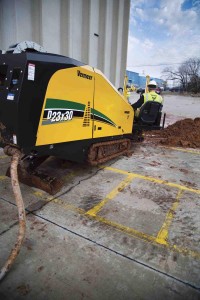
An onboard self-diagnostic system empowers contractors to make machine adjustments when required and helps to maximize productivity. The Vermeer InSite™ Fleet remote monitoring system is optional on the D23x30 S3. InSite Fleet is available now.
Contractors have two 10-foot (3 m) Firestick® drill stem options to configure the drill for different types of work — for longer runs, a 2.06-inch (5.2 cm) diameter drill stem is available and provides improved flexibility in tight bore requirements. When pulling back larger product or for compatibility with rock tooling, contractors can select a 2.375-inch (6 cm) diameter drill stem that offers a better flow path for improved air hammer efficiency and flexibility for rock drilling applications.
Improved rotation, thrust and tracking performance is the result of an enhanced hydraulic system that helps to increase the system’s efficiency, allowing better use of engine horsepower and increasing the drill’s productivity.
Daily maintenance has been simplified with all service points located on one side of the drill and easily accessed via a rugged hood design.
The D23x30 S3 directional drill is now available through the Vermeer global dealer network. For more information on Vermeer products and services, visit the company’s website at www.vermeer.com or email Vermeer at salesinfo@vermeer.com.
Vermeer Corporation delivers a real impact in a progressing world through the manufacture of high-quality underground construction, surface mining, tree care, environmental and agricultural equipment. With a reputation for durability and reliability, that equipment is backed by localized customer service and support provided by independent dealers around
the world. To learn about Vermeer Corporation, products, the dealer network and financing options, visit vermeer.com.
Vermeer, the Vermeer logo, Equipped to Do More, Navigator and InSite are trademarks of Vermeer Manufacturing Company in the U.S. and/or other countries.
© 2015 Vermeer Corporation
All Rights Reserved.
Please send all reader inquiries to:
Vermeer Corporation
P.O. Box 200
Pella, Iowa 50219
+1-641-628-3141
Uncategorized

Tri-State Utilities – Chesapeake, Virginia – This September will be the 25th Anniversary of Tri-State Utilities! In addition, this April marked the 15 year anniversary of the licensee agreement between Tri-State Utilities and CIPP Corp. It is amazing how fast that 15 years has passed us by and the changes, or evolution if you will, that has occurred within the CIPP industry. When we first began installing CIPP liners, it was out of necessity. The PVC Fold & Form market was drying up due to poor product performance by the HDPE Fold & Form products, patent infringement lawsuits by Insituform against Fold & Form manufacturers, and the use of steam to effectively cure CIPP liners. The latter being the reason for the unprecedented growth of the rehabilitation market not only in the United States, but around the world.
We began installing CIPP liners very modestly, one water cure crew slowly but surely installing liners daily ranging in size from 6” to 48” diameter. We would drive 14 hours every other week to Columbus, Ohio or Hudson, Iowa to pick up our wet-out liners for the first two years of operation. Within the first 18 months of installing CIPP liners, we quickly realized we could use the same equipment we were processing Fold & Form liners with to cure the CIPP and with that decision came a very fast growth to five CIPP crews and almost two million feet of CIPP installed over the past 15 years.
As exciting as the past 15 years of CIPP lining have been, we feel that the next 15 years are going to be even better. The CIPP industry is continuing to evolve; in the very near future applying CIPP liners to pressure pipes both potable and sanitary will become accepted practice. The application of CIPP to pressure pipes will allow for a greater amount of pipe to be rehabilitated in the country at a fraction of today’s replacement cost. This is a win for all parties involved; we (citizens) will enjoy cleaner drinking water and better sanitation and utility owners will reap the benefit of lowered rehabilitation costs.
All of this change is possible by the creativity and ingenuity of our industry professionals. Whether by water, steam or UV cure, Polyester Felt, Glass Reinforced, or other exotic material, our industry is moving forward every year with new and improved variations of the same “old” thing: Cured-In-Place Pipeliner!
We at Tri-State Utilities look forward to bringing our customers new and innovative products such as the Rausch Quicklock Repair Sleeve, the Link-Pipe Repair Sleeve, pressure pipe liners, and short liners.
We also want to thank our customers for trusting us to bring them the best product the industry can offer for 25 years and offer a special thanks to Steven F. McSweeney for providing us with a great place of employment and example of how to carry ourselves.