Industry News, trenchless people, trenchless products, trenchless projects
 In the trenchless excavation, horizontal directional drilling, and underground manufacturing industries, one family stands out as leaders in this close-knit community: The Barberas. Family Patriarch, James S. Barbera founded Barbco, Incorporated, a world class capital equipment manufacturer in these industries. In fact, his status is so renown and legendary, that in April, he will be posthumously inducted as a member of the Class of 2020 into the North America Society for Trenchless Technology’s Hall of Fame, joining a very elite and highly esteemed society of industry ground breakers. James S. Barbera has passed the torch onto his three sons, Anthony, David, and James A., who now own the family business, Barbco. The Barbera clan continues to drive the industry forward and now have brought the third generation of the family into this exciting field.
On January 2nd, grandsons Drake Barbera (son of Anthony) and James V. Barbera (son of James A.) along with co-owner Clay Gillian successfully completed their very first horizontal bore with their new company AccuLine Underground at an urban work site in Metuchen, New Jersey. AccuLine partnered with project General Contractor J. Fletcher Creamer & Son, Inc. to complete a 250 foot long crossing that was at a depth of 20 feet under the length of a busy city road skillfully avoiding numerous very critical city main utilities. To say that this 3,000 man hour project was challenging is a complete understatement.
The AccuLine team’s years of experience and deep knowledge of the industry was readily apparent before the first shovelful of dirt was removed from the job site. In his initial meeting with the job owners, Drake made a strong and convincing counter-proposal to the microtunneling option with his recommended approach using a conventional auger boring machine pushing a BMTA (boring machine tunnel attachment). Drake’s proposal proved to the winning combination, securing AccuLine this very prestigious and highly visible contract.
The crew faced numerous job site challenges ranging from old and forgotten infrastructure to rocky and sandy soils. Their expertise allowed them to make on site equipment modifications and adjustments coupled with some new to the field innovations to keep the job on line and on grade, dramatically saving the job owners both time and money. This highly successful initial foray into the Barbera family business as proven that the third generation of Barberas and their company, AccuLine Underground is a force to be reckoned with! Grandfather Barbera must be very proudly watching over his progeny!
Industry News, trenchless products, trenchless projects
Adaptable machine will begin bore at 11.6 m then size down to 9.9 m
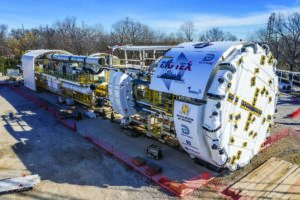
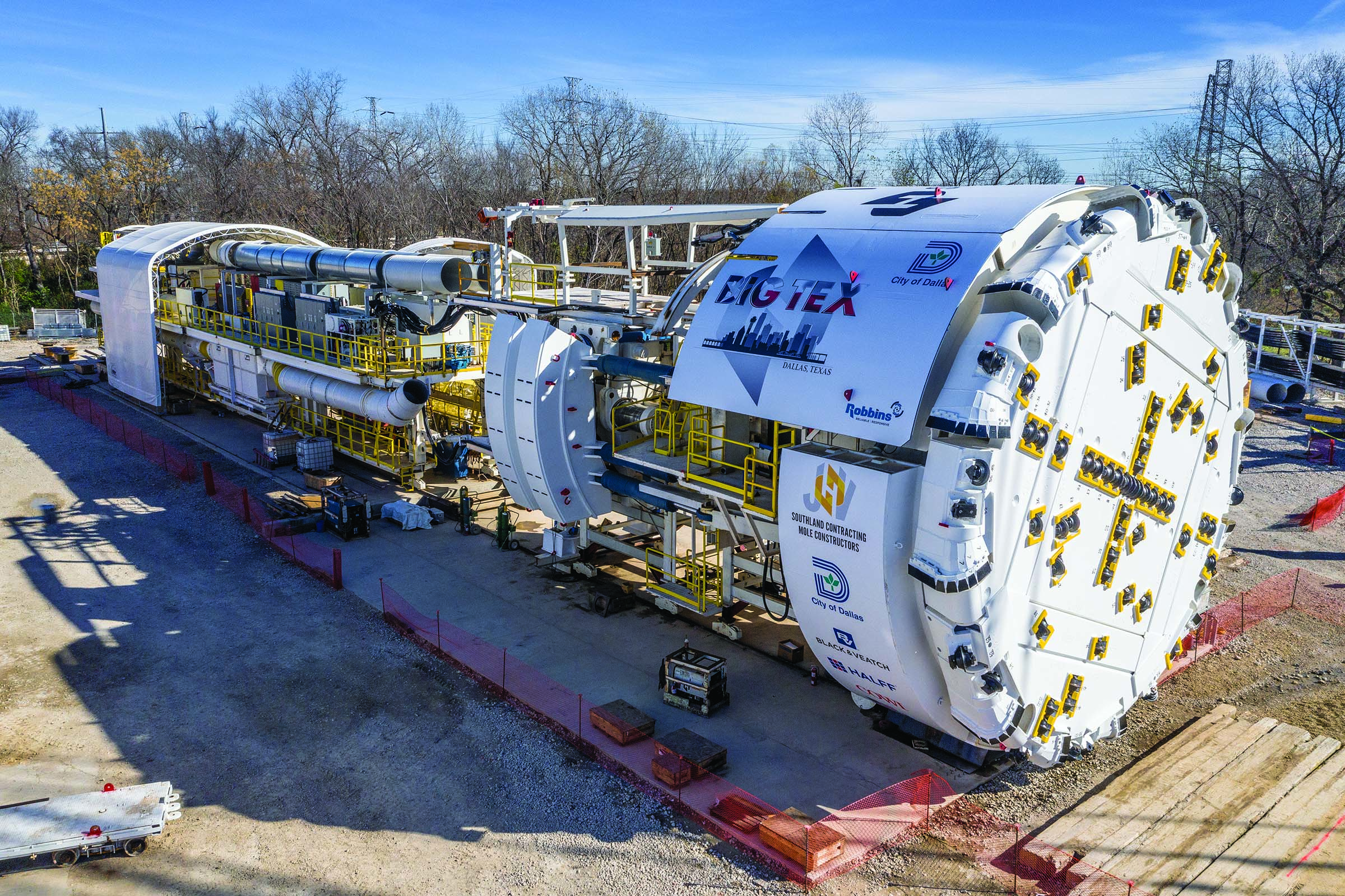
In December 2019, the City of Dallas, Texas, USA unveiled the largest hard rock TBM ever to bore in the U.S. The 11.6 m (38.1 ft) diameter Robbins Main Beam TBM will excavate the 8 km (5 mi) Mill Creek Drainage Relief tunnel, and its size is not its only distinction. The adaptable machine will change size partway through the bore, to a more compact 9.9 m (32.5 ft).
The unique Robbins TBM will be used to dig a tunnel designed to provide 100-year flood protection for east and southeast Dallas, areas affected in recent years by severe storms. The tunnel will protect 2,200 commercial and residential properties, including Baylor Medical Center. The current drainage system in these areas was constructed 50 to 70 years ago, and only provides two to five years of flood protection. “The completion of the TBM assembly marks a major milestone in the Mill Creek Tunnel Project,” said Council Member Lee Kleinman, chair of the Transportation and Infrastructure Committee for the City of Dallas. “I’m thrilled to see this type of engineering marvel happening right here in Dallas.”
The dual-diameter aspect of the Robbins TBM will be a first-of-its-kind conversion process. The contractor, Southland/Mole Joint Venture (SMJV), will make the conversion underground about 2.8 km (1.8 mi) into the bore. The two diameters are needed as the upstream section of the tunnel is designed with a circular cross section and peak flow rate of 42 m3/sec (15,000 ft3/sec), while the downstream 2.8 km (1.8 mi) portion has a higher peak flow of 565 m3/sec (20,000 ft3/sec) and was initially designed as a horseshoe cross section. Using the TBM for the entire tunnel is less time consuming and costly. “Robbins and SMJV are working closely to create the safest and most efficient sequence for completing this conversion within the limits of the bore. The City of Dallas (Owner) and our Project Team are very excited to embark on this unique challenge,” said Nick Jencopale, Project Manager for Southland Holdings.
The Robbins TBM, named “Big Tex” with permission of the State Fair of Texas, has been designed with a specialized cutterhead including removable spacers and adjustable bucket lips to convert to a smaller diameter. The TBM will first complete its 11.6 m (38.1 ft) diameter section of the alignment, then back up about 21 m (75 ft) to a transition area for the conversion, which is expected to take six to eight weeks.
As the TBM bores, it will pass through Austin Chalk between 12 to 30 MPa (1,800 to 4,400 at depths from 31 to 46 m (100 to 150 ft) below the city. The route is potentially gassy, so probe drilling is mandatory throughout the project. Crews will utilize ground support including eight 3.9 m (13 ft) long rock bolts every 1.5m (5 ft) with wire mesh and channel straps as needed. The finished tunnel will be lined with a 380 mm (15 in) thick cast-in-place concrete lining.

“Big Tex will work 24 hours a day to excavate the tunnel with crews ranging in size depending on activities,” said Rachel Sackett, marketing and communications director for Southland Holdings. Based on previous work through similar geology, the project team expects TBM excavation to progress rapidly to an average of 25m (80 ft) per day, allowing the project to be completed on schedule in 2023.
Image 1: The 11.6 m (38.1 ft) Robbins Main Beam TBM is the largest hard rock TBM ever to be used in the U.S.
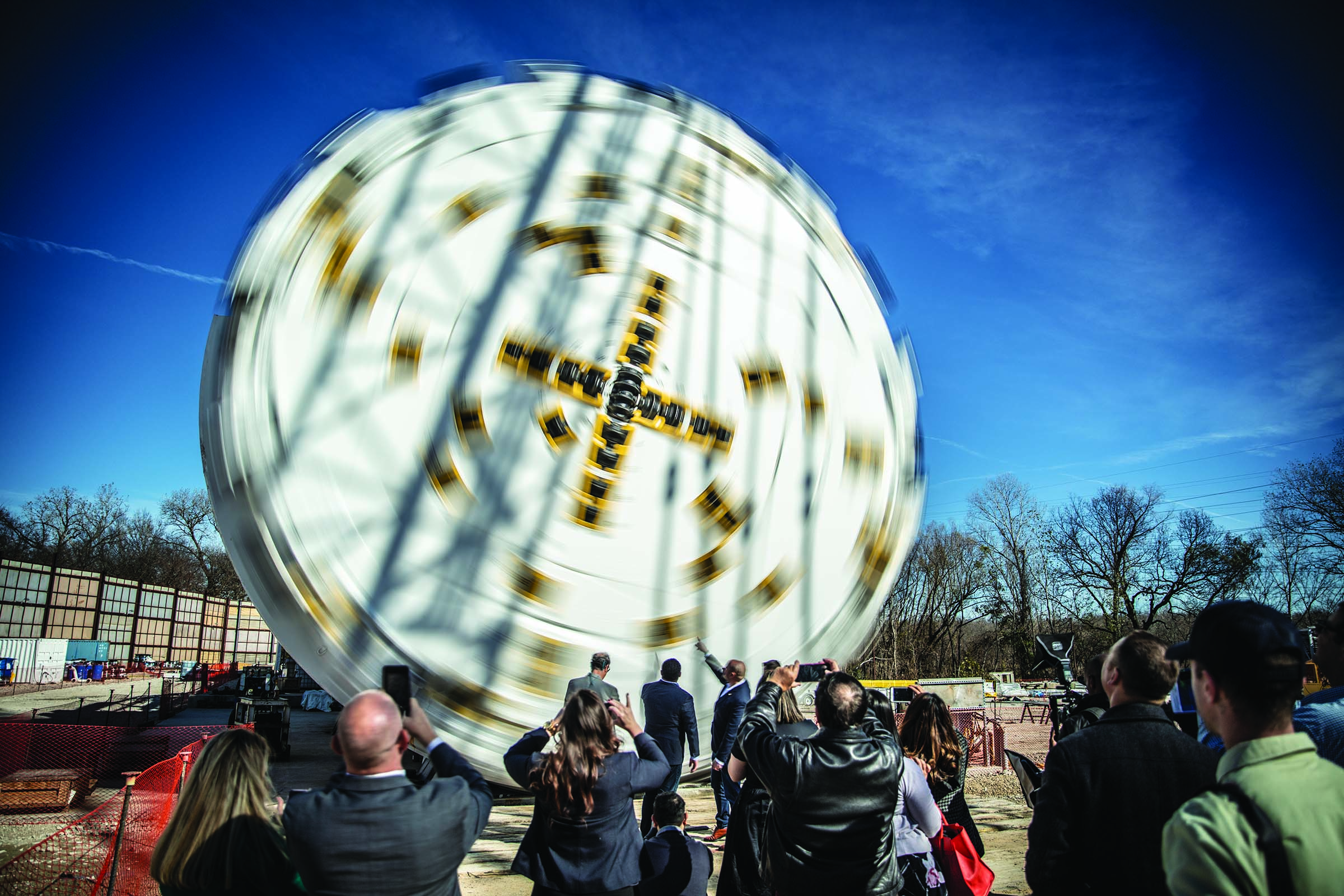
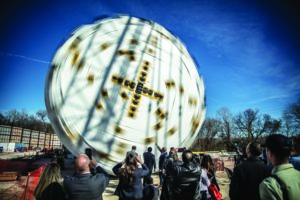
Image 2: A ceremony was held in December 2019 to mark the impending launch of the unique Robbins TBM, which will undergo a first-of-its-kind diameter conversion approximately 2.8 km (1.8 mi) into the bore.
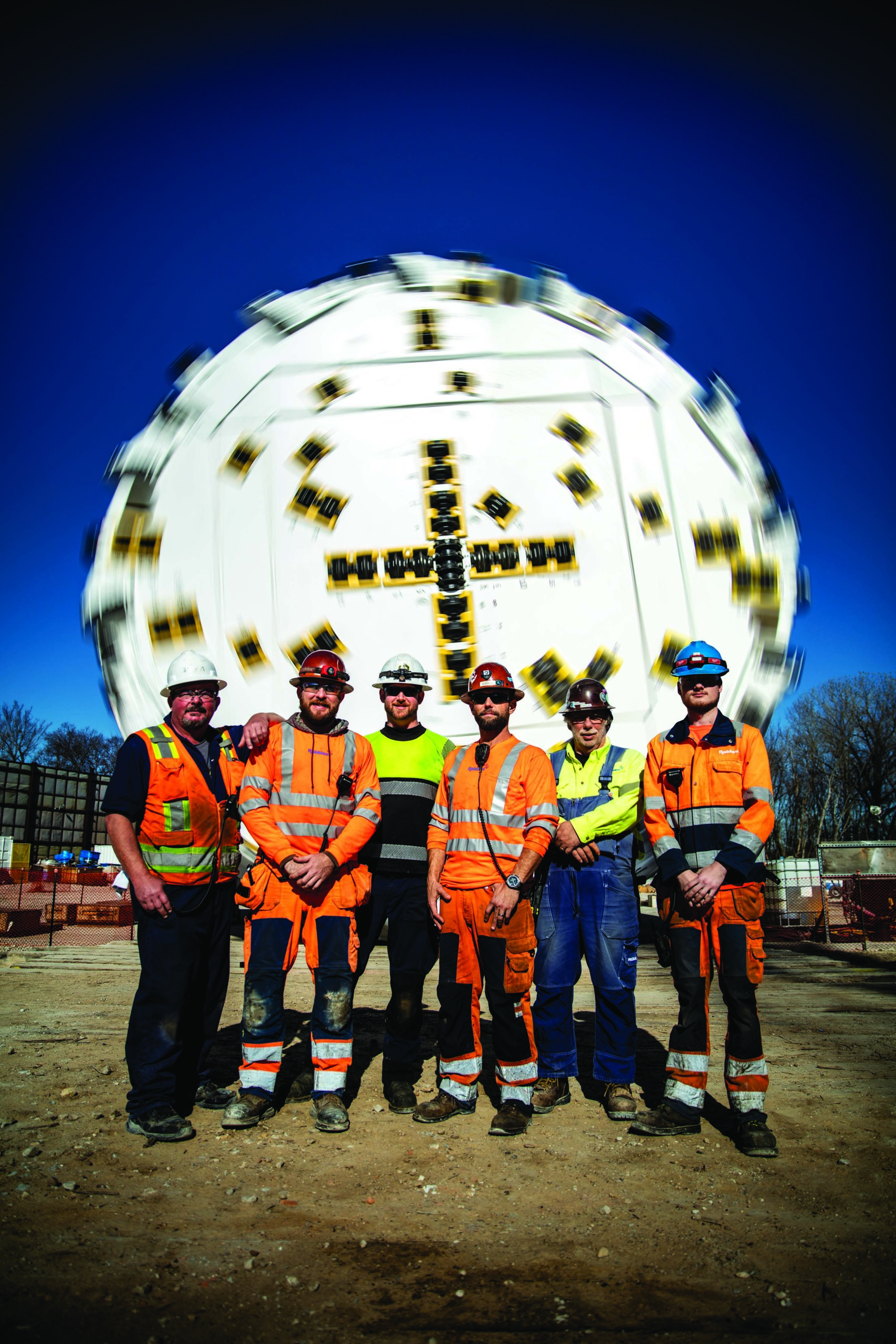
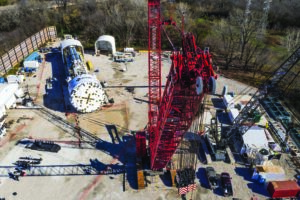
Image 3: The 8 km (5 mi) Mill Creek Drainage Relief tunnel will provide 100-year flood protection for east and southeast Dallas, areas affected in recent years by severe storms.
Image 4: The adaptable Robbins machine will change size partway through the bore, to a more compact 9.9 m (32.5 ft).
Photos by Shannon Faulk
For more information/questions please contact:
Desiree Willis
Technical Writer
Email: willisd@robbinstbm.com
Direct: 253.872.4490
The Robbins Company
29100 Hall Street
Solon, OH 44139
USA
Industry News, trenchless people
 CDM Smith environmental engineer Ajay Shrivastav, P.E., ENV SP, is the winner of Trenchless Technology’s World Trenchless Day (WTD) Sweepstakes.
The WTD Sweepstakes was hosted by Trenchless Technology and was generously sponsored by Akkerman, Applied Felts, Michels Corp., Maxliner, NASTT and Vortex Companies. The Sweepstakes generated more than 400 entries throughout the year, with the drawing held on World Trenchless Day.
Shrivastav’s prize package includes: one free conference registration to the NASTT 2020 No-Dig Show, April 5-9; a ticket to attend the annual No-Dig Show Gala Awards Banquet Dinner on April 7; standard room accommodations at the host hotel for up to four nights and up to $500 for airfare to Denver.
 Congratulations Ajay and we’ll see you in Denver!
Want to join him? Register today and save before early discounted registration ends.
Industry News, trenchless products
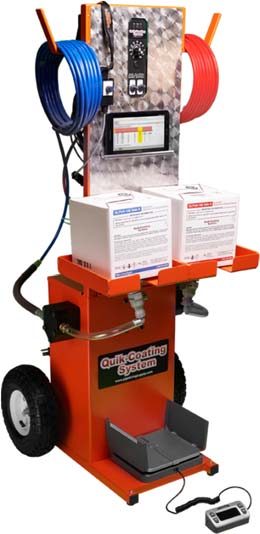
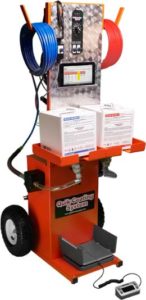 January 2020 – Pipe Lining Supply introduced its Quik‐Coating System in 2017. Today we are happy to announce the Quik‐Coating 2020 System. This system has the exact same core functionality as the initial model with a few exterior changes that have been requested from our customers. These items include a
shorter unit (to fit in a standard cargo van), a stainless steel control plate, a scale shelf, a 4‐plug power strip, a powder‐coated (painted) frame and a tablet with important documentation pre‐loaded (no WiFi necessary).
Pipe Lining Supply is dedicated to research & development of all equipment and materials. This equipment improvement comes from many test trials and customer feedback. Being a leader in the industry is Pipe Lining Supply’s top priority.
About Pipe Lining Supply:
Pipe Lining Supply is a leader in the distribution of materials and equipment used in the lateral sewer lining and DWV rehabilitation businesses. The company was formed to support customers who need training and support as well as the equipment and materials to rehabilitate aging sewer laterals. Our
goal is to serve the industry with a complete warehouse stocked with the best products at the lowest delivered cost on a timely basis.
Our staff has many years of plumbing, excavating, pipe bursting, DWV coating, and, CIPP lining experience to share with its clients. Customer support is our #1 goal, we train and support installers throughout the USA to be the most knowledgeable and efficient in their goals.
For More Information:
Call: 888‐354‐6464
Visit: www.pipeliningsupply.com
Email: info@pipeliningsupply.com.
Quik‐Coating™ 2020 System shown with new improvements
Industry News, trenchless products, trenchless projects
40 Years after Original Tunnel, Robbins Returns to Russia
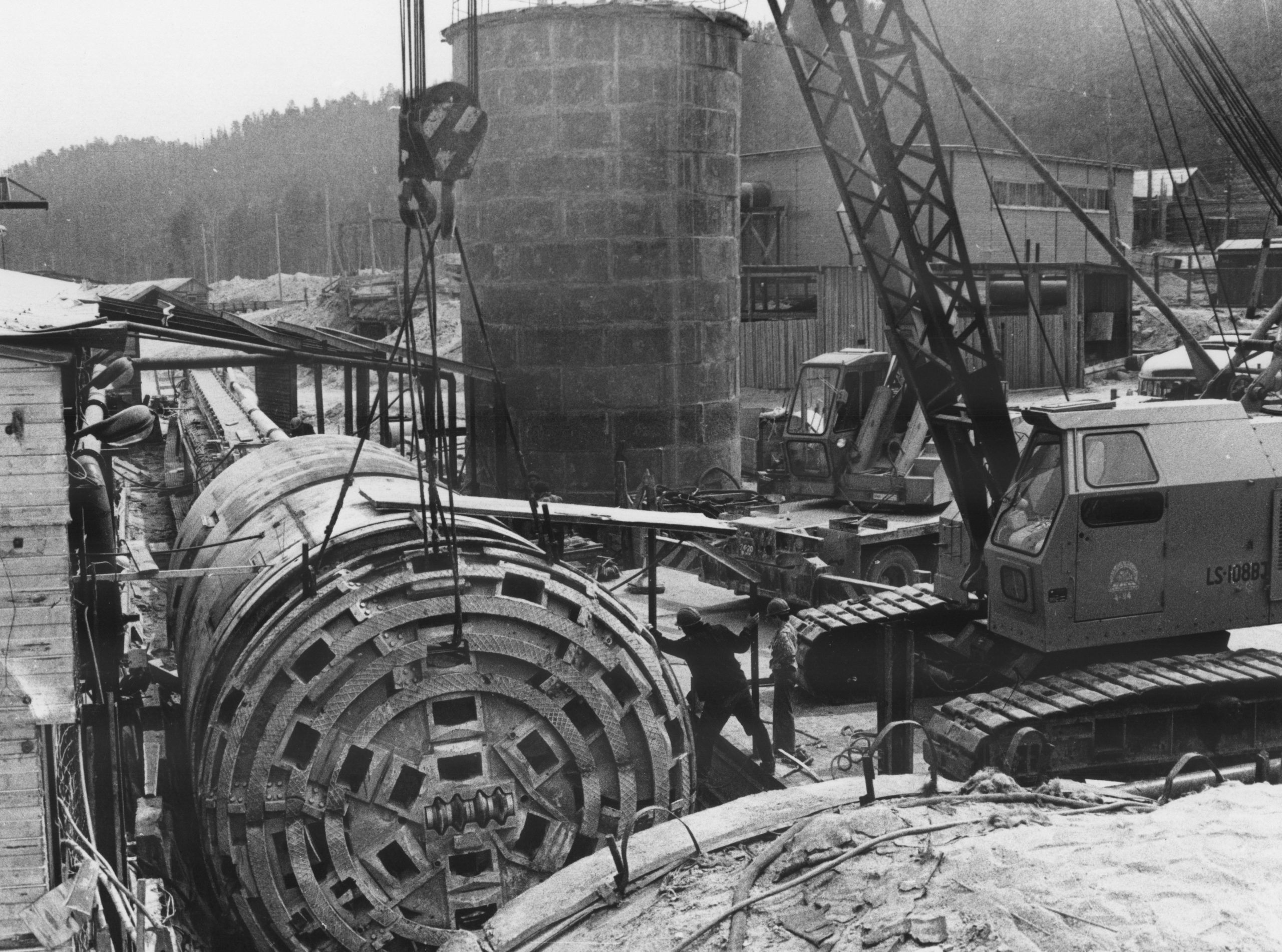
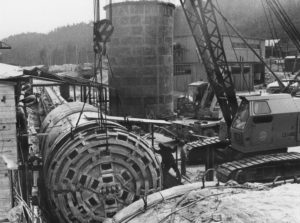 In 1979, a 4.56 m diameter Robbins Double Shield TBM was delivered to bore the Severomuysky Service Tunnel, a 15.3 km long railway through the remote mountains of Siberia. Now, 40 years after the original machine was delivered, Robbins is returning to the role. Two 10.37 m diameter Crossover (XRE) TBMs will bore the second Severomuysky Tunnel, clocking in at 15.5 km long and running through mixed ground and fault zones. The new rail line is needed due to limitations on carrying capacity on the current Baikal-Amur Mainline (BAM) railway through the area. Currently 16 million tonnes of cargo are carried through the existing Severomuysky tunnel but the Russian Government wants to increase cargo carrying capacity by more than six times in the region.
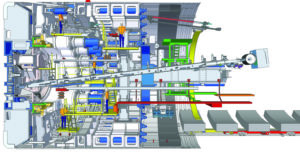 The largest global anthracite producer, Sibanthracite Group, is taking on the tunnel construction with management by VostokCoal Management Company. The companies, owned by Dmitry Bosov, aim to increase coal transport by up to 100 million tonnes per year through the addition of the second tunnel. “Robbins has established itself on the market as the best manufacturer of hard rock machines, which are able to provide the maximum penetration rate in hard rock. This is one of the determining factors in connection with the tight deadlines for the implementation of our project. Also, Robbins is the only manufacturer to build the Crossover TBM,” said a representative of Sibanthracite Group. Other aspects of the supply include a continuous conveyor for muck removal, rolling stock, spare parts, and cutting tools.
Sibanthracite Group chose Crossover technology for a number of reasons, geology being chief among them. “A Crossover type tunnel boring machine was selected for tunneling due to the fact that the construction of the tunnel will be carried out in difficult heterogeneous geological conditions (from unstable waterlogged soils to hard rock). The Crossover is able to operate in two modes: Open mode, used while boring in hard rock formations, and closed mode (with earth pressure balance), used when boring in unstable water-logged soils,” said the Sibanthracite representative.
The lessons learned during the first Severomuysky tunnel—the importance of probe drilling, consolidation grouting, and preventing a shielded machine from becoming stuck in fault zones or squeezing ground—are all part of the Crossover TBM solution. “I was a young engineer working at Robbins when the Double Shield TBM was delivered for the first tunnel, so it is a special honor to bring this new technology to the second Severomuysky Tunnel in Siberia,” said Robbins President Lok Home. “Per the contract Robbins is supplying Crossover TBMs for the new parallel rail tunnel—these machines are made to bore in highly variable ground conditions while maintaining good advance rates. With our latest technology we hope to again prove TBMs are the better choice over Drill and Blast when difficult ground conditions are to be encountered.”
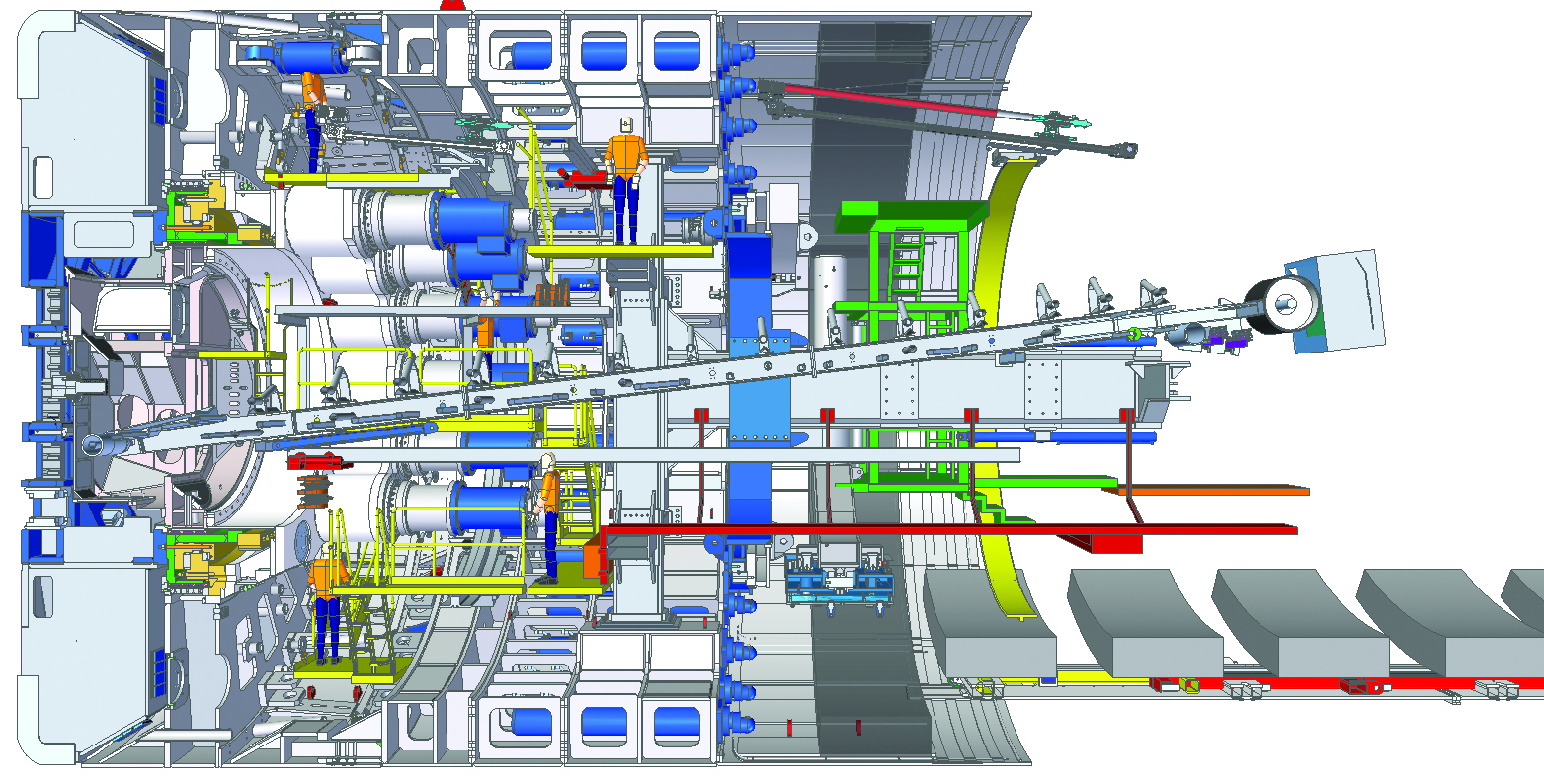
The machines will be designed for varying water pressures, ranging from 5 to 20 bar. They will feature Water Inflow Control, a system that seals off the face and periphery and creates a safe working environment in which to dewater and consolidate ground. The machines will feature probe drill ports and capabilities for 360-degree probe drilling and grouting ahead of the excavation face, while the Robbins Torque-Shift System will enable the machines to bore through collapsing ground and other situations that demand high torque. The machines will also be designed with a belt conveyor in hard rock mode that can be switched out with a screw conveyor when crossing into soft ground.
Crews will bore through the Severomuysky Ridge, a mountain range in Buryatia and part of the Stanovoy Highlands, which separates the basins of the Upper Angara and Muya Rivers. “The second Severomuysky tunnel is located in one of the most geologically active areas of our planet—on the north-eastern flank of the Baikal rift zone. The region is characterized by high seismic activity, difficult geological and hydrogeological conditions against the backdrop of a harsh climate (the summer period lasts only 80-100 days, temperatures from + 39°C in summer to -58°C in winter). The construction work on the portals is complicated by the presence of permafrost as well,” said the Sibanthracite representative. Construction of the new tunnel is expected to begin in 2020 and take five years.
Image 1: The original 4.56 m diameter Double Shield machine was supplied for the Severomuysky Service Tunnel in 1979.
Image 2: The new 10.37 m Robbins Crossover (XRE) TBMs are designed for highly variable geology and will have a belt conveyor that can be switched out with a screw conveyor in challenging conditions.
Industry News, trenchless products
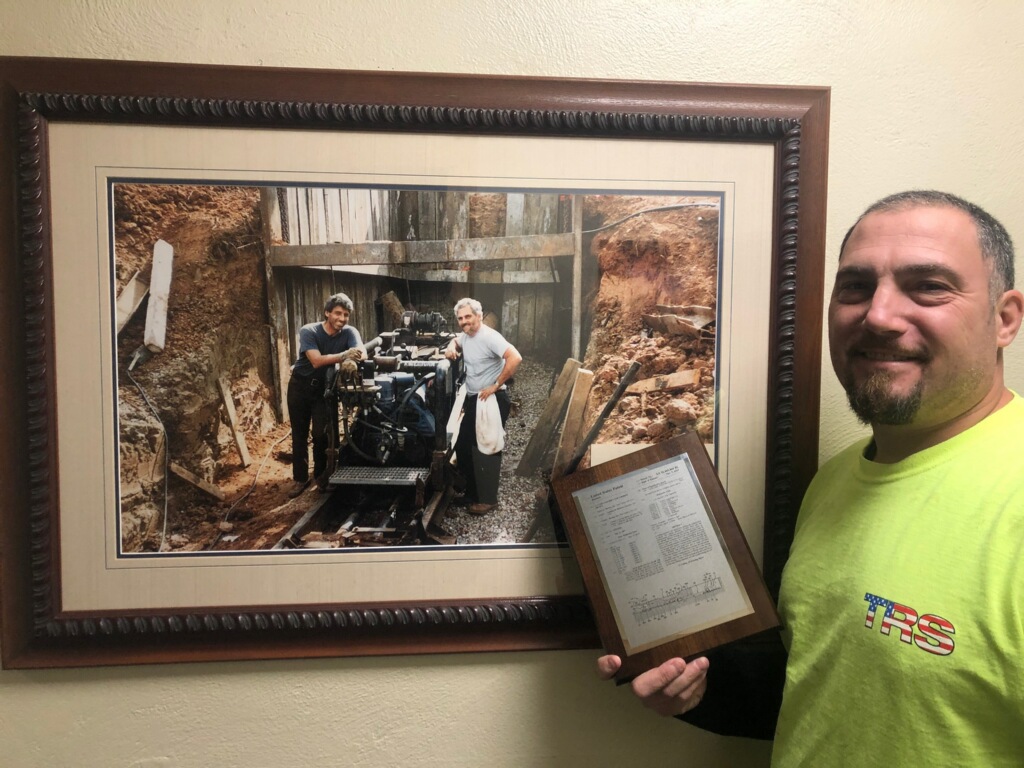
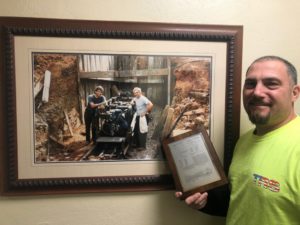 November 2019: Barbco, Inc. Co-Owner and CEO, Anthony R. Barbera was granted U.S. Patent #10465460 for the Barbco FlexBor tooling and technology on November 5, 2019! This is a proud moment in this East Canton, Ohio manufacturer’s storied 30-year history of driving the trenchless technology, horizontal boring, and underground manufacturing industries forward with world class capital equipment and cutting-edge technology. The FlexBor is an extremely cost-effective, environmentally safe trenchless method and tooling. The FlexBor is designed to virtually eliminate “frac-outs” / ”inadvertent returns” that are often associated with horizontal directional drilling and the use of bentonite.
 The Patent Abstract reads: “A cutting assembly and method for drilling an underground borehole. The cutting assembly includes front and rear cutting heads of different diameters mounted on a shaft. An air passage defined through the cutting assembly may be placed in fluid communication with a pressurized remote air source and with a bore of a casing extending rearwardly from the cutting assembly. Pressurized air flows through the air passage and entrains cuttings produced by the front and rear cutting heads. A housing extends rearwardly from the larger diameter rear cutting head and an auger provided within the housing aids in directing cuttings into the casing. The auger rotates independently of the rest of the cutting assembly and may be configured to further reduce the size of the cuttings. A collar on the housing seals the borehole cut by the rear cutting assembly and aids in preventing frac-out.”
Visit the Barbco website for more details.
Industry News
Join NASSCO in an industry-wide webinar as the Trenchless Technology Center at Louisiana Tech (TTC) presents their findings on the Cured-in-Place Pipe (CIPP) Emissions Testing Study – Phase II.
In response to published reports on the safety of styrene emissions used in cured-in-place pipe (CIPP), NASSCO, Inc. proactively supported research in its quest to ensure workers and the public are safe.
Phase 1 was a four-month study which focused on the review of published literature pertaining to chemical emissions during CIPP installations using styrene-based resins. The study, completed on April 6, 2018 by researchers at the University of Texas at Arlington (UTA)’s Center for Underground Infrastructure Research and Education (CUIRE), and the Institute for Underground Infrastructure (IKT) in Germany, found that existing studies do not adequately capture worker exposures or levels in the surrounding areas to which workers or citizens may be exposed. The team further determined that spatial variation of concentrations, and variations in concentrations with different meteorological conditions, are not well determined.
Phase 2 of a larger, in-field study conducted by the Trenchless Technology Center (TTC) at Louisiana Tech, recently concluded and findings will be shared via webinar on December 17, 2019. The year-long study included measurement of styrene and other organic compounds at multiple CIPP installation sites across the country, representing different pipe diameters (8”, 12”, and larger), and lengths, in order to capture variation in emissions. Measurements were conducted before, during, and after curing at the termination manhole, as well as various locations in the surrounding outside area and inside nearby buildings. Worker exposure was also measured via personal exposure monitors. Finally, dispersion modeling was conducted to estimate compound concentrations at different locations for a wide variety of meteorological conditions. Measured and modeled concentrations were compared to appropriate health-based action levels to determine if any potential health risks exist for workers or citizens in the surrounding communities.
The webinar is on December 17, 2019 at 2:00 p.m. Eastern and will cover TTC’s findings and recommendations. Registration is open to all. Click here to register for the webinar.
The Trenchless Technology Center (TTC) at Louisiana Tech University is a cooperative research center for academia, government, and industry. The Center’s mission is to advance trenchless technology by serving as an independent source of knowledge, research, and education in the field. Trenchless technology includes a large family of methods used for installing and rehabilitating underground utility systems with minimal surface disruption and destruction resulting from excavation. The TTC utilizes a three-pronged approach to accomplish its mission: research & development, education, and technology transfer.
Click here to register for the webinar.
Industry News, trenchless people, trenchless products
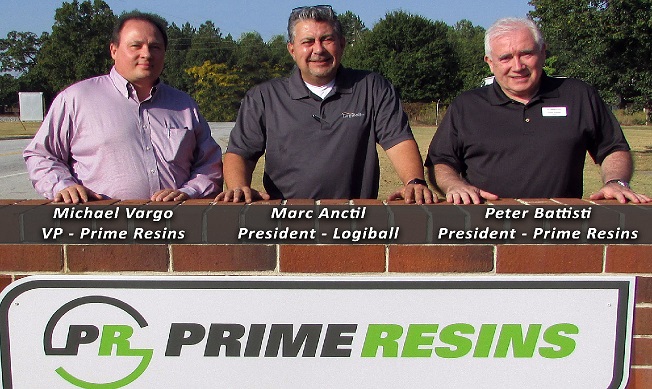
 Conyers, GA – November 15, 2019 – USL Group announced today that it has acquired Logiball Inc., a leading manufacturer of trenchless pipe rehabilitation equipment headquartered in Quebec, Canada. Terms of the transaction were not disclosed.
Founded in the early 1980s, Logiball holds a leading position in the manufacturing and supply of inflatable pipe plugs and test-and-seal injection packers for the maintenance and trenchless rehabilitation of collection systems and gravity pipes compromised by groundwater intrusion – a sizable segment of the general infrastructure sector known as the Inflow and Infiltration (I&I) market.
Logiball’s main product range is test-and-seal injection packers, which are used to confine and apply grouts for the repair of points of water ingress and egress from pipes, such as leaking joints or cracks. Logiball is the primary producer of these specialized products, which has allowed the company to forge a strong position in the niche of the I&I market.
“This acquisition provides channel synergies for both Logiball and our Prime Resins business, which makes chemical grouts. It will enable both companies to expand their reach in the growing I&I market space by leveraging their joint reputations and product offerings” said John Taylor, Director at USL Group. “Prime Resins has actively pursued growth in this market space, and the clear synergies with Logiball will lead to product improvement and expansion of use that will benefit the Trenchless Rehabilitation industry as a whole”.
About USL
Founded in 1981, USL Group of companies are market leaders in the provision of specialist civil engineering and construction solutions. For nearly four decades, USL Group has been at the forefront of cutting-edge resin and cementitious technology, combining high performing innovative products, first class operations, expert technical support and unrivalled customer service. Specializing in expansion joints, structural and liquid waterproofing, construction chemicals, concrete repair systems, injection resins and specialist safety & anti-slip products, USL boasts a comprehensive portfolio of products and a highly developed global network. For more information about USL, visit www.uslgroup.com.
Industry News, trenchless people, trenchless products
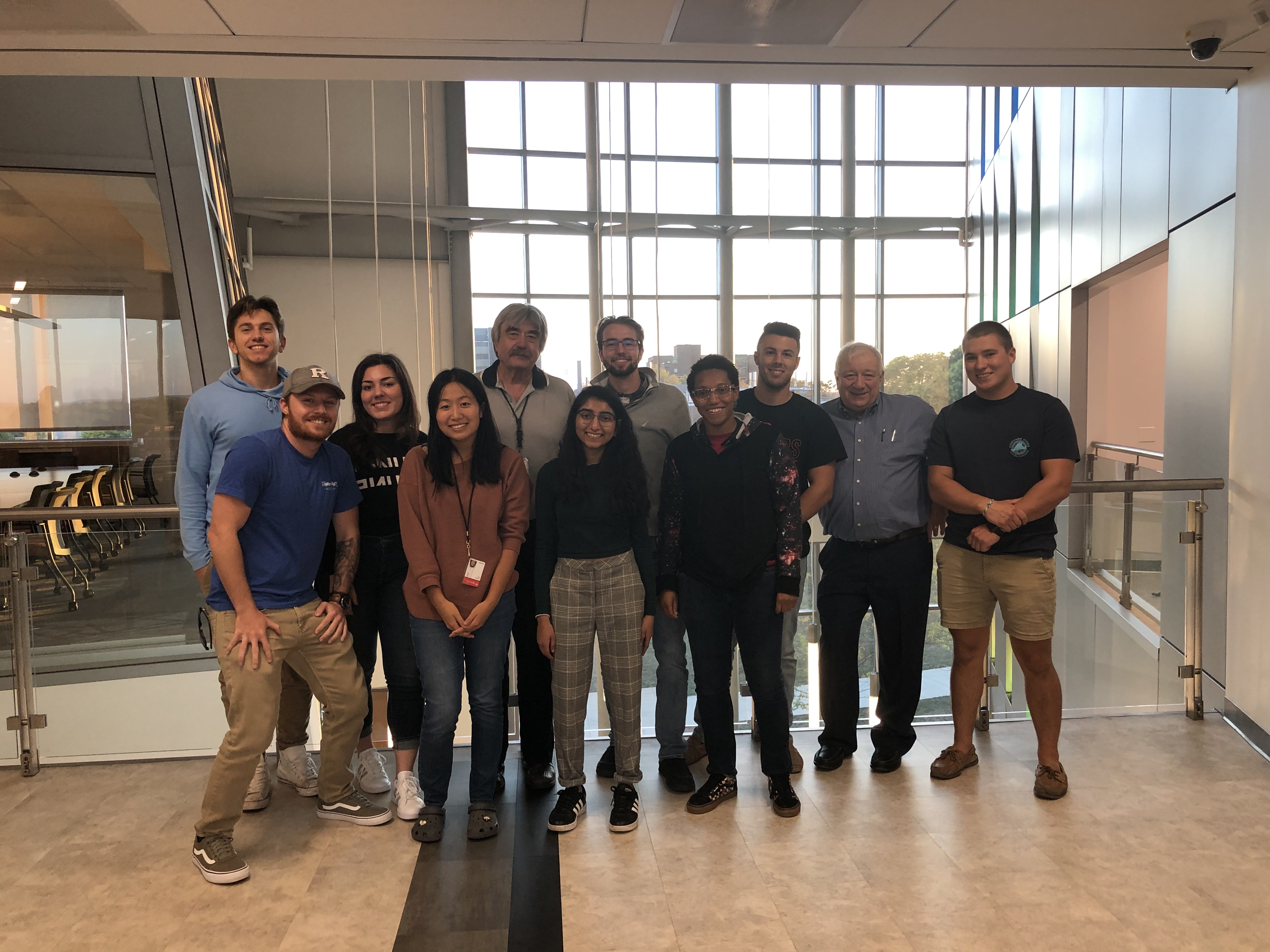
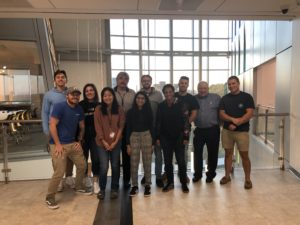 Recently two of NASTT’s very dedicated volunteers, Dennis Walsh and George Ragula, both of PSE&G, met with our Rutgers Student Chapter to give a presentation.
The presentation covered a project that is the new world record diameter 42” CIPL renewal that included an extremely complicated piping geometry involving seven bends in a u-tube configuration crossing a major parkway with a significant change in vertical elevation.
The project presentation was fascinating and the students were thrilled to have two industry experts on hand to answer questions and provide insight. Future presentations and job site visits are in the works.
Pictured are volunteers and student members:
Left to right, front row: Max Ritner, Sharon Xiao, Riya Maniar and Kendi Bailey.
Left to right, back row: Amil Muminovic, Demetra Tampasis, George Ragula, Ian Walczak, Anthony Genchi, Dennis Walsh and Troy Dittenhofer.
Industry News, trenchless products, trenchless projects
The following is a post from Akkerman. For more details and additional job site photos, visit their website.
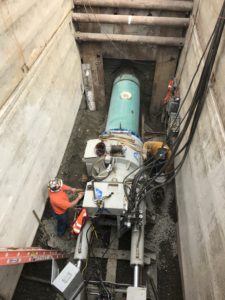 Northwest Boring Co. Inc. (NWB) of Woodinville, WA was subcontracted by Shoreline Construction for an emergency replacement of the City of Mill Creek’s failed 30-inch CMP stormwater pipeline that had been causing flooding in the suburban neighborhood, just north of Seattle.
The need for the stormwater system’s repair became apparent when a sinkhole appeared in December 2017, between the Sweetwater Ranch and Douglas Fir neighborhoods. Temporary repair work was conducted, but another sinkhole developed in the same location just one month later. After inspection, it was determined that a failed coupler and damage to the 36-inch corrugated metal stormwater pipe was the root cause.
Because the City of Mill Creek had declared this an emergency project with a budget less than $300,000, a public bidding process was not required. Shoreline Construction was selected as the contractor, who subcontracted the trenchless work to NWB.
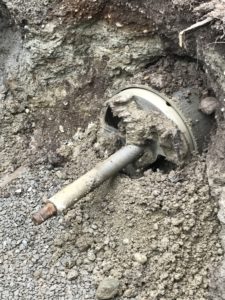 The alignments scheduled for replacement were positioned within a narrow easement between two homes at an 11-foot depth in difficult ground. With minimal real estate, the depth of installation and geological conditions, NWB knew that their guided boring system would be an ideal installation choice for the new stormwater connections.
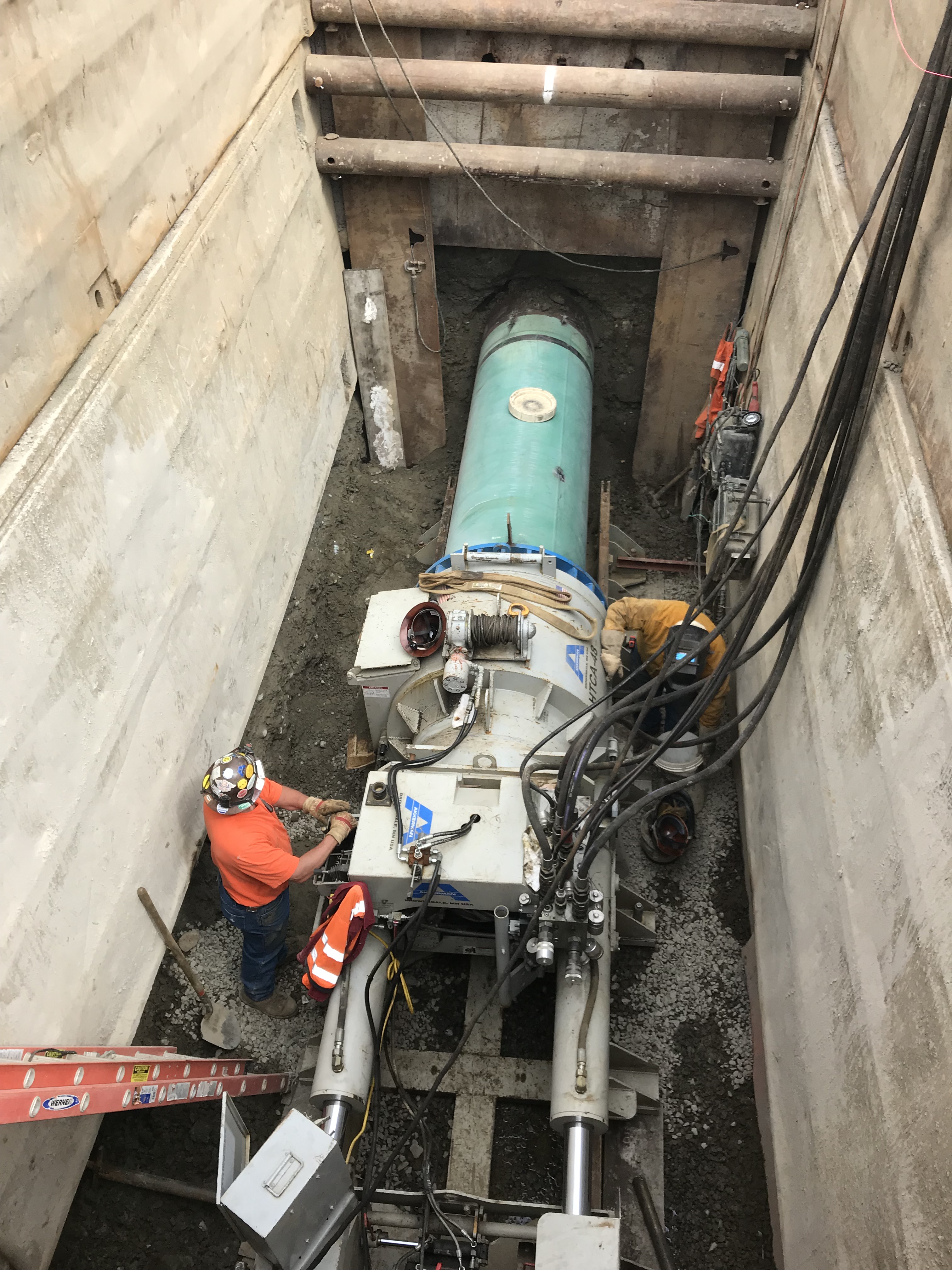
NWB employed the use of their Akkerman GBM 4800 Series Jacking Frame with a high-torque casing adapter attachment for auger boring. The combination made it possible to install the pilot tube passes and 10-foot pipe segments with the torque and jacking force of an auger boring machine but within a smaller shaft. The design utilized one launch shaft to initiate the runs from both directions which further reduced disruption to resident’s properties and saved on project costs.
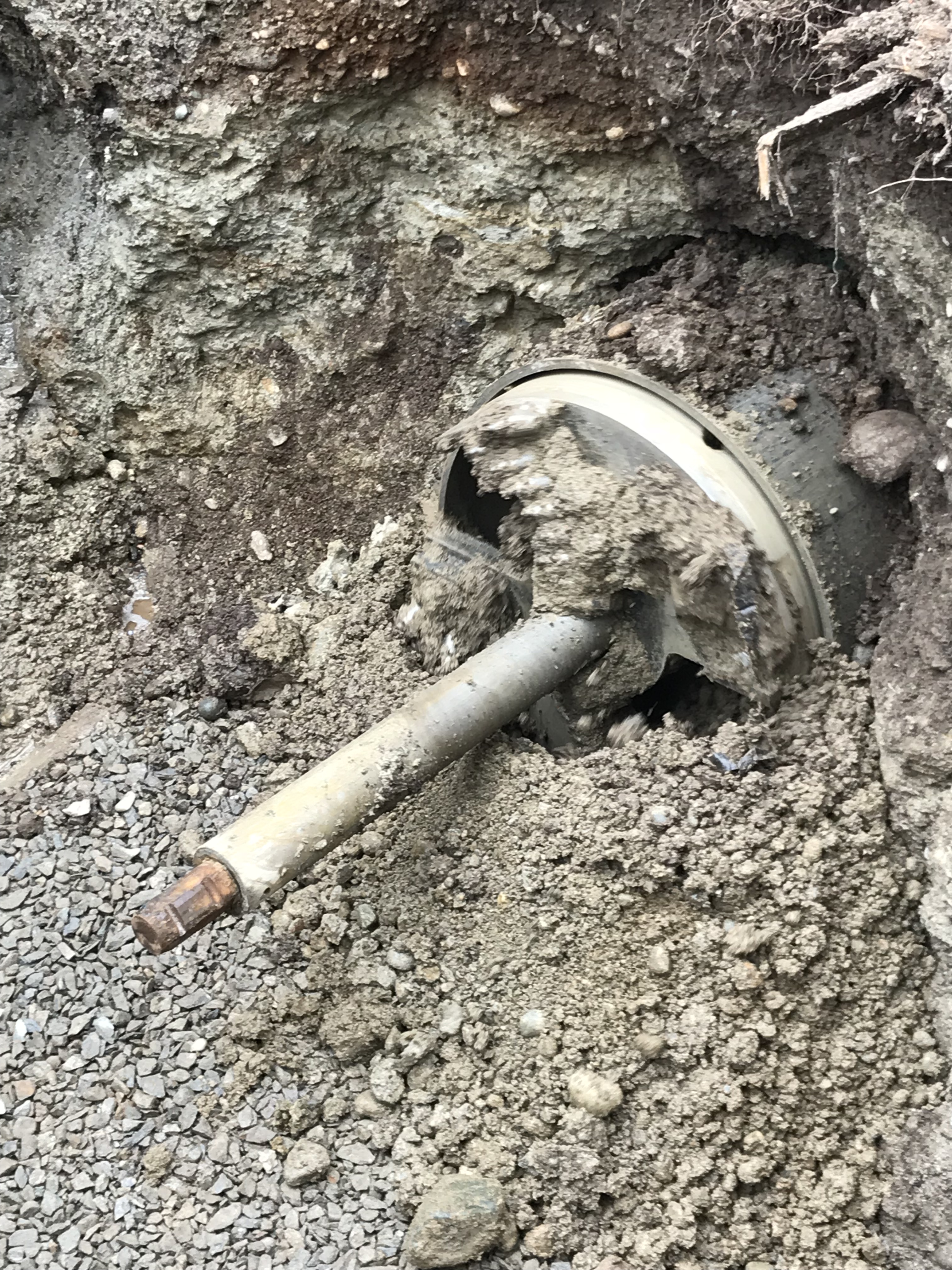
The ground conditions present were glacial till with rock, which is typical for this region. This ground cannot be displaced with a standard pilot tube steering head so NWB arranged to use special tooling for up to 12,000 psi UCS ground. The drill bit of choice, the Rock Drill Adapter with TriHawk® drill bit, lead the pilot tube passes which established the 140 and 110-linear foot alignments at the necessary line and grade for gravity flow. Simultaneously, a soil appropriate lubrication regime was applied to flush the excavated cuttings back to the launch shaft for removal. (continued)
Crews then prepared to direct jack the 110 and 140-linear foot, 36-inch steel casing. In advance of the casing, NWB launched a guide rod swivel with a 36-inch cutter head which matched the 36-inch casing diameter. The swivel portion of the tooling absorbed the auger rotation while the cutter head, equipped with durable carbide gage cutter bit tooling, excavated the difficult ground. This second pass was completed with the guide rod swivel with cutter head for both stormwater sections.
The alignments were then finished with 27-inch Vylon® carrier pipe was positioned inside the casing and connections to the existing infrastructure were made.
From start to finish the entire project was finalized in just under a month, resolving the City’s dilemma in a timely manner with minor intrusiveness to residents.